Follow the smell of cardamom and charcoal off Baniyas Road at noon and you won't find a maître d' — you'll find gold traders, cab drivers and delivery riders elbow to elbow at a folding table, paying in loose change for a meal that costs less than the taxi that brought them there. This is the Dubai that never makes the awards shortlists, and it has been quietly feeding the city for decades: the Deira cafeterias, the Kerala mess halls, the Pakistani grill rooms and the Filipino bakeries that keep the workforce running. In 2026, with a Michelin Guide now covering the city and menus creeping past AED 500 a head along the Marina, this older food city hasn't gone anywhere — it's just easier than ever to walk straight past it.
The pattern is the same at every stop on this trail: no host stand, no wine list, often no menu translated into English, and a bill that would barely cover a starter at the restaurants getting the awards. What follows isn't a "hidden gem" list dressed up for visitors — these are working canteens that happen to be extraordinary, built for the labourers, drivers, traders and shift workers who actually keep Dubai running day to day. The etiquette here (cash, queues, who you can and can't seat as a group) matters as much as what to order, and it's worth knowing before you go rather than working it out at the counter with a queue building behind you.
This is also a geography lesson as much as a food one. Deira is the old trading city, still smelling of the Gold Souq and the Creek; Satwa is the scruffier, older residential quarter where Iranian and Pakistani communities have cooked side by side for half a century; Karama is where the Kerala expat community rebuilt its own street food scene block by block until it earned a nickname of its own. None of these neighbourhoods were designed around tourism, which is exactly why the food in them hasn't been designed around it either.
Deira: Cafeterias Built for Traders, Not Tourists
Deira's Gold Souq runs on foot traffic, and the traders who work it eat at places like Ashwaq Cafeteria (Gold Souq, Deira), a hole-in-the-wall juice-and-shawarma counter a block from the market gates. There's no menu to book from and no one to seat you — you walk up, order at the counter, and take one of the small pavement tables outside. That format suits pairs and small groups far better than a party of eight; a big group will end up eating in shifts or spreading across two or three tiny tables rather than one. A shawarma, a fresh juice and a plate of falafel comes to AED 10-25, less than the taxi fare most visitors will have paid to get there.
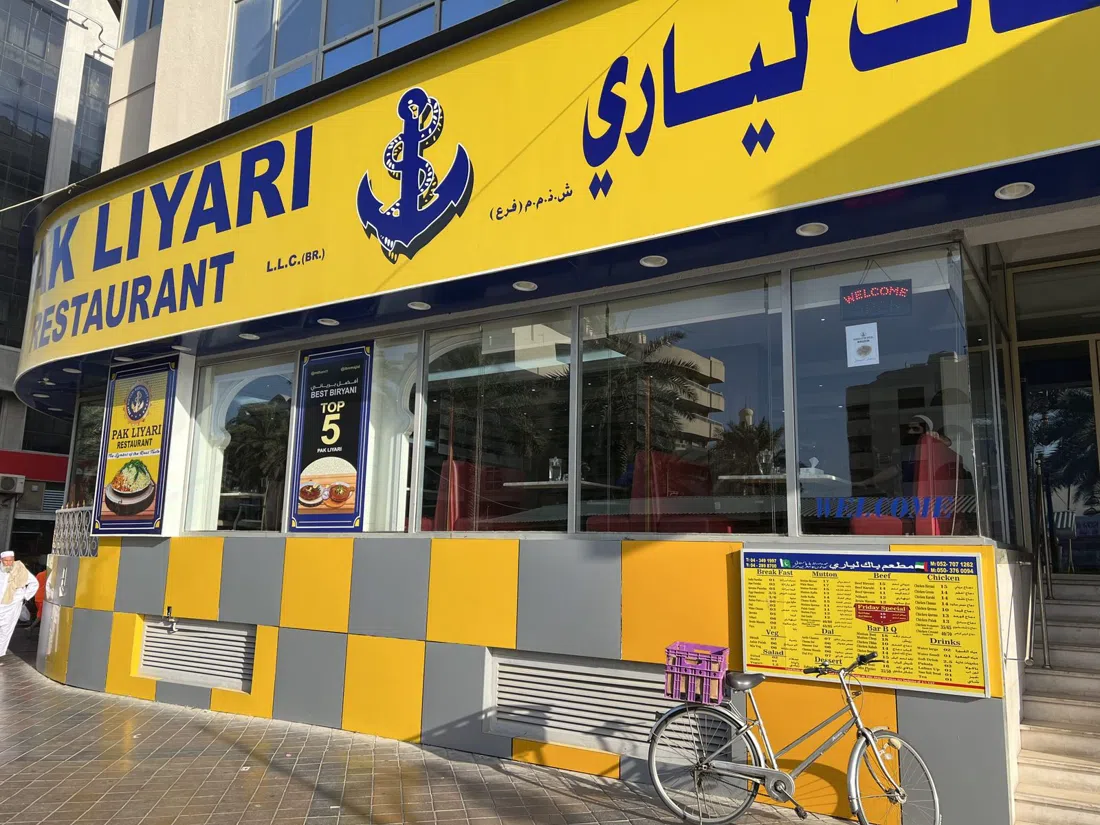
A short walk into the Naif side of Deira, Pak Liyari Restaurant (Naif, Deira) does one thing in industrial quantities: biryani, cooked in the wide steel degs visible right behind the counter, the steam alone enough to draw a queue at lunchtime. The counter-and-seating format works fine for small groups, there's no reservation system to navigate, and the menu barely changes because it doesn't need to — this is the original branch of what has since grown into a five-outlet chain, and it's still the one the regulars mean when they say "Pak Liyari." A full plate runs AED 15-35.
For something built around a crowd rather than in spite of one, Carinderia ni Tandang Sora (Deira) is the standout. It specialises in the boodle fight — a Filipino spread of rice, grilled meats and seafood laid out together on banana leaves for a table to eat with their hands — and at AED 25-60 a head it's one of the better group-dinner values anywhere in this guide. The catch is that boodle fights are meant to be ordered ahead, not improvised at the door; call or message before you turn up as four or more, and it rewards the planning with a proper feast.
Satwa's Streetside Grill Circuit
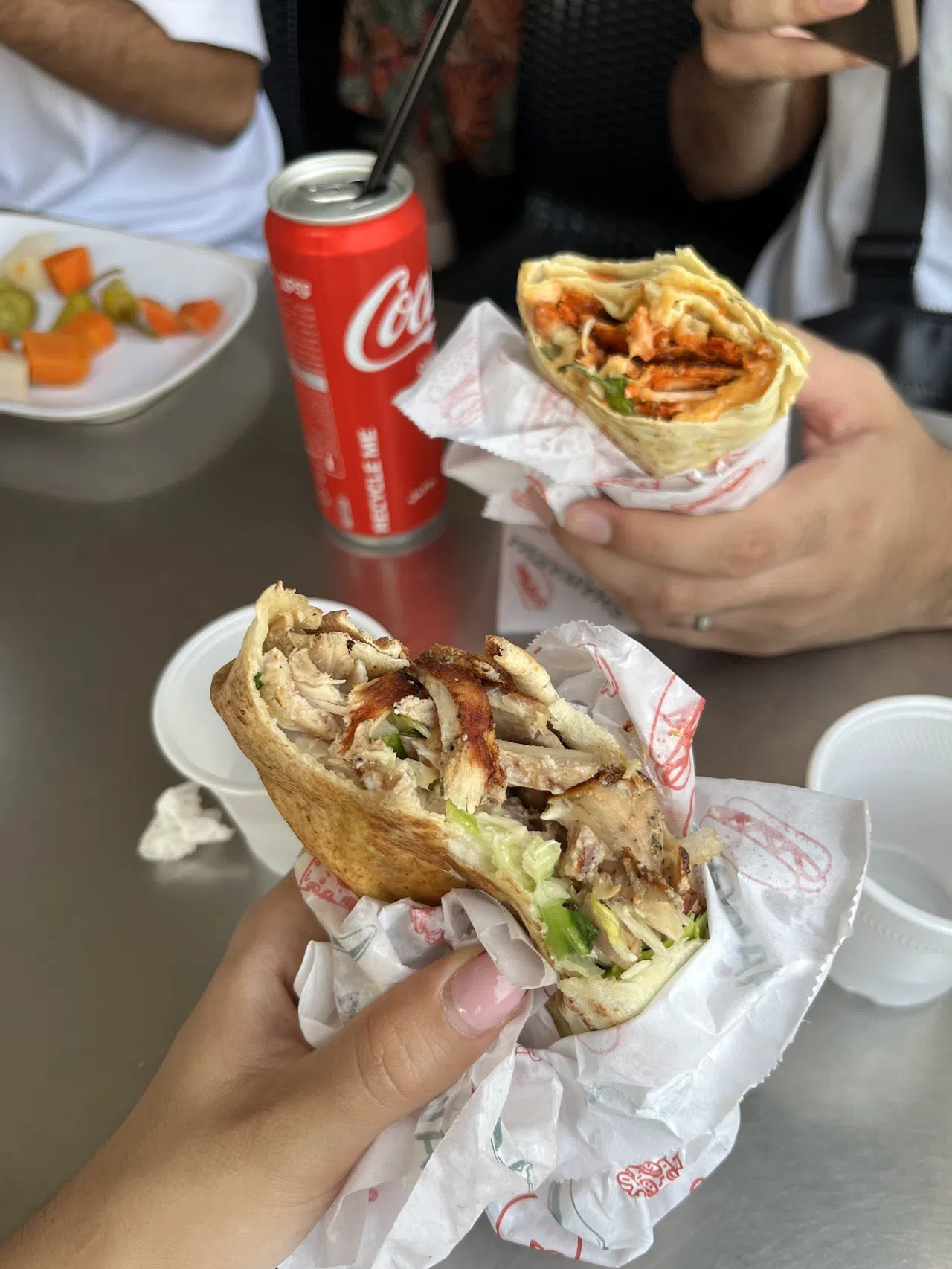
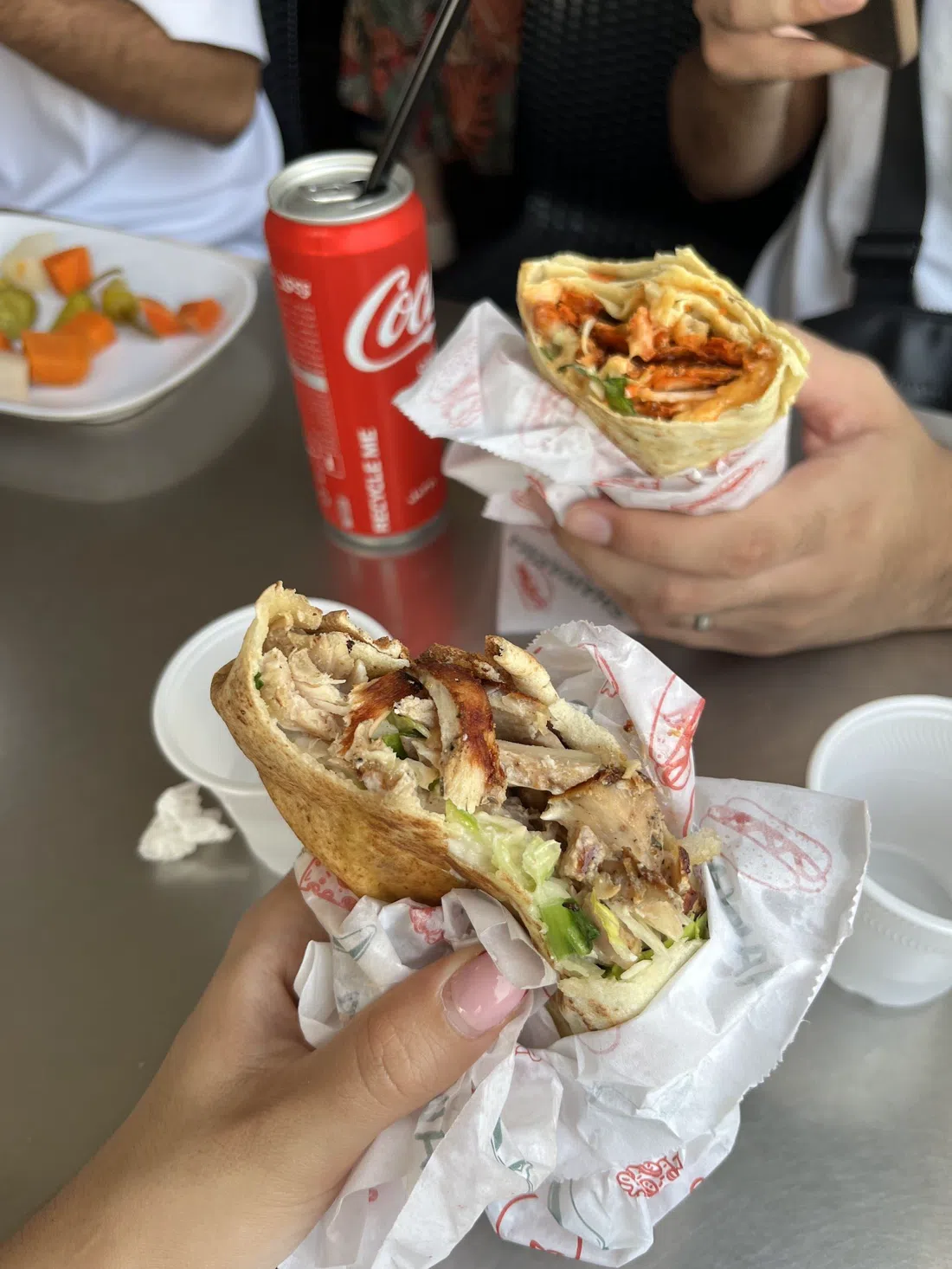
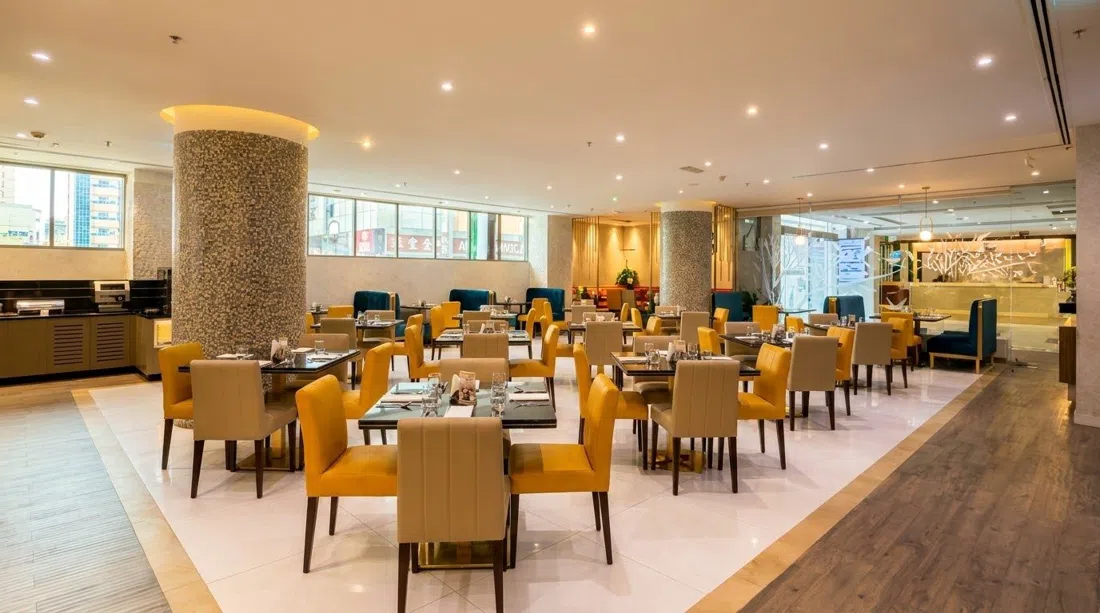
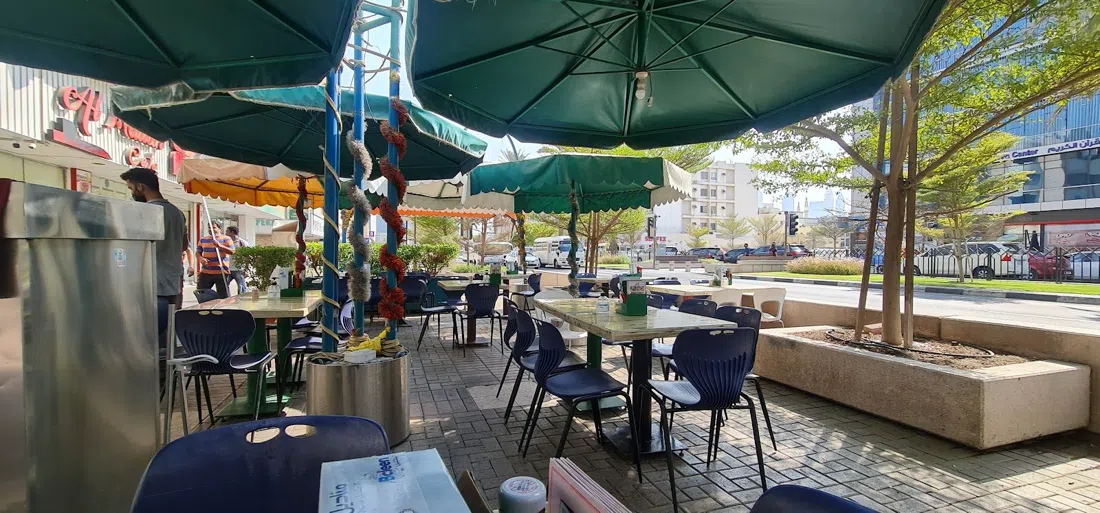
Ten minutes south, Satwa runs on a different fuel entirely — Iranian charcoal and Pakistani karahi rather than Gulf-style shawarma, though it has its own cafeteria classic too. Al Mallah (Satwa) has been carving shawarma streetside here for nearly 40 years, long enough that it's become the reference point every other Dubai cafeteria gets measured against, fairly or not. It's walk-in only, but the plastic pavement tables are simple furniture that staff will happily push together for a bigger group — one of the more flexible venues on this whole list when numbers swell. AED 15-40 covers a proper sitting.
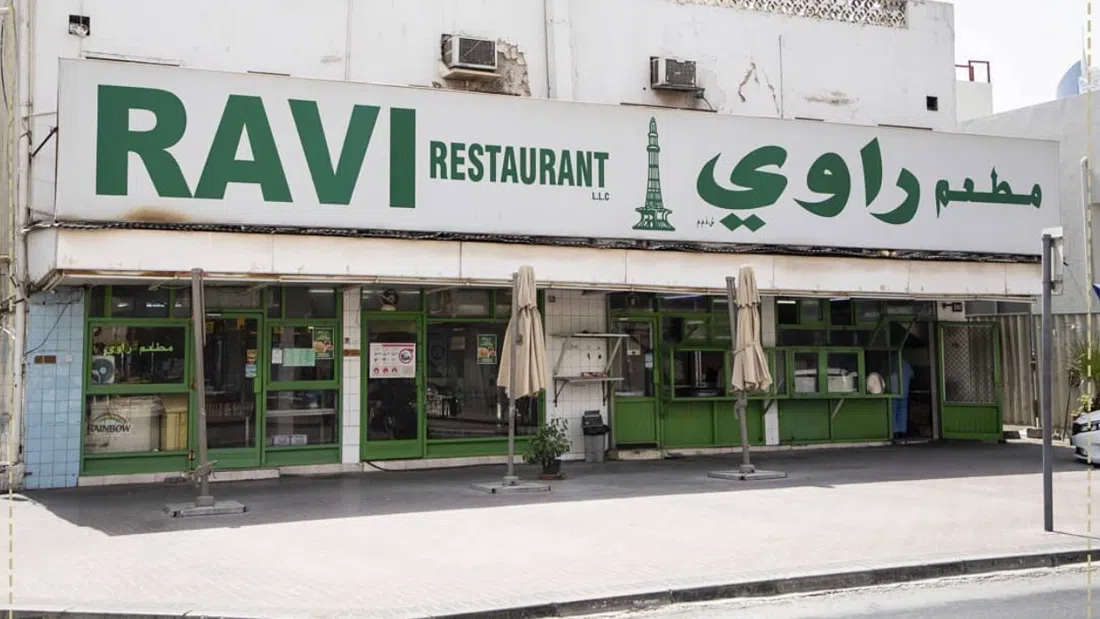
A few streets over sits Ravi Restaurant (Satwa), Dubai's most famous curry house and arguably its most photographed: open since 1978, cash-only to this day, and still full of taxi drivers refuelling at two in the morning between shifts. The communal tables are genuinely built for groups — expect to share space with strangers at busy hours, which is part of the ritual rather than a flaw in it. A meal comes to AED 15-40, but bring cash in hand; there is no card machine here and there never has been.
Round the corner, Al Ustad Special Kabab (Satwa) is the opposite kind of institution — a 47-year-old Iranian grill house so small, and so good, that it out-kebabs restaurants charging ten times the price. It's also genuinely too small for a crowd: anything larger than four or five people will struggle to sit together, and there's no booking system to arrange around that. Go in pairs or small groups, expect a short wait at dinner, and budget AED 20-40 for skewers that justify every minute of it.
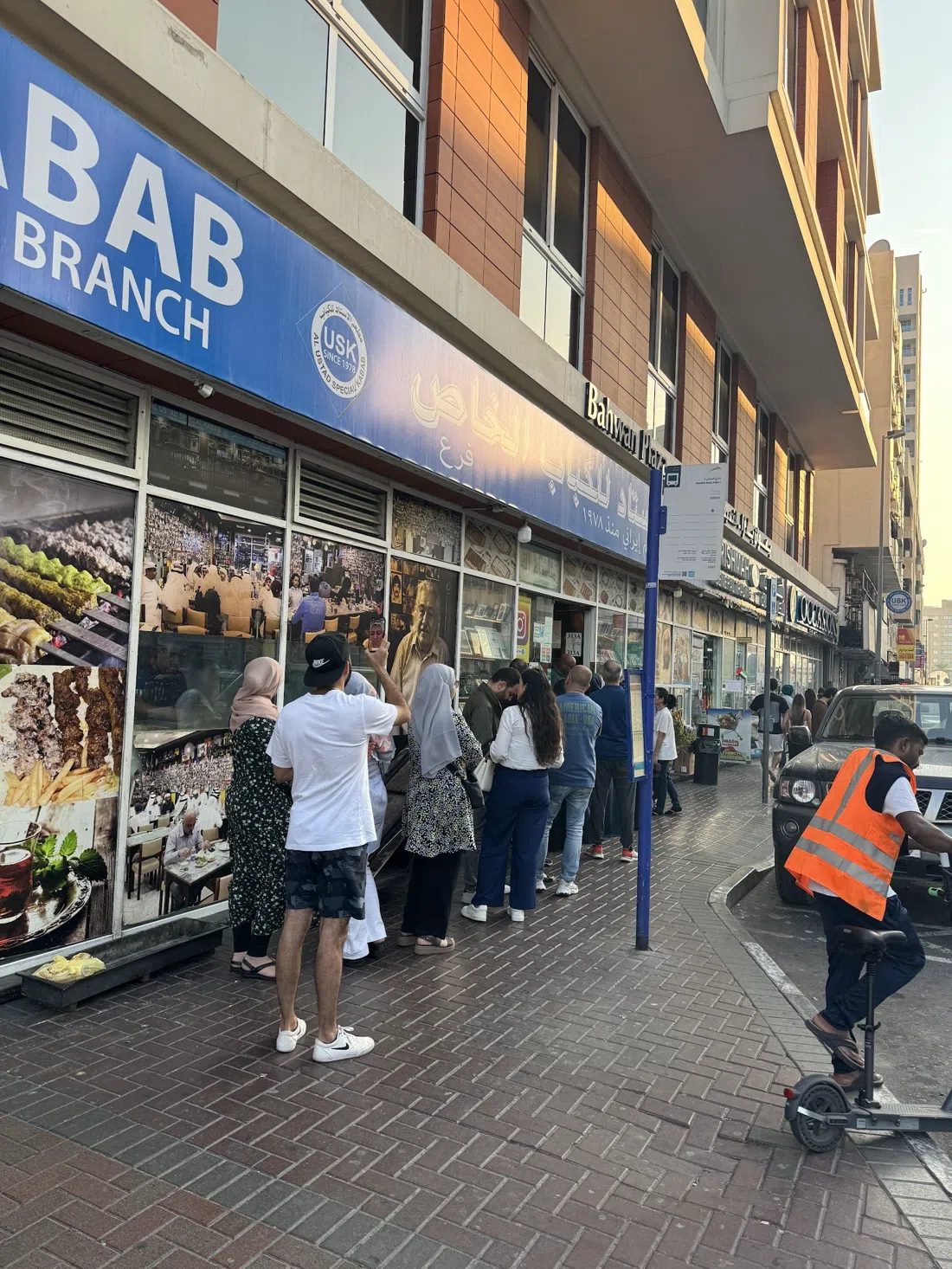
Karama: Mini Kerala and Its Karachi Neighbour
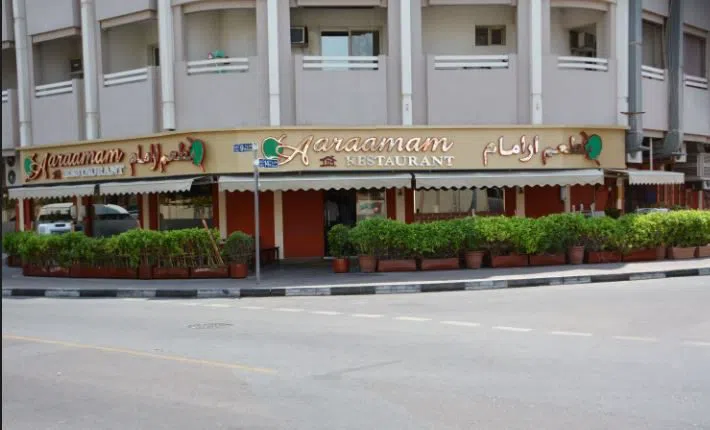
Karama has earned its nickname "Mini Kerala" honestly, and the strip of Kerala mess halls along its main roads is where that's easiest to see. Aaraamam Restaurant (Karama) is the plainest and most functional of the three — canteen-style long tables, no booking required, and a full thali that genuinely costs less than the taxi fare to reach it, at AED 15-35. It's the venue on this list best suited to a large, unplanned group turning up hungry and hoping for space.
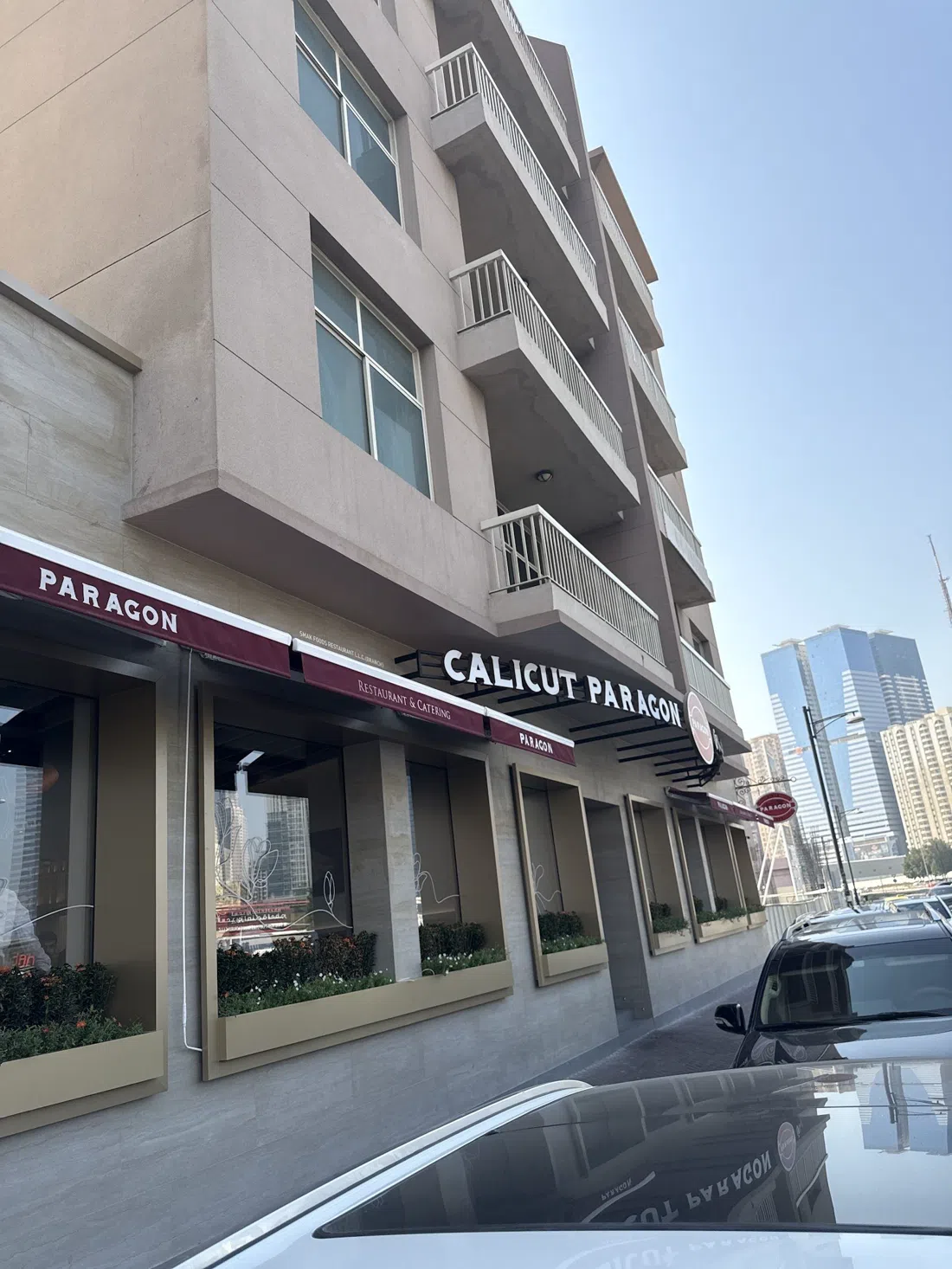
Calicut Paragon (Karama), a few doors along, is the Kerala seafood chain every Malayali expat in the city has an opinion about — and the one everyone still queues for regardless of the argument. Its dining halls handle large groups comfortably, but this is the one Kerala venue on the strip where it's genuinely worth calling ahead on a weekend, since the queues stretch out the door by early evening. Expect AED 30-70 a head depending on how much seafood ends up on the table.
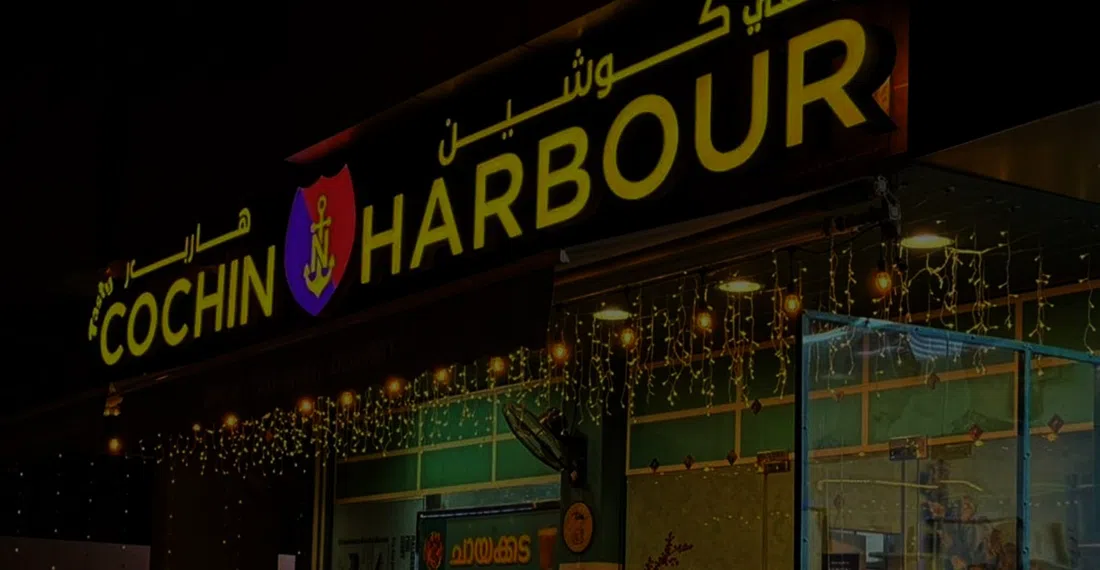
Just past it, Cochin Harbour Restaurant (Karama) specialises in karimeen pollichathu — pearl spot fish wrapped and steamed in banana leaf — done with enough care to justify the higher end of its AED 40-90 range. It's a proper sit-down restaurant with group tables built in, and walk-ins are fine outside weekend peak hours, when the whole Karama strip fills up at once.
For the Pakistani side of Karama, Karachi Darbar (Karama) has been family-run since 1973 and built its name on a bubbling karahi rather than any pretension around it. Family and group tables are standard here and it's a popular choice for group dinners specifically, with no formal booking required — you just turn up and wait to be seated. A meal costs AED 25-60.
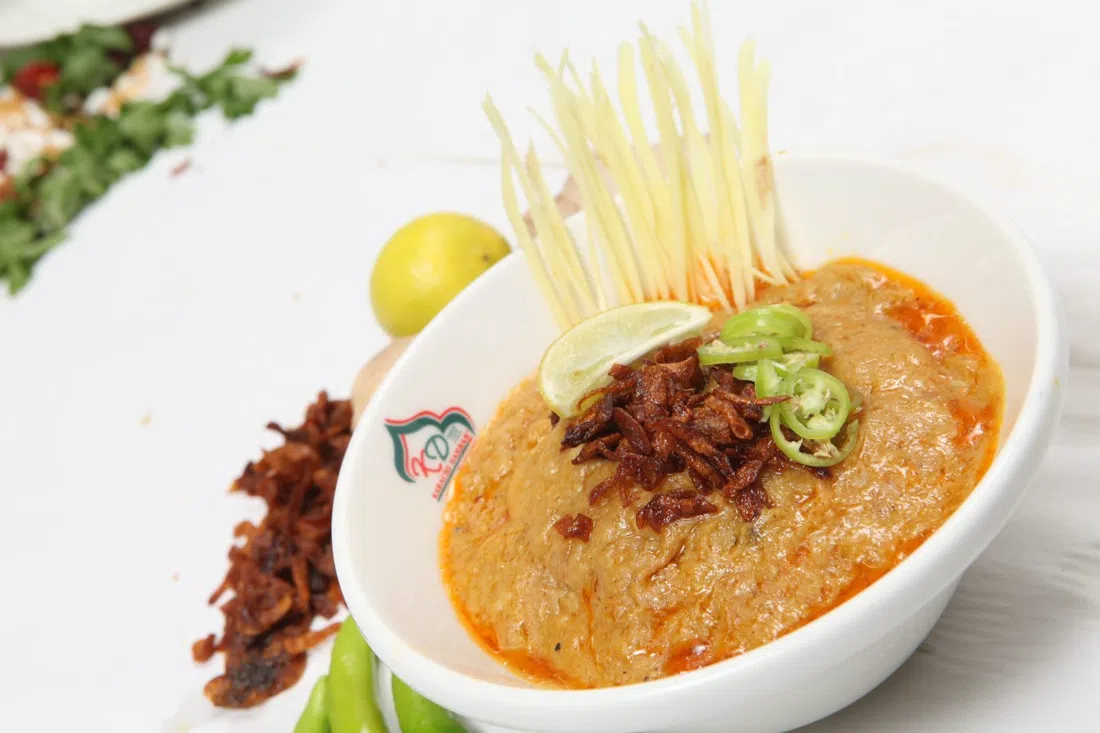
The Bakery Counter Before the Shift Starts
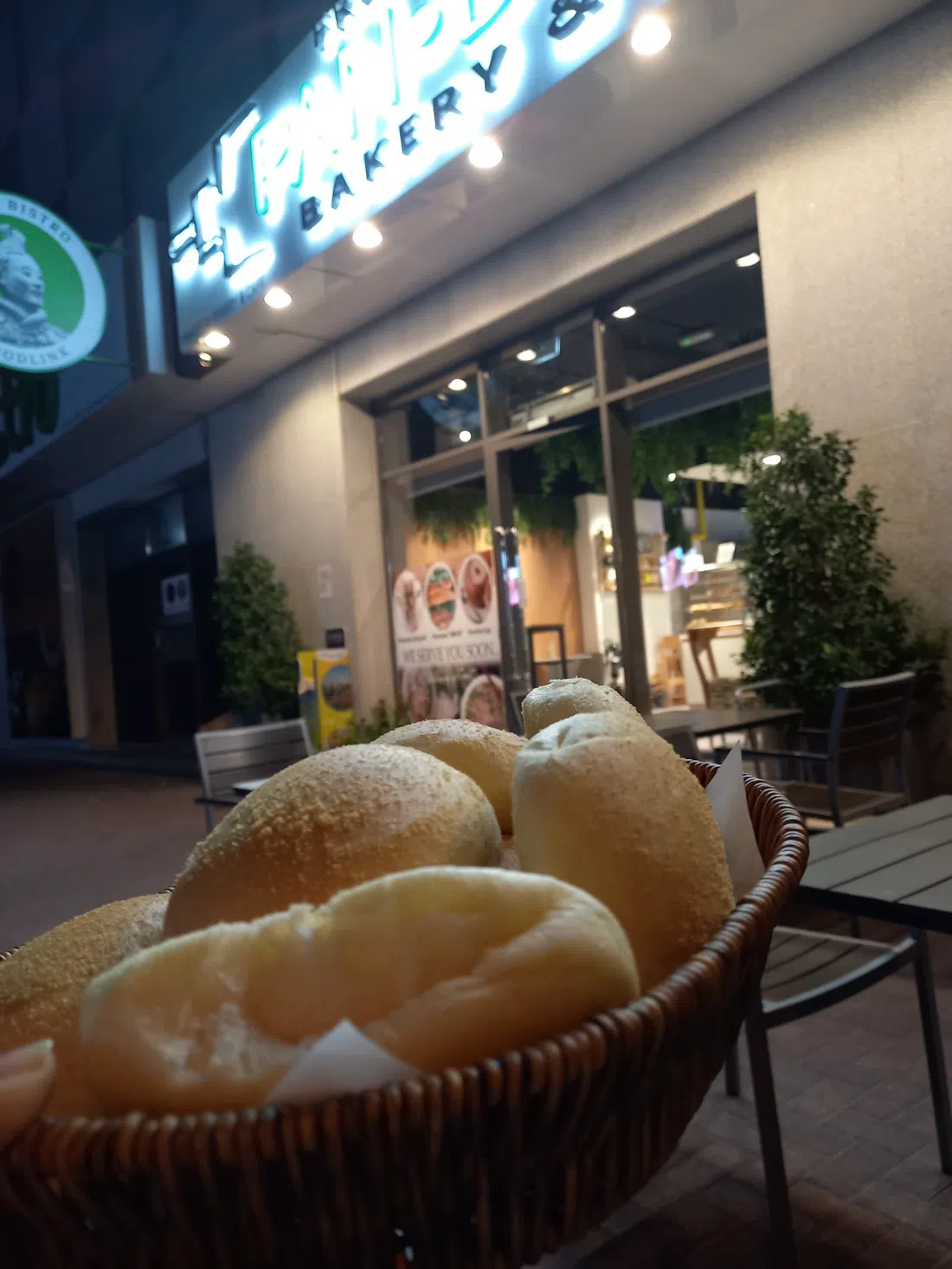
Not every meal on this trail is a sit-down affair, and one of the most telling stops isn't a restaurant at all. Pandecia, with branches from Karama to Al Quoz, is a grab-and-go bakery rather than a group venue — the pandesal, soft rolls dusted with breadcrumbs, come out of the oven warm at dawn, and this is genuinely where much of the city's Filipino workforce stops before a shift starts, not somewhere staged for visitors to watch. It isn't a place to gather a table of six; it's somewhere to grab breakfast standing at the counter, for AED 5-20, and keep moving.
The Fisherman's Shack the Awards Circuit Ignores
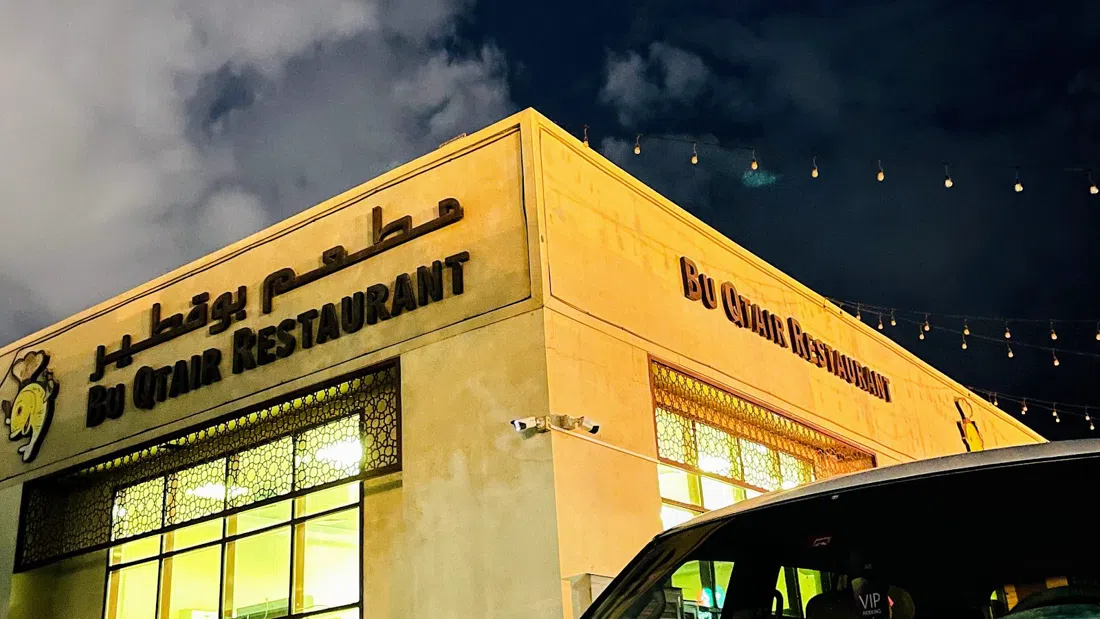
Out on the sand near Jumeirah's fishing harbour, Bu Qtair takes no bookings and has no interest in changing that. You pick your fish at the counter — hammour is the standard order — it comes back whole and fried, and you eat it at plastic tables within sight of the boats that caught it that morning. It's first-come, first-served, and a large group may get split across two tables during the dinner rush, so arrive early, especially on weekends when the queue backs up past the parking area. A full fish meal runs AED 40-80, still less than most hotel room-service sandwiches ten minutes down the coast.
Getting There, Paying, and Timing It Right
None of this is Dubai Mall food, and none of it is laid out for visitors who expect valet parking and a laminated English menu with photographs. A few practical notes before setting off:
- Transport: Deira and Satwa are each walkable in short bursts once you're there, but the two areas sit apart, so a taxi or the Dubai Metro is the sensible way to move between them — Union and Al Ghubaiba stations sit closest to the Deira and Satwa cafeterias. Karama has its own Green Line Metro stop within walking distance of the Kerala strip. Bu Qtair, out in Jumeirah, is taxi-only unless you're already staying nearby.
- Cash: Ravi Restaurant is cash-only, full stop, and several of the smaller cafeterias run more smoothly with small notes on hand even where cards are technically accepted. Carry AED 100-200 in small denominations for an evening out across two or three stops.
- Timing: Lunch rush across Deira and Karama runs roughly 1-2:30pm, when trading-floor and warehouse staff take their break; dinner peaks around 8-10pm, and Ravi Restaurant in particular gets a second wind well after midnight with the taxi-driver shift change. Bu Qtair is best attempted before 7pm, or you'll be waiting for a table as the sun goes down.
- Budget: A full meal at any of these venues runs AED 10-90 per person — genuinely less than the taxi ride to reach most of them from a Downtown or Marina hotel, which is close to the entire point of eating this way.
- Groups: Travelling as six or more, lean toward Ravi Restaurant, Karachi Darbar, Aaraamam Restaurant, Calicut Paragon or Carinderia ni Tandang Sora, the last with advance notice for its boodle fight. Keep parties to four or fewer for Al Ustad Special Kabab and Ashwaq Cafeteria, where the seating genuinely can't stretch further than that.
Plan the rest of the stay around it rather than the other way round — start with a Dubai hotel search for a base near Deira or Karama instead of the Marina, and use the full Dubai guide to fill the days between meals. The skyline isn't going anywhere. The queue at Ravi Restaurant, at 2am, might not wait.