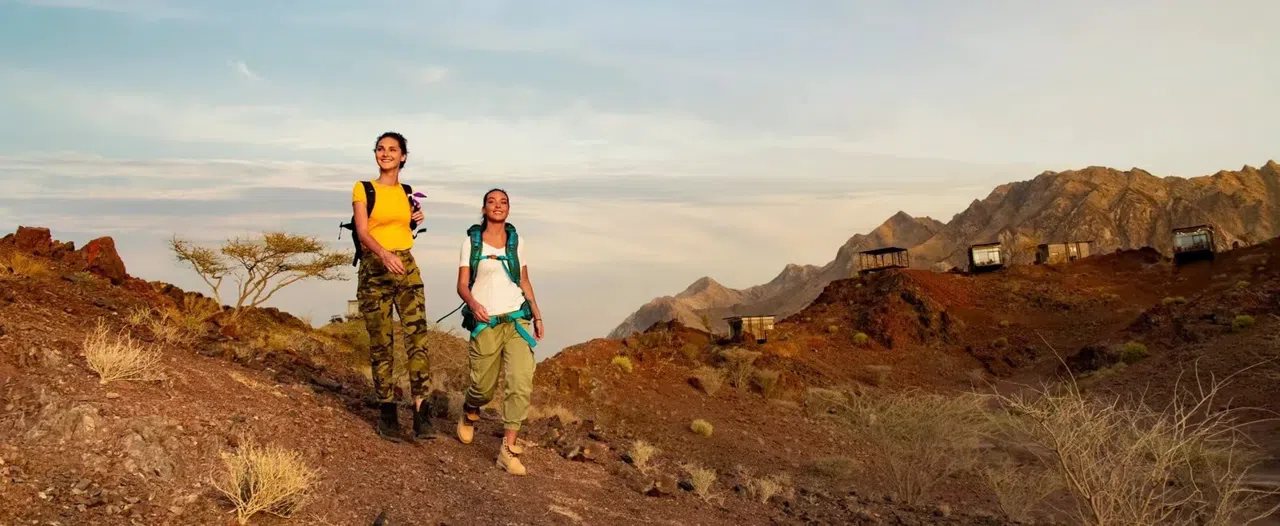

The road east out of Dubai stays flat and bright for the best part of an hour, and then the ground begins to fold. Past the last roundabout the horizon turns from glass to grey limestone, the air drops a few degrees, and a reservoir appears where nothing in the landscape suggests water should be: turquoise, motionless, ringed by bare rock without a single tree. This is Hatta, a pocket of Dubai held inland in the Hajar Mountains, and it is the one part of the emirate where the subject is geology rather than architecture.
The drive out is the first real decision
Hatta does not touch the rest of Dubai. It is an exclave, and the old straight shot along the E44 clips Omani land on the way in, which was a non-issue for years and is now the single most common way a Hatta day trip goes wrong. That shortcut is off-limits unless your passport lets you cross and re-cross, so the legal approach for most international visitors is the longer eastern loop through the neighbouring emirate's mountain roads. Budget two hours each way rather than the ninety minutes the map promises, and leave Dubai before 07:00 if you want the dam to yourself.
That detour hands you a stop worth having. Al Rafisah Dam (on the eastern approach road, roughly forty minutes short of Hatta village) is a reservoir park with free entry, generous parking, cafés and flat walking paths, open daily 08:00-22:00. Kayaks are absurdly cheap here, around AED 30 for a single and AED 60 for a double, which makes it the rare place you can put an entire group on the water at once without a booking spreadsheet. Because it sits on the road you now have to take, treat it as the second stop of the day or the evening leg on the way home, when the light comes off the water and the crowds have gone back to the coast.
Start on the watchtower before anything else opens
Nothing orients you in Hatta faster than five minutes of climbing. Hatta 360 Observatory (signed in places as Hatta Watchtower, on the ridge above the village) is an 1880 military tower, unstaffed, free and open around the clock. The stone steps are short and the summit platform is genuinely small, two or three people at a time, so a group of ten rotates through in shifts and nobody minds. From up there the whole day makes sense: the village below, the dam road threading south, the wadi cuts running east into the mountains. It is also the cheapest sunrise in the emirate, and at that hour you will likely have it entirely to yourself.
If you want the same panorama with somewhere to sit afterwards, Hatta Hill Park (village edge, above the main street) opened in 2004 and remains the local choice rather than the visitor one. It is free, open 24/7, and built around barbecue and picnic pitches, with running tracks, play fields and a climbable tower. Bring your own charcoal. On Friday evenings it fills with large Emirati family groups and stays that way until late, pleasant company if you are relaxed about noise, the wrong plan if you came for solitude.
Turquoise water in a landscape with no trees
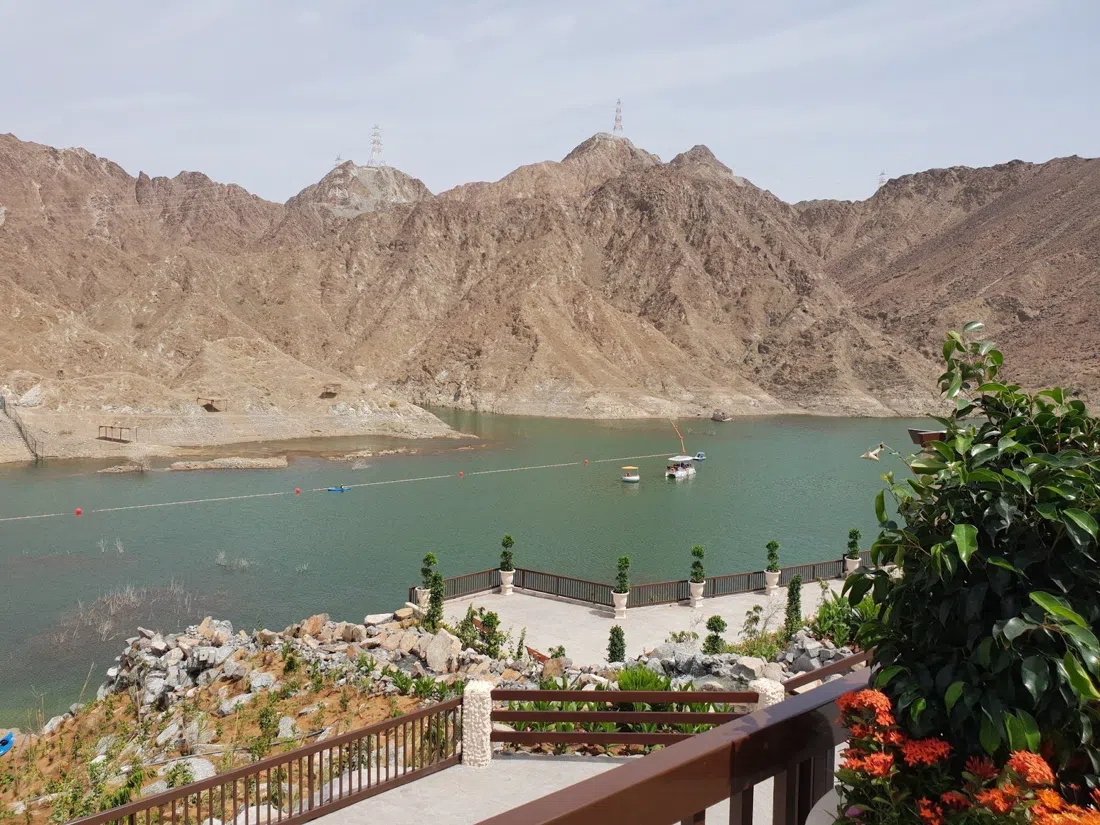
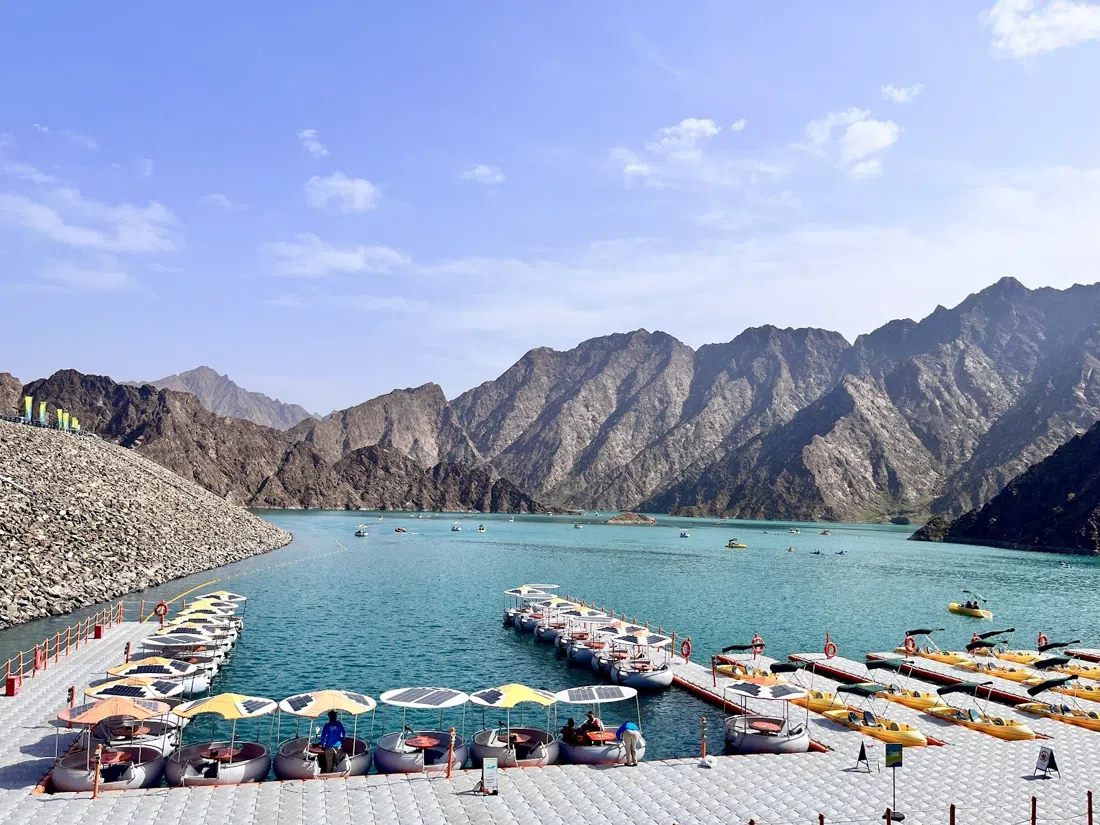
Hatta Dam (south of the village, ten minutes by car) is the image that sells Hatta to anyone who has only seen Dubai from a hotel window, and it costs nothing. The shoreline is open public land, no gate and no ticket, with free parking areas and shaded picnic shelters that absorb big groups without complaint. The catch is simple arithmetic: the car park closest to the waterline is small and fills fast at weekends. Arrive by 08:00 and you park beside the water; arrive at 11:00 and you walk down in full sun.
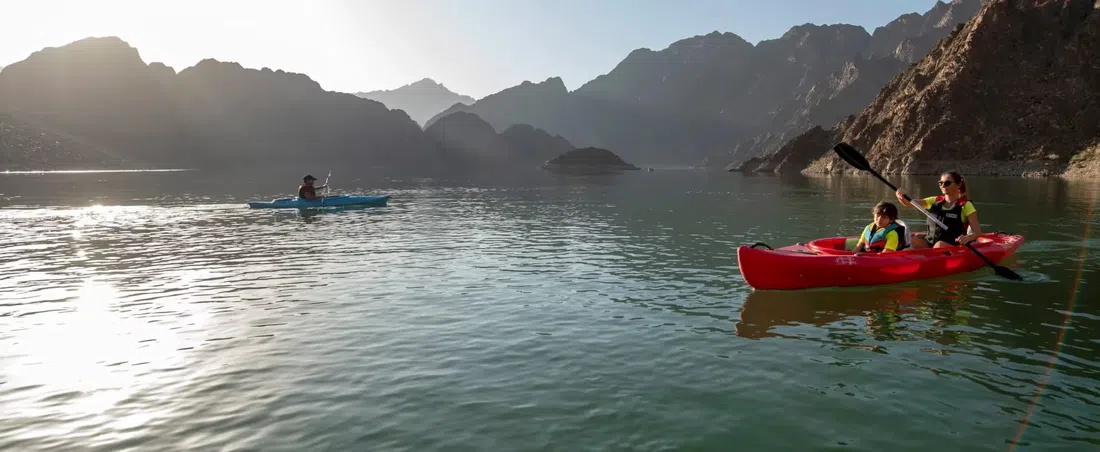
The only legitimate way onto the water is Hatta Kayak (dam shoreline, beside the main car park), and it is the best-value hour anywhere in the emirate: roughly AED 60 for a single kayak, AED 150 for a double, with unlimited time rather than a clock-watching slot. Pedal boats and donut boats cost about the same. Families, students and groups get discounted rates, and at weekends you should book a slot by phone or WhatsApp on +971 56 616 2111 unless you enjoy queues. Two hard limits catch people out: singles are 16 and over only, and there is a 110kg per-person weight cap, so check before you drive two hours for it. Paddle out twenty minutes and the engine noise disappears entirely; the water is deep green-blue and the rock walls go straight down into it.
What the rock pools actually involve
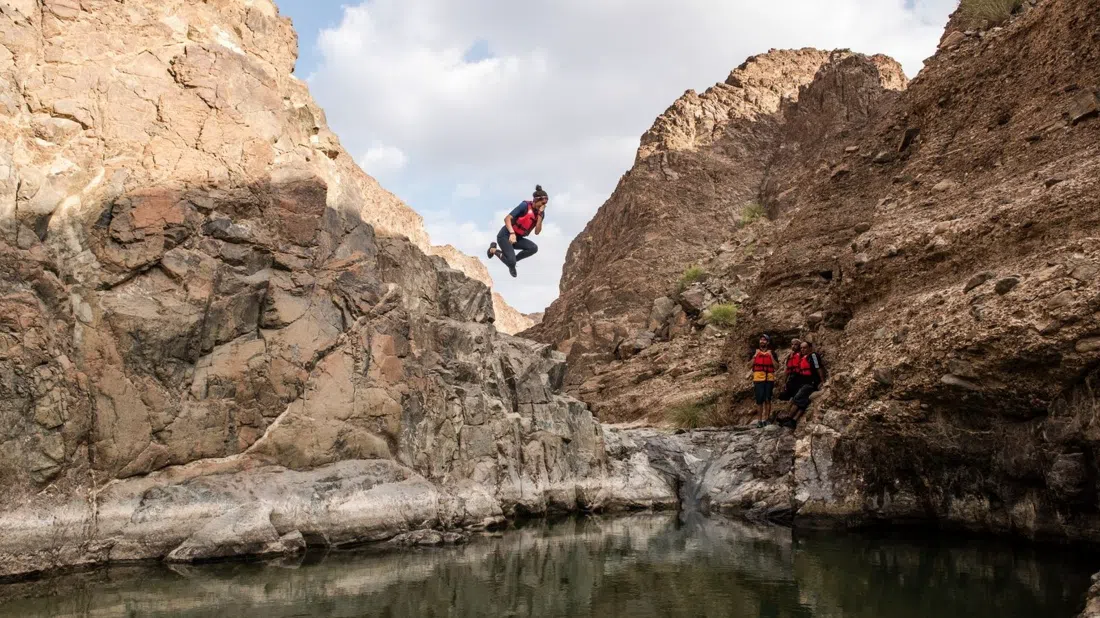
The pools deserve plain description rather than atmosphere. The Hatta Rock Pools (in the wadis east of the village, on the Omani frontier) are the natural swimming holes that every photograph of Hatta promises: smooth-scoured rock, cold clear water, small waterfalls after rain. They are completely informal, with no gate, no guide and no lifeguard, and nobody to call if someone slips on wet stone.
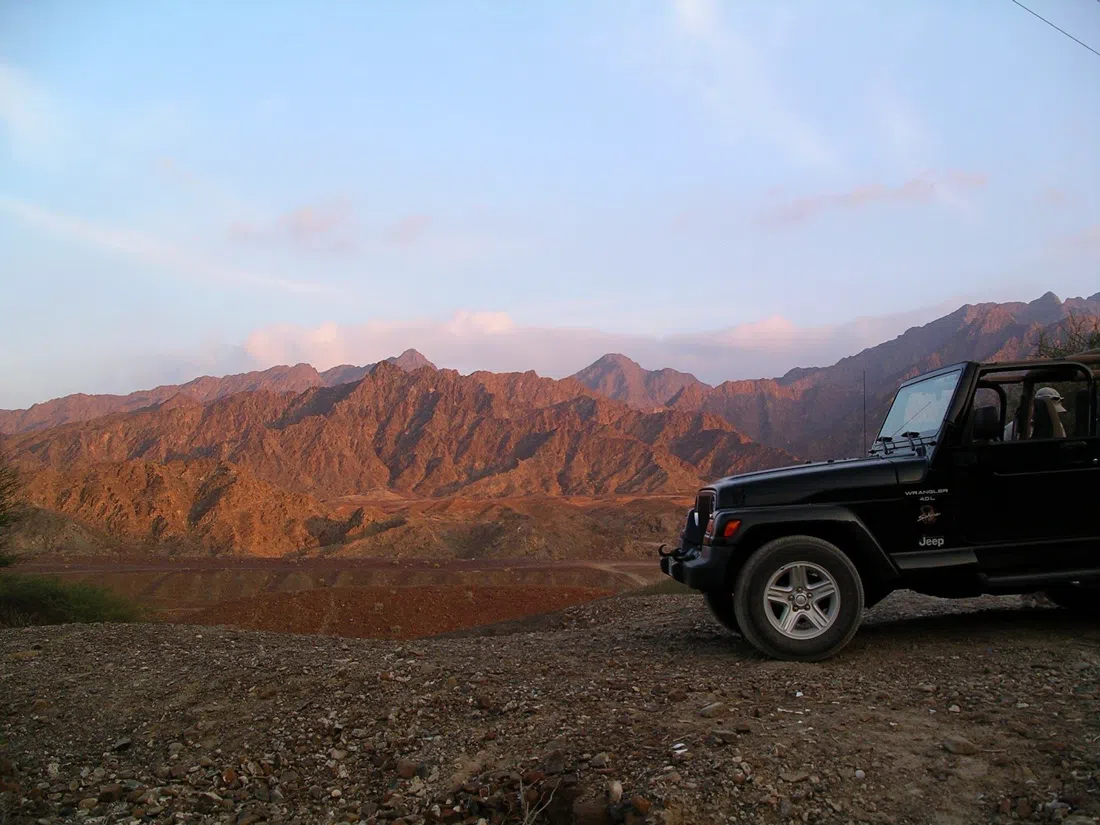
The complication is the border. The classic pools sit right on the Omani line, and access from Hatta village has been closed to non-GCC passport holders for years. If you hold anything other than an Emirati or Omani passport, reaching them legally means a proper Oman visit visa and an inland crossing, not a casual turn off the Hatta road, and the direct route across Omani land is not an option. Guided 4x4 day trips out of Dubai (roughly AED 250-450 per person) exist and remain the practical answer for most visitors, because the operator handles which pools are actually reachable on the day. What you should not do is drive to the village, follow a gravel track east on the strength of a blog post from 2019, and discover the situation at a checkpoint.
The wadi that every passport can reach
The honest fix is to stop chasing that specific set of pools. Wadi Shawka (Hajar foothills, around 90km from Dubai and directly on the approach side of the mountains) delivers comparable Hajar wadi swimming with no border, no permit and no fee. The standard outing is an 8km round trip from the small dam up to the pools, on a graded track that suits mixed abilities, which is why hiking clubs and group campers use it constantly. Water level depends entirely on recent rain, so this is realistically a January-to-March proposition; in October you may find beautiful empty rock and nothing to swim in. Go with that expectation and you will still have swum in the mountains without a visa conversation.
Gel-ball, zorbing and fifty kilometres of graded singletrack
Hatta Wadi Hub (southern edge of the village, below the dam road) is the reason Hatta works as a full day rather than a viewpoint stop. Site entry is free and you pay per activity, roughly AED 25-150 each, with bundles running to a few hundred AED. The format skews hard towards teams. Gel-ball battles, football zorbing and the archery arena all want bodies on both sides, so it is a better afternoon for a group of eight than for two people on a quiet weekend away. Walk-ins are fine for most activities and no booking is needed, but large parties should call ahead: Hatta Outdoor on +971 50 136 0085, Go Gravity on +971 50 760 0278.
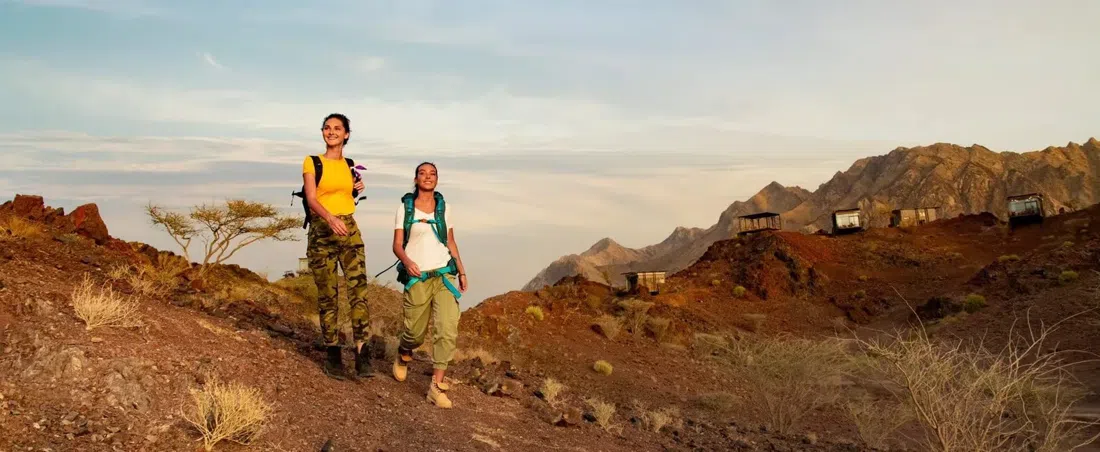
One caveat that ruins itineraries: the Hub is strictly seasonal. Season 9 opens on 28 September 2026 and the published run is October to early May, with everything shuttered June through September. Check the dates before you commit a group to the drive.
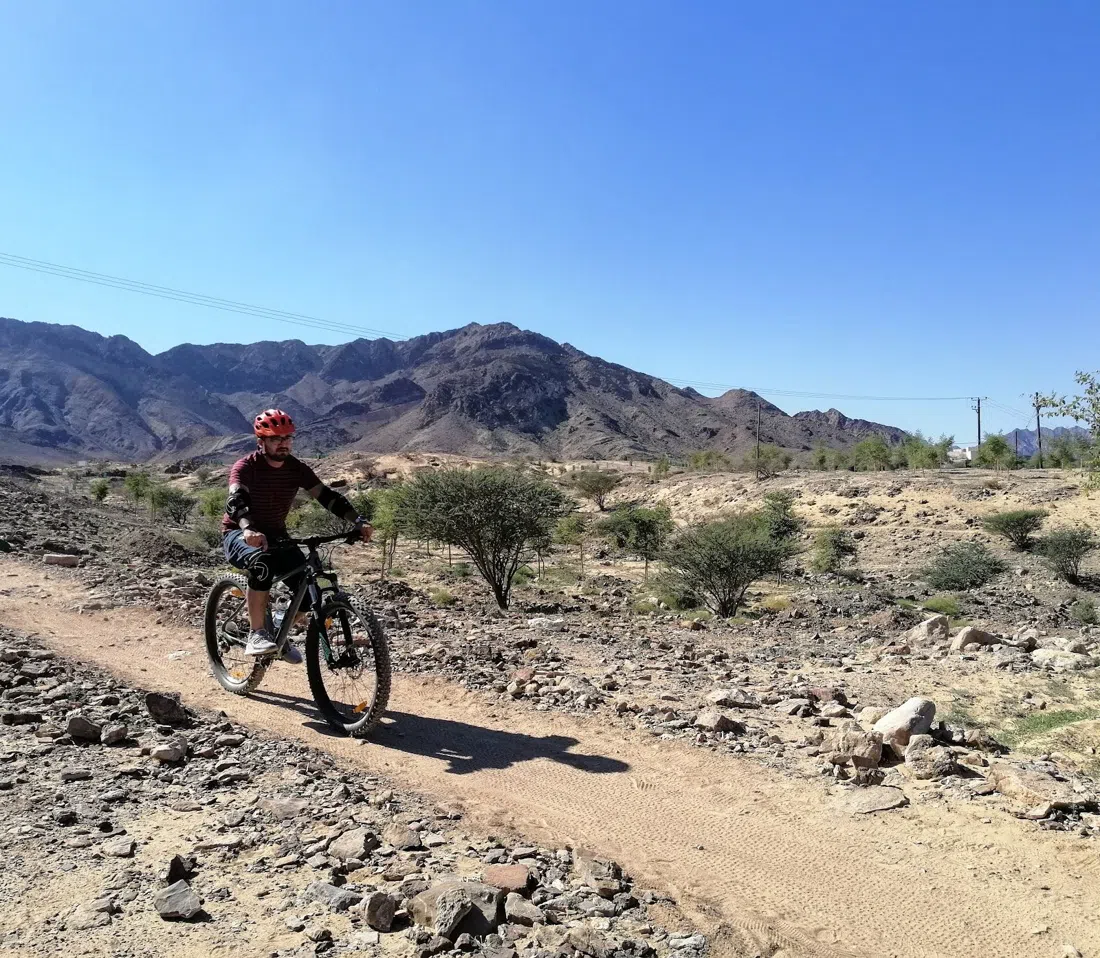
Riders have the better deal, because the Hatta Mountain Bike Trail Centre (trailhead north of the village) runs year-round. There are around 50km of properly built, graded loops here, purpose-cut singletrack with signed difficulty, which is rare in the Gulf and the reason serious riders make the drive out from the city before dawn. The centre keeps about 60 hire bikes, plus showers and a workshop, at roughly AED 50-150 per session; trails themselves are free to ride. Book rentals ahead in peak season. In summer the trails stay open but riding is a first-light activity only, and you should treat that as a rule rather than advice.
The slow half of Hatta
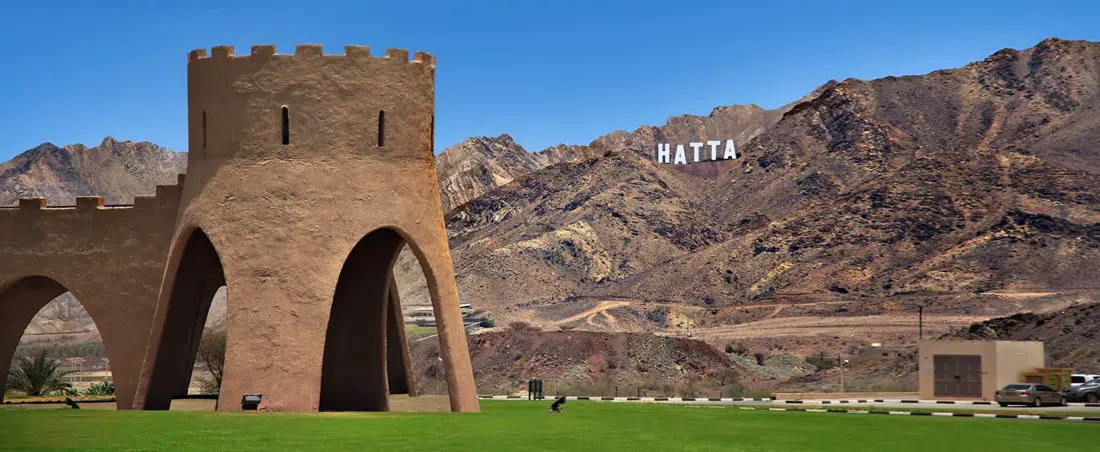
Hatta Heritage Village (centre of the village, beside the main street) is the counterweight to all that adrenaline and the reason the day has some depth to it. The settlement is around 3,000 years old and was rebuilt in 2001 using traditional materials (mud-brick, palm trunk, stone), and it is the one place in Dubai where the pre-oil mountain economy is legible: the falaj channels, the defensive towers, the way houses sit to catch shade. Entry is free and unticketed, it handles coach parties easily, and guided walks can be arranged on +971 800 33222. Hours are Sat-Thu 07:30-20:30 and Friday from 14:30, which trips up anyone planning a Friday morning start.
Next door, Hatta Swan Lake (adjacent to Heritage Village) is gentle, and it belongs in this itinerary for exactly that reason. Walking around it is free and the gates never close; swan pedal boats run about AED 60 for fifteen minutes and bird feed around AED 10. Each boat seats two adults plus two children, so a larger group splits across several and drifts about separately. It is the slow-water bookend that makes Hatta workable for mixed ages, where half the party has no intention of zip-lining.
The best hour in the enclave might be Hatta Honey Bee Garden and Discovery Centre (in the hills a short drive from the village), the Middle East's first dedicated bee garden and the region's largest honey producer. Suited, hands-on beekeeping sessions run in timed batches, so group slots need booking; it opens daily 09:00-17:00 with last entry at 16:00, from AED 50 for adults and AED 20-65 for children. It reads as working agriculture rather than theme park, and it is one of the few Hatta attractions that stays open straight through summer.

Where to eat in the village
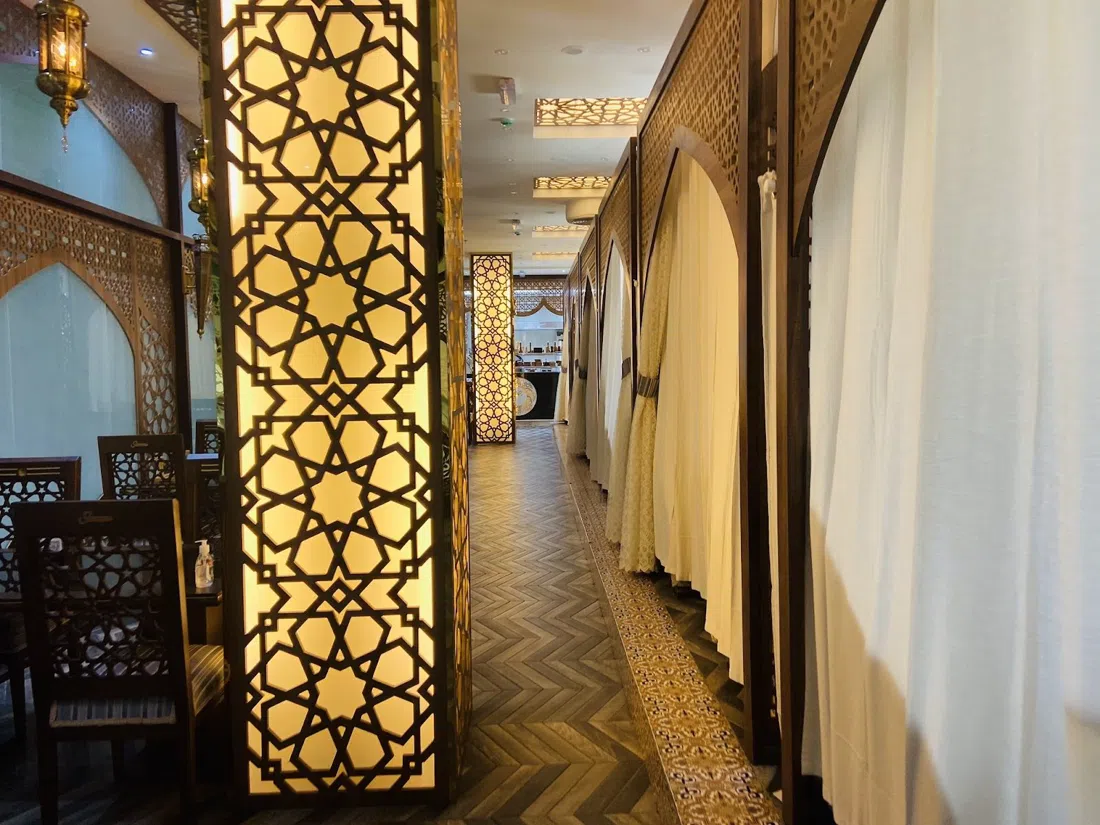
Hatta is not a dining destination. Janam Restaurant (village centre, near the heritage quarter) is the consensus best sit-down meal and the sensible lunch stop between Heritage Village and the dam, at AED 40-90 a head. The menu leans Mediterranean rather than strictly Emirati, despite the setting. It takes groups but does not take the pressure well: peak-season waits of thirty minutes or more for a table are normal, so call ahead for anything over six, or eat early at 12:30 rather than joining the 14:00 crush.
Staying the night is the upgrade
The case for an overnight is the sky. Two hours from the coast, with no towers and almost no light spill, the stars are the sort of thing city visitors forget exist.
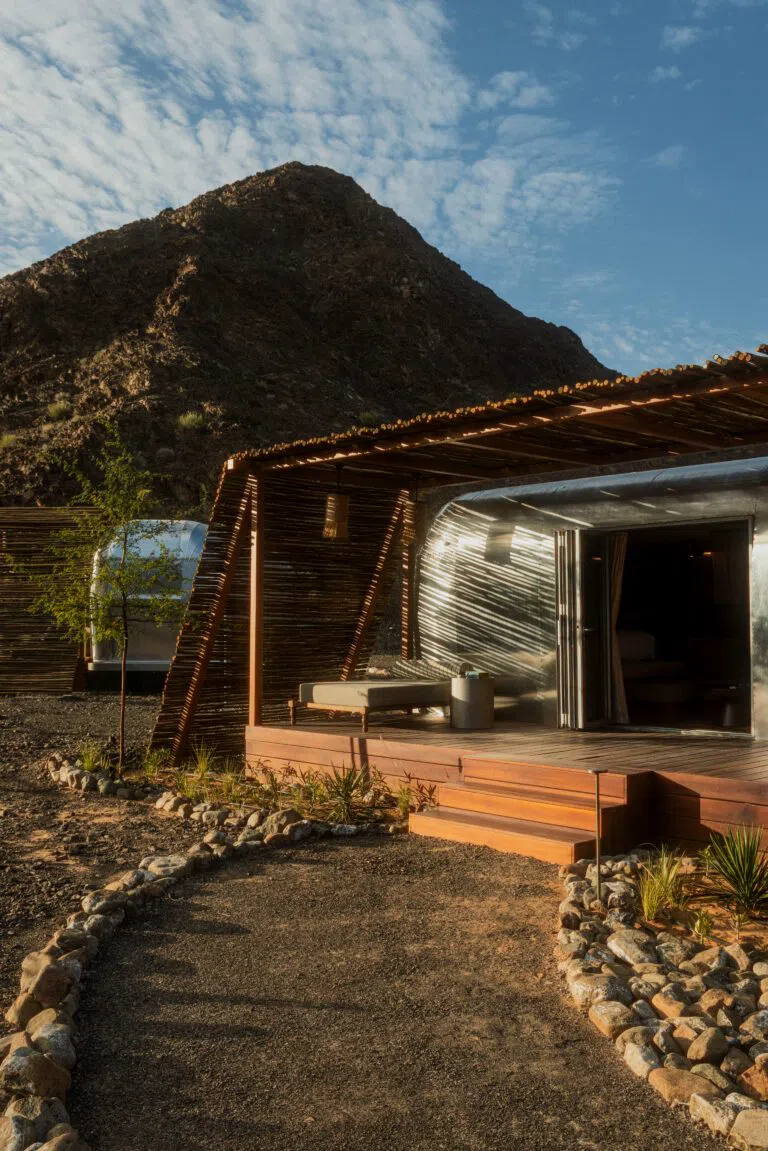
Hatta Resorts (dam road, below the mountain ridge) is the glamping option: lodges, domes, caravans and vintage campers, roughly AED 700-1,800 per night by unit type, each with its own BBQ station, fire pit and complimentary firewood. Units cluster, so a group can take a pod of them and still have somewhere communal to sit. Season 9 opens 28 September 2026 with refreshed interiors, two new plunge-pool Premier Lodges and a pair of heritage trailers called The 1958 Coach and Route 1948. It closes again for summer, so confirm season dates before planning.
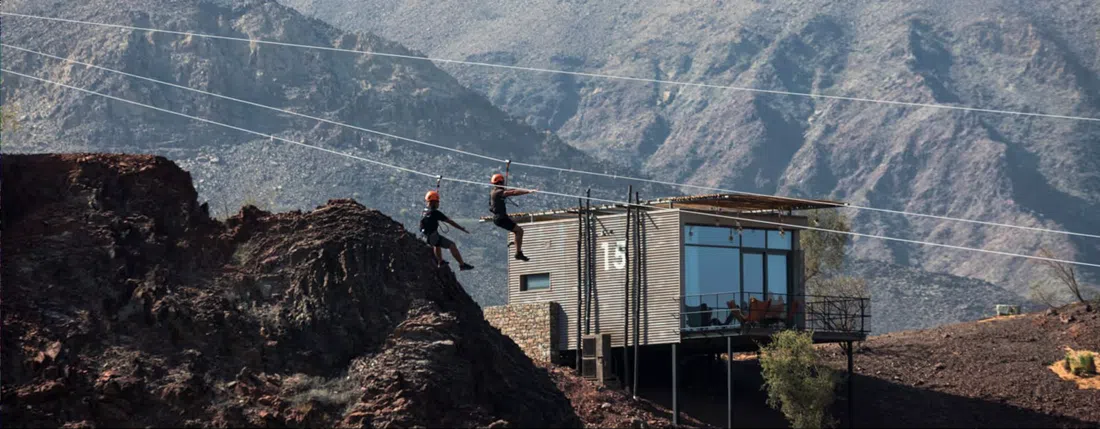
The significant new arrival is Caravan Hatta by Our Habitas (dam road, on the site that used to trade as Hatta Sedr Trailers), the group's UAE debut with Dubai Holding, opening 28 September 2026. Fifty units, communal dining, a pool and an outdoor yoga and sound-healing programme make it viable for a whole-group buyout as well as a couple's two nights, from around AED 1,130 per night including breakfast. Use the new name when you search, because the old one still lingers on booking sites and causes confusion.
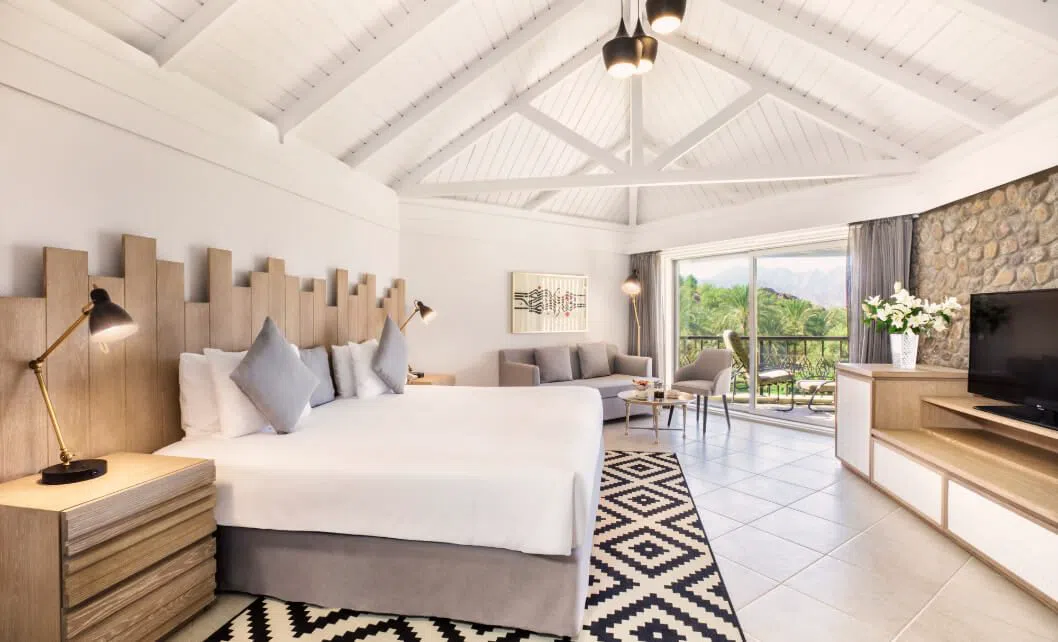
When the glamping is shut, JA Hatta Fort Hotel (on the main approach into the village) is the year-round answer and the enclave's only full-service hotel. Expect roughly AED 600-1,200 per night, with archery, a driving range, two pools and conference space, which is why it has always been the default for corporate and group bookings. A phased refurbishment is under way; the April-May 2026 works are complete and a new wellness centre is part of the plan, so ask which phase is live when you book. For everything closer to the coast, start with a Dubai hotel search and treat Hatta as the night you drive out for.
Practical notes for the drive
Getting there needs a car. There is no useful public transport for the stops above, and the attractions are spread across several kilometres of valley. Take the eastern approach past Al Rafisah Dam rather than the short cut across Omani land, and fill the tank before you leave the city. A 4x4 is not needed for anything described here; it is needed only for the wadi tracks, which is one more reason to let a guided trip handle those.
Bring AED in small notes. Kayak hire, boat rides, barbecue supplies and trail-centre extras are cheap and often cash-first, and mobile signal in the wadis is patchy enough that you should not rely on tapping a phone.
October to early May is the season. The Wadi Hub and the glamping both close June to September, when midday heat makes the outdoor half of the day unreasonable anyway. Wadi pools need winter rain, so January to March is the swimming window. Weekdays are markedly quieter than weekends at the dam and the parks. Leave the city by 07:00, be on the watchtower for sunrise, and you will have done the dam before most people have parked.
A full day is cheap by the emirate's standards: free entry at the dam, Heritage Village, the watchtower, Hill Park and Swan Lake, roughly AED 60 for an unlimited kayak, AED 50-150 for a bike, AED 25-150 per activity at the Hub, AED 50 at the bee garden and AED 40-90 for lunch. Two people can do a rich version of the day for under AED 400 plus fuel. Add a night at AED 700 upwards and it becomes a proper short break. See the wider Dubai guide for how to slot it against the coastal half of the trip.