The Dubai issue
Crossing Dubai by Metro, Abra and Metered Taxi
Six transport systems, one nol card and about AED 60 a day: how to get around Dubai properly without ever renting a car.

By Saskia van DijkDubai's neighbourhoods, sights and slow mornings
Dubai reads, from the flyover, like a city built to be driven. Spend three days here without a key and you find the other city underneath it: a driverless train running the length of the place, a tram looping the Marina, wooden boats crossing the Creek for two dirhams, and metered taxis cheap enough that you stop doing the arithmetic. Going car-free here is mostly a question of knowing which of six systems handles which leg of the day.
The metro carries the spine of any car-free trip

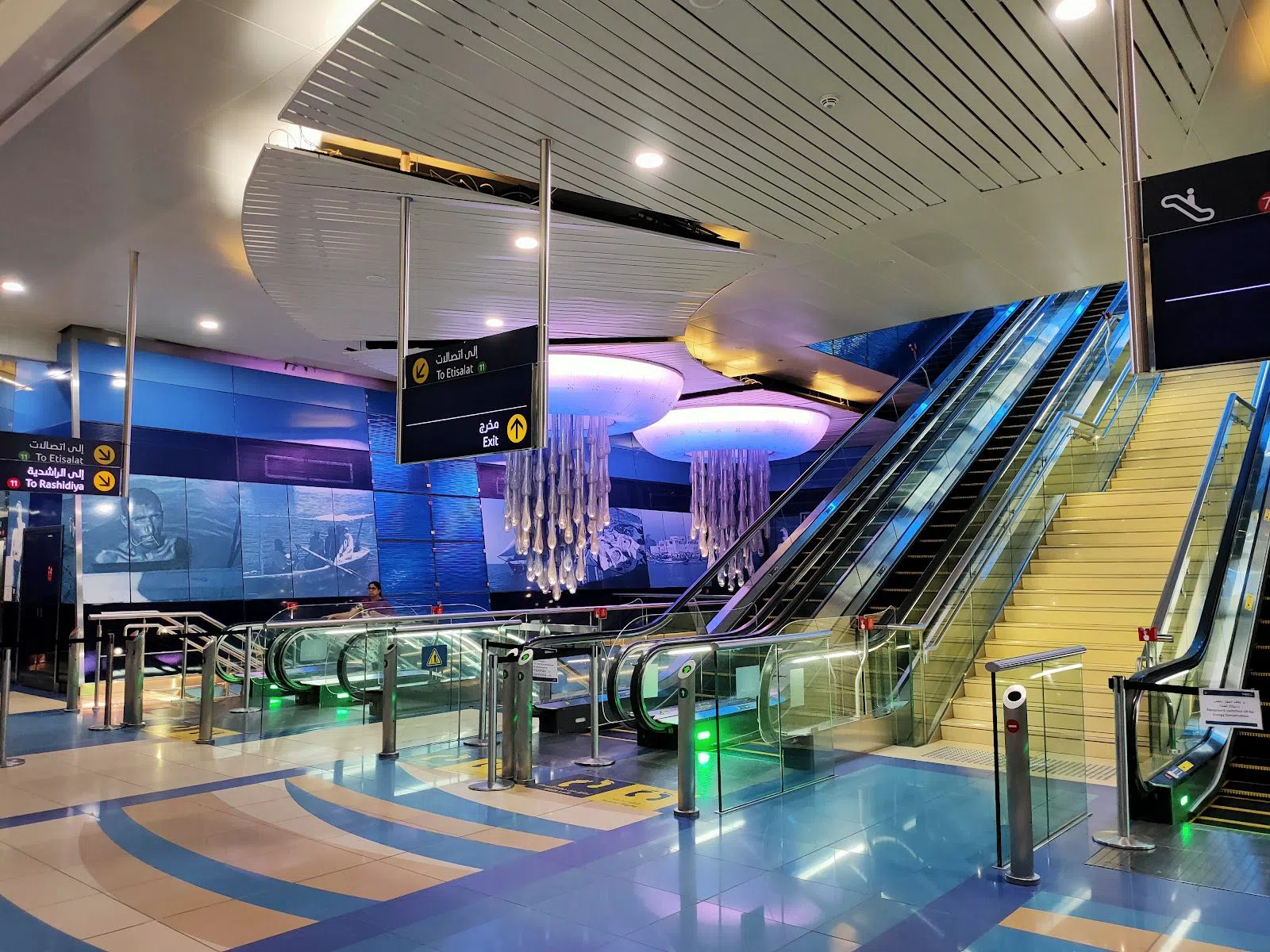
Dubai Metro (Red and Green Lines) runs from the airport at Deira through Downtown and the Marina to Expo City, and it is the one system everything else hangs off. The first section opened at nine minutes past nine on the ninth of September 2009, a piece of showmanship that tells you a good deal about the city, and the trains have been driverless from the start. Sit at the very front and the tunnel and the skyline come straight at you through the windscreen, which is the best free view in Dubai.
The Red Line links DXB Terminals 1 and 3, Deira, Downtown and the Burj Khalifa, the Marina and Expo City. The Green Line loops the older districts either side of the Creek. Trains run roughly 05:00 to midnight most days, to 01:00 on Friday, and start late on Sunday at 08:00. That Sunday start catches people out more than anything else on the network, so plan an early Sunday airport run around a taxi instead.
Fares are AED 3 to 7.50 a journey on a Silver nol card, capped at AED 14 a day. Buy the Silver card at any station for AED 25, which includes AED 19 of credit, and use the same card for the tram, the ferry, the buses and most abra routes. There is no group limit and no booking: six of you tap in and walk on. If you want to stay together and talk, the Gold Class cabin at the front of the train is quieter and worth the small premium. The pink-signed women-and-children cabin is enforced, not decorative, and men who drift into it are fined.
Ignore the Blue Line. It is under construction and appears on plenty of maps that have run ahead of reality; you cannot use it in 2026.
Where you sleep decides how much of this works. A room within walking distance of a Red Line station changes the whole trip, which is worth filtering for when you run a Dubai hotel search. Deira and Bur Dubai for the souks and the water, Downtown for the walk-everywhere convenience, the Marina if you want the tram as well.
Plan your Dubai trip
Live prices from our booking partners.
Free cancellation on many rooms. We may earn a commission when you book.
The tram is the piece that makes a Marina stay work
Dubai Tram covers the eleven stations looping Dubai Marina, JBR, Media City and Al Sufouh, and it interchanges with the Metro Red Line at Dubai Marina and Jumeirah Lakes Towers. It opened in late 2014 with platform screen doors at every stop, which is why it feels less like a tram than a horizontal lift. You wait in a glass box, the doors line up, nobody hangs off the back.
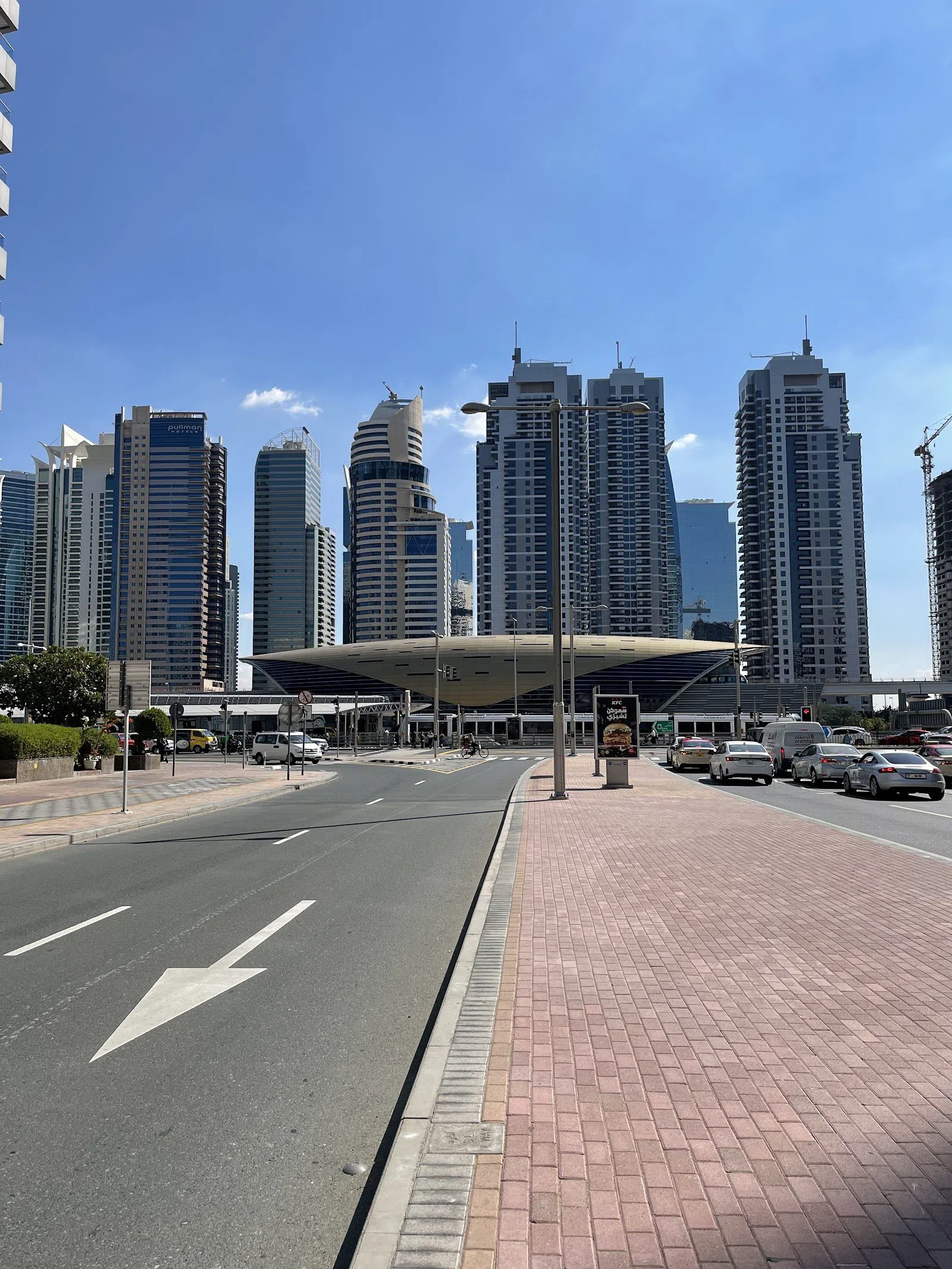
The fare is flat: AED 3 with a Silver nol, AED 4 on a single-journey Red ticket, the same whatever the distance. The cars are wide and low-floor, so groups, suitcases and pushchairs get on without the usual negotiation. It runs 06:00 to 01:00, and again from 09:00 on Sunday.
The speed is worth thinking about honestly. For one or two stops along JBR in the cool months, walking is quicker and more interesting than waiting. The tram earns its place on the longer hops, Marina to Media City or the run up to the Metro interchange with luggage, and on any afternoon when the heat makes a fifteen-minute walk a bad idea.
Two dirhams gets you across the Creek
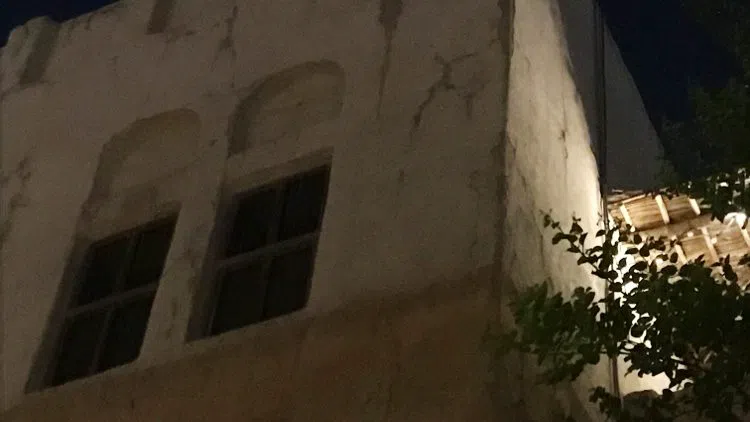
The Creek was the entire town once, pearling money first and then the re-export trade, and everything that mattered happened on one bank or the other. Abra (Dubai Creek crossings) are still how you get between them: flat wooden boats between Bur Dubai and Deira Old Souq, about five minutes, AED 2 a person. Boats seat around twenty and leave when full, so a group of six or eight fills a bench and the boat goes sooner.
I would take the abra even if it were the slow way across, and it is not. It is the sensible way to move between the two souk districts, and the bridges and tunnel are a long detour for a crossing you can make in the time it takes to find your coins. Private hire of a whole boat is straightforward at the stations, from around AED 60 for half an hour, which is fair if you want the Creek at dusk on your own terms. Do not treat it as a photo stop. It is a working ferry that thousands of people use to get to work, and the pictures happen anyway. RTA is gradually replacing the diesel boats with electric ones on the same routes, so the engine noise you get depends on which boat pulls in.
Dubai Ferry is the larger, air-conditioned version, with terminals at Al Ghubaiba, Dubai Canal, Bluewaters, Dubai Marina and Souk Al Marfa. It is a scheduled transport service that happens to be the cheapest sightseeing cruise in the city: AED 25 one way in Silver class on the Al Ghubaiba to Dubai Canal and Canal to Bluewaters and Marina routes, AED 50 on the Marina to Palm and Atlantis run, family packages around AED 140. Pay with nol; children under five travel free. Seats are ticketed, groups are fine, but book ahead in peak season and for the Silver and Gold family packages. Ride this before you spend four times as much on a dinner cruise, and decide afterwards whether you still want one.

The Palm has exactly one train and it comes and goes
Palm Monorail on Palm Jumeirah is the only public transport on the island: 5.5km, about nine minutes end to end, trains every fifteen minutes, roughly 09:00 to 22:00. It opened in 2009 as the first monorail in the Middle East, and the mainland station is a short walk from the tram, which is what stitches the Palm into the rest of the car-free network.

Fares are AED 10 one way, AED 15 return, with family and unlimited passes available. Turn up and ride, no group cap, luggage allowed, which makes it a workable hotel transfer rather than an attraction.
The line was shut for station maintenance from January 2026 and reopened in July 2026, and the operator's own website banner has been slower to catch up than the trains were. Check the app or the operator's Instagram on the morning you plan to use it, and have a taxi fare in mind as the fallback. Treat the monorail as transport to a hotel or to Atlantis, not as a ride worth crossing the city for. The view is of a road and a lot of villas.
Taxis are cheap enough to change the plan
Dubai beats most cities on the fare. Dubai Taxi Company (street-hail taxis) wait at ranks outside every mall, hotel and airport terminal, and you can still raise a hand at the kerb. Flagfall is AED 5 by day and AED 5.50 at night, the meter runs at about AED 2.19 a kilometre, and the minimum fare is AED 12, with Salik road tolls added and a surcharge on DXB pickups. Cards are accepted, the meter is never broken, and haggling is not a thing here; if a driver suggests otherwise, that is the moment to get out. Standard cars take four passengers; seven-seat family taxis and pink-roofed taxis with women drivers exist and can be requested at ranks or by phone.
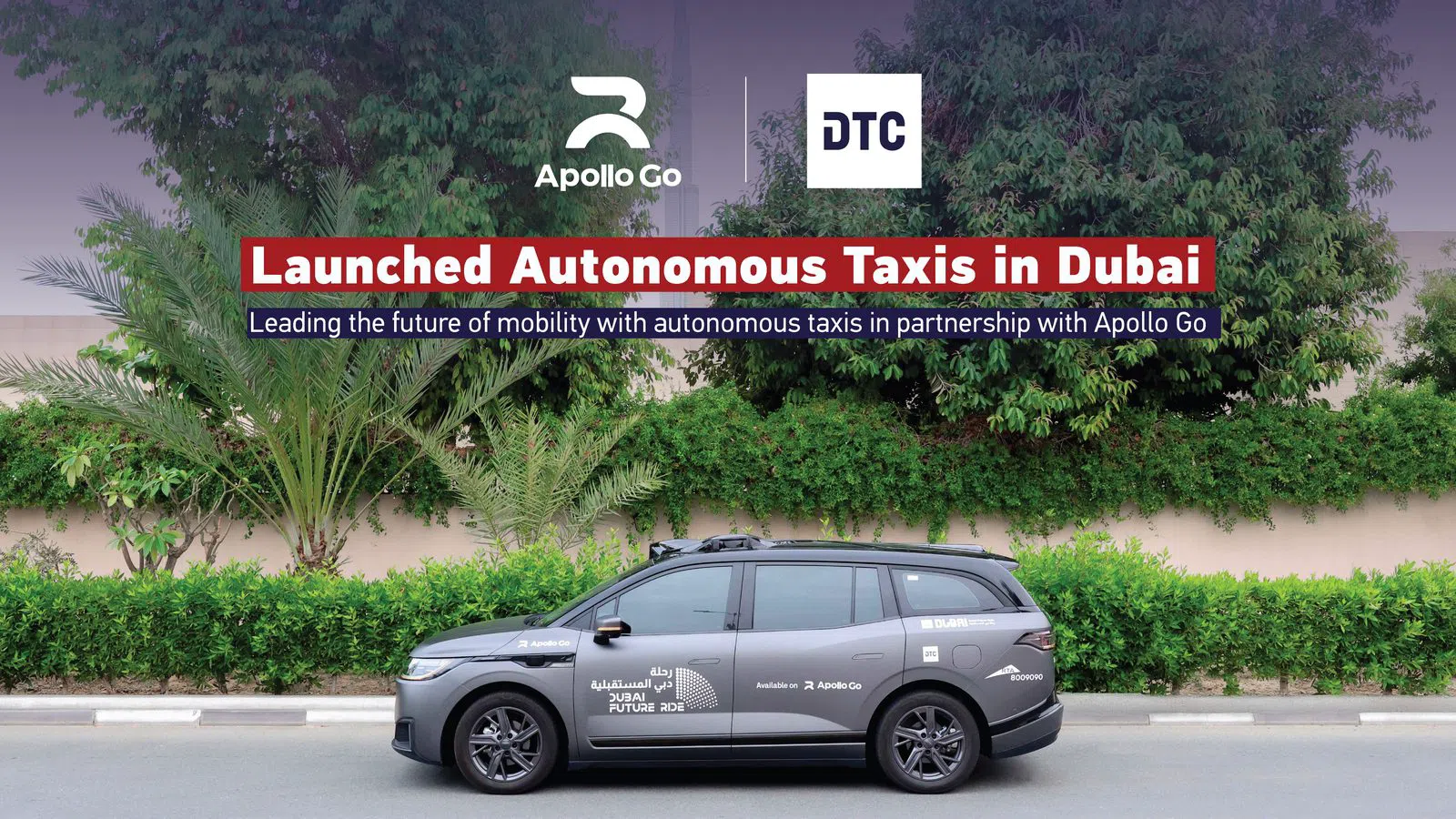

Hala (in the Careem app) is the same licensed fleet in an app, the RTA and Careem joint venture that dispatches around 13,000 mostly hybrid taxis. You pay the regulated meter plus a booking fee of roughly AED 4 off-peak to AED 7.50 at peak, minimum around AED 13, which normally makes it the cheapest app ride in the city and much the easiest if you have no Arabic and a vague idea of where you are going. Standard cars seat four; the larger Hala vehicles and Careem vans handle six.

Uber works exactly as it does everywhere, with the price agreed before you get in. UberX takes four, UberXL and the van tiers take six, and a cross-town hop typically runs AED 20 to 60, more at peak and from the airport. Keep it for the trips the rail network cannot do: the cycling loop at Al Qudra, the desert road, a late return from the Palm after the monorail has stopped.
Bolt arrived in the UAE at the end of 2024 and now carries Dubai Taxi Company cars alongside its own, so the coverage is real rather than theoretical. It usually comes in a little under Uber for the same trip, with short city runs from around AED 15 to 20. On a ten-minute hop the saving is a few dirhams. Worth having installed, not worth waiting for.
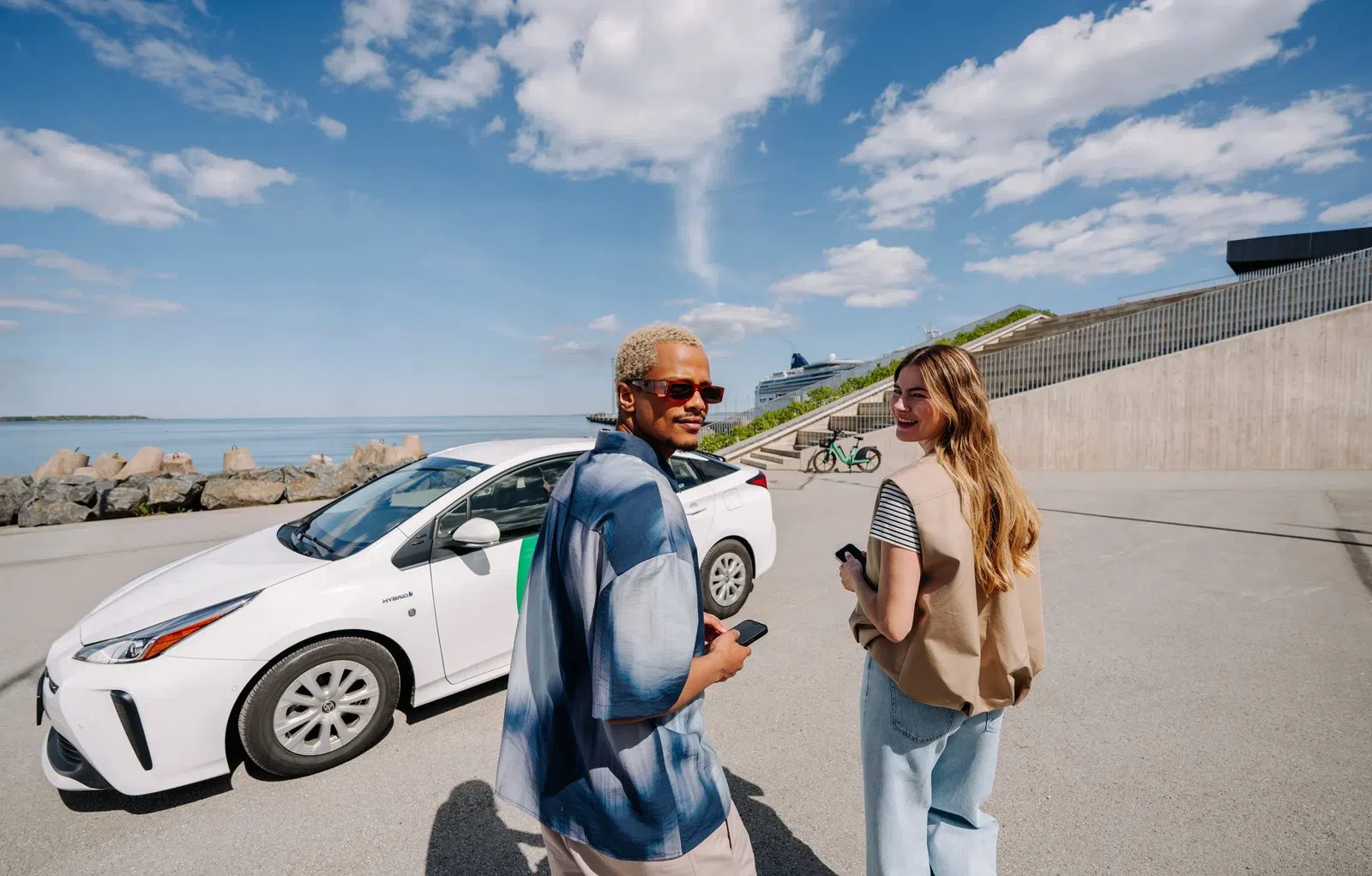
Apollo Go is the driverless option, working around Jumeirah and Umm Suqeim. The commercial service started in March 2026 and went fully public on the Uber platform in August, priced like a normal UberX. Four seats, no driver to talk to, and not the car for large luggage or a group. The service zone is small, so it will not always be offered. Take it if it appears and you are curious, but do not build a morning around it.
Bikes and scooters, and the months they actually work
Careem Bike covers Jumeirah, the Marina, the Dubai Water Canal, Deira and Al Qudra with roughly 1,750 bikes across more than 175 docking stations, running twenty-four hours. Pay-as-you-go suits visitors; a day pass is around AED 20 to 29 and a month AED 70, with a 45-minute ride limit and AED 10 per extra half hour after that. Docks hold enough bikes for a group to take one each, though the popular stations empty out at sunset when everyone else has the same idea.

The season decides this one. From November to March the canal path and the Jumeirah seafront are one of the best things you can do here on two wheels. In midsummer, a midday ride is punishing and slightly stupid; go at dawn or not at all.
Lime is the most familiar of the four RTA-approved e-scooter operators, alongside Tier, Arnab and Skurrt. It costs about AED 3 to unlock plus AED 1 a minute. The rules matter more than the price: one rider per scooter with no passengers, helmets required, riding permitted only in 21 designated zones, and a free RTA e-scooter permit needed unless you hold a valid driving licence. It suits a group of individuals covering a flat kilometre or two; it is useless if anyone is carrying anything.

The one sightseeing bus that earns its fare as transport
Big Bus Dubai is worth considering purely for the links the rail network does not make directly. The Red route strings together Al Fahidi (the wind-tower houses there, built by merchant families, are the oldest surviving quarter of the city) with the souks, Dubai Frame and Dubai Mall; the Blue route joins the Marina, Atlantis and Souk Madinat. Buses run daily, roughly 09:00 to 17:00, every forty minutes. Tickets are sold per person with no group cap, group and family rates exist, and pushchairs are fine.

A 24-hour Classic ticket is around AED 200 to 255 and 48-hour or combo tickets start near AED 320, which is a lot of money next to a AED 14 metro cap. Buy it only if you are going to do that specific chain of stops in one day. Otherwise the metro, a taxi or two and an abra will cover the same ground for a tenth of the price.
Practical notes
Buy a Silver nol at any metro station on arrival, AED 25 with AED 19 of credit, and top it up at the machines. It covers metro, tram, ferry, buses and most abra routes, and the AED 14 daily cap makes a heavy rail day almost free.
Carry a small amount of coins and small notes for the abra, which is the one part of the network where cash is still the simplest answer. Taxis, apps, ferry tickets and bike passes all take cards.
Rail starts at 05:00 on most days but only 08:00 on Sunday, and the tram at 09:00 on Sunday, so early Sunday departures mean a taxi. The monorail keeps shorter hours than everything else, roughly 09:00 to 22:00, and its status has changed twice this year, so check on the day. From May to September, plan outdoor legs for before nine in the morning or after sunset and let the metro and taxis carry the middle of the day.
A realistic car-free day looks like AED 14 on rail, AED 4 on two abra crossings and AED 30 to 40 on one taxi to somewhere the trains do not reach: under AED 60, comfortably less than parking and fuel would cost you. Add the ferry on one afternoon at AED 25 and you have your sightseeing cruise as well.
Rail, tram, ferry and abra take groups without arrangement. Taxis are the constraint: four to a standard car, so book Hala's larger vehicles, an UberXL or a seven-seat family taxi in advance if there are six of you with bags. Couples have the easiest time of it, and the Gold Class cabin and a AED 60 private abra are the two small indulgences actually worth paying for.
For where to stay, eat and spend the days between all this movement, see the wider Dubai guide.
Before you go
Do I really need to rent a car in Dubai?
No. The Metro Red Line covers the airport, Deira, Downtown, the Marina and Expo City, the tram fills in the Marina and JBR, abras and ferries handle the water, and metered taxis are cheap enough for everything else. A car is only worth it for desert trips or the outlying mountain roads.
What is the cheapest way to get from DXB to my hotel?
The Metro Red Line serves Terminals 1 and 3 directly and costs AED 3 to 7.50 on a Silver nol card. It is much the cheapest option, but it does not run before 05:00, only from 08:00 on Sunday, and closes around midnight. Outside those hours take a taxi or Hala, and expect a surcharge on DXB pickups.
Do I need cash, or is everything card and app based?
Almost everything takes cards: taxis, ride-hailing apps, ferry tickets, bike passes and nol top-up machines. The exception is the abra at AED 2 a crossing, where small notes and coins work best. Buy a Silver nol card at any metro station for AED 25, including AED 19 of credit, and use it across metro, tram, ferry and buses.
Is the Palm Monorail running in 2026?
Yes. It was shut for station maintenance from January 2026 and reopened in July 2026, but the operator's own website banner has lagged behind the actual service. Check the app or the operator's Instagram on the morning you plan to travel, and keep taxi fare in reserve.
How do I get around with a group of six and luggage?
Rail, tram, ferry and abra take groups with no booking. You tap in, and an abra bench seats about twenty. Taxis are the constraint: a standard car takes four, so pre-book a seven-seat family taxi, one of Hala's larger vehicles or an UberXL. The tram's low-floor cars are the easiest for suitcases and pushchairs.