In this area
Al Fahidi & Deira
Sheraton Dubai Creek Hotel & Towers
9.2· 120 reviews
approx. from£95 / nightSee prices
The Dubai issue
From one-dirham abras to gold souks and wind-tower courtyards, Al Fahidi and Deira are Dubai’s most walkable, working old-town pair.
By Aisha RahmanDeira gold souk to Alserkal studios
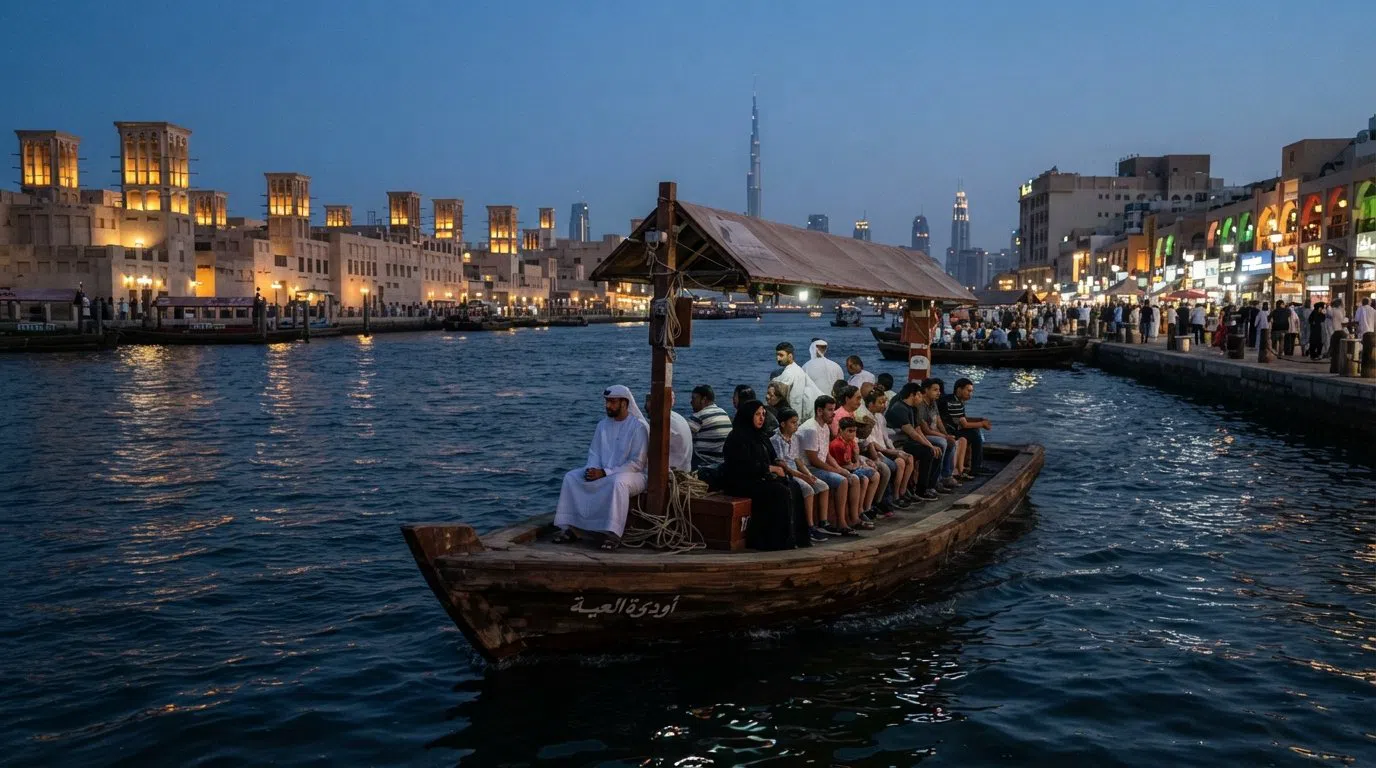
For one dirham, the city changes banks. At the Bur Dubai abra station, you can step onto a wooden boat, share a bench with commuters and shopping bags, and cross Dubai Creek in about five minutes to the Deira souks. It is the simplest transaction in Dubai and, in some ways, the most revealing: no velvet rope, no reservation, no lobby polish, just water, heat, voices and the old commercial pulse of the city still doing what it has always done.
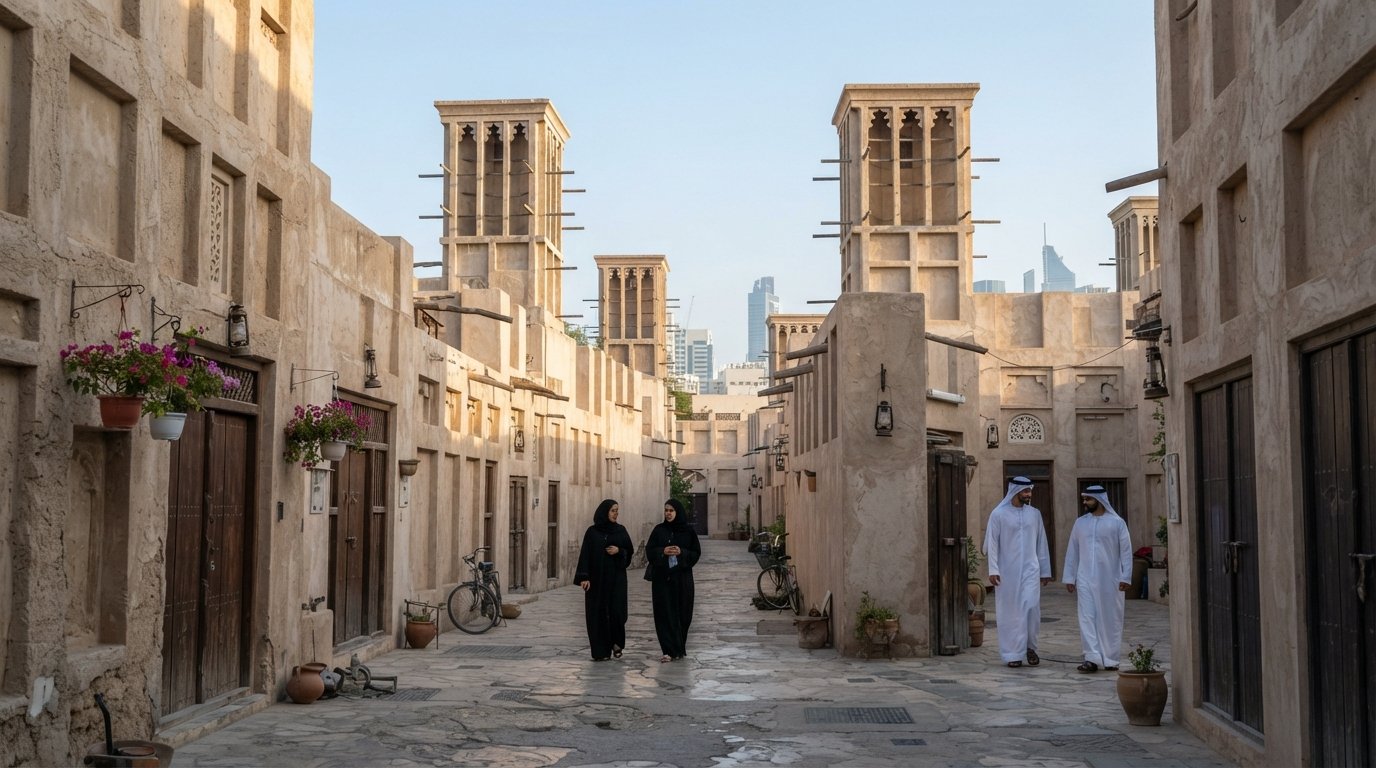
Al Fahidi and Deira are the two halves of old Dubai, and the Creek is not a scenic divider so much as a working seam. On the Bur Dubai side, Al Fahidi Historical Neighbourhood — still called Bastakiya by many — is the city’s best-preserved pocket of traditional architecture: mud-brick walls, coral-lime and gypsum houses, and the barjeel wind towers that once pulled air through the rooms before anyone spoke in the language of central air. The lanes are narrow enough to make you slow down. They are shaded, sand-coloured, and built for human scale, not spectacle.
Across the Creek, Deira is louder, denser and more transactional, and that is exactly why it matters. This was the trading heart of the city for a century, and it still feels like a place where goods arrive, are priced, argued over, carried, wrapped and sold. The Gold Souk glitters under fluorescent light. The Spice Souk throws out the smell of cinnamon, dried lime and frankincense. Porters wheel handcarts through crowds of shoppers, traders and touts calling out “best price, my friend,” and the whole district hums in a dozen languages at once.
This is not a polished heritage set piece. It is working Dubai, still heavily South Asian, Iranian and Emirati, mostly dry, and best met in the cooler hours when the lanes feel alive rather than punishing. The soundscape is as important as the architecture: the muezzin, outboard motors on the Creek, the scrape of cart wheels, bargaining, greetings, the clink of metal, the rustle of spice bags. If you come here wanting a theme park version of the past, you will miss the point. The point is that the past is still earning a living.
One honest note for 2026: the Dubai Museum inside Al Fahidi Fort, the city’s oldest building, has been closed for a multi-year restoration and is expected to reopen in the first half of 2026 with new galleries. Check before you plan around it. In the meantime, the free and open star of the quarter is the Coffee Museum, which feels more intimate anyway.
Live prices from our booking partners.
Free cancellation on many rooms. We may earn a commission when you book.
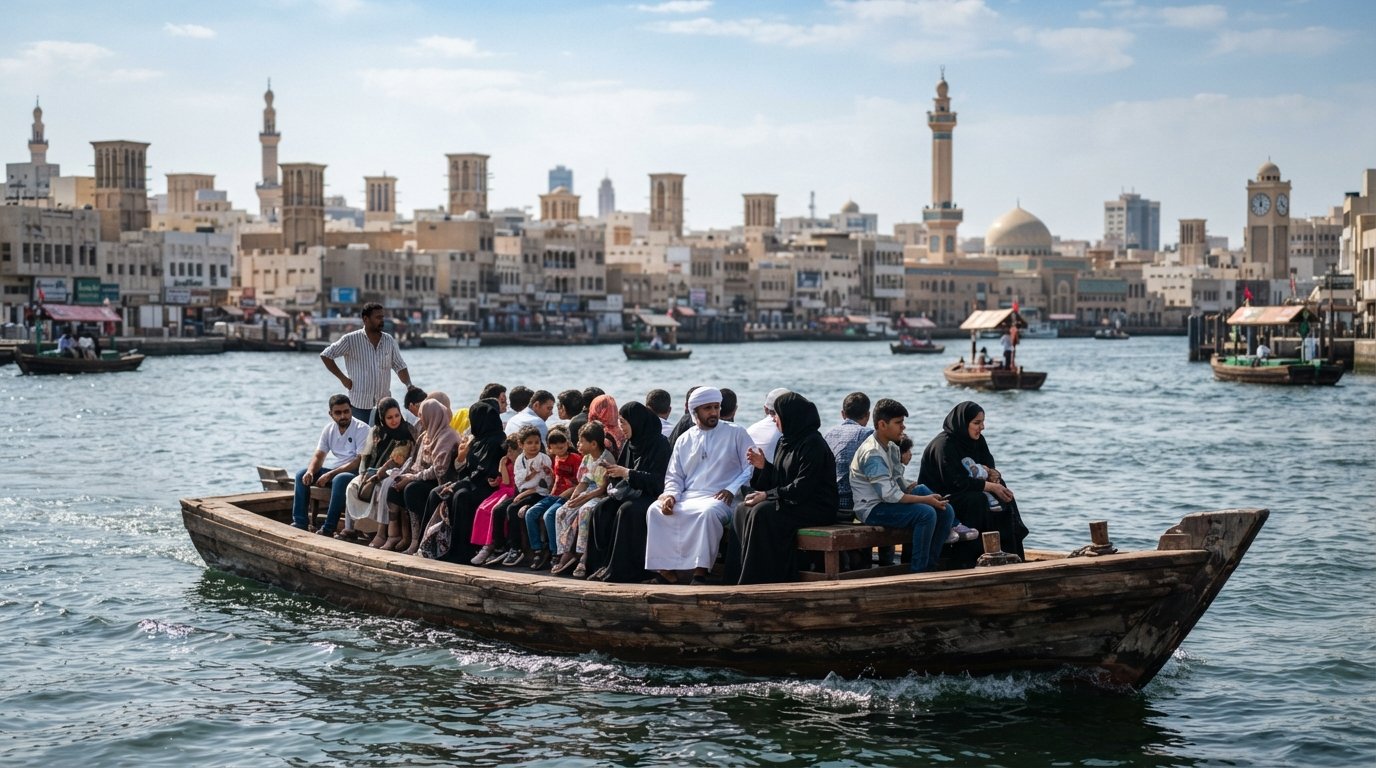
The essential thing to do here costs one dirham and takes about five minutes: the abra crossing between Bur Dubai and Deira Old Souk stations. It is one of those small civic rituals that never feels designed for visitors, which is precisely why it stays memorable. You board a wooden boat, sit shoulder to shoulder with people carrying groceries, office bags and market parcels, and let the Creek do the rest.
On the Al Fahidi side, the pleasure is in wandering without a plan. The historical neighbourhood is a grid of sikkas and restored merchant houses, and the Coffee Museum is the place to pause when the heat starts to press. It is a free wind-tower house museum, open Sat–Thu roughly 9am–5pm, with two floors of antique roasters, live brewing and a courtyard cup of charcoal-brewed qahwa. You do not need to be a coffee obsessive to enjoy it; the building itself does half the work, and the smell of roasting beans does the rest.
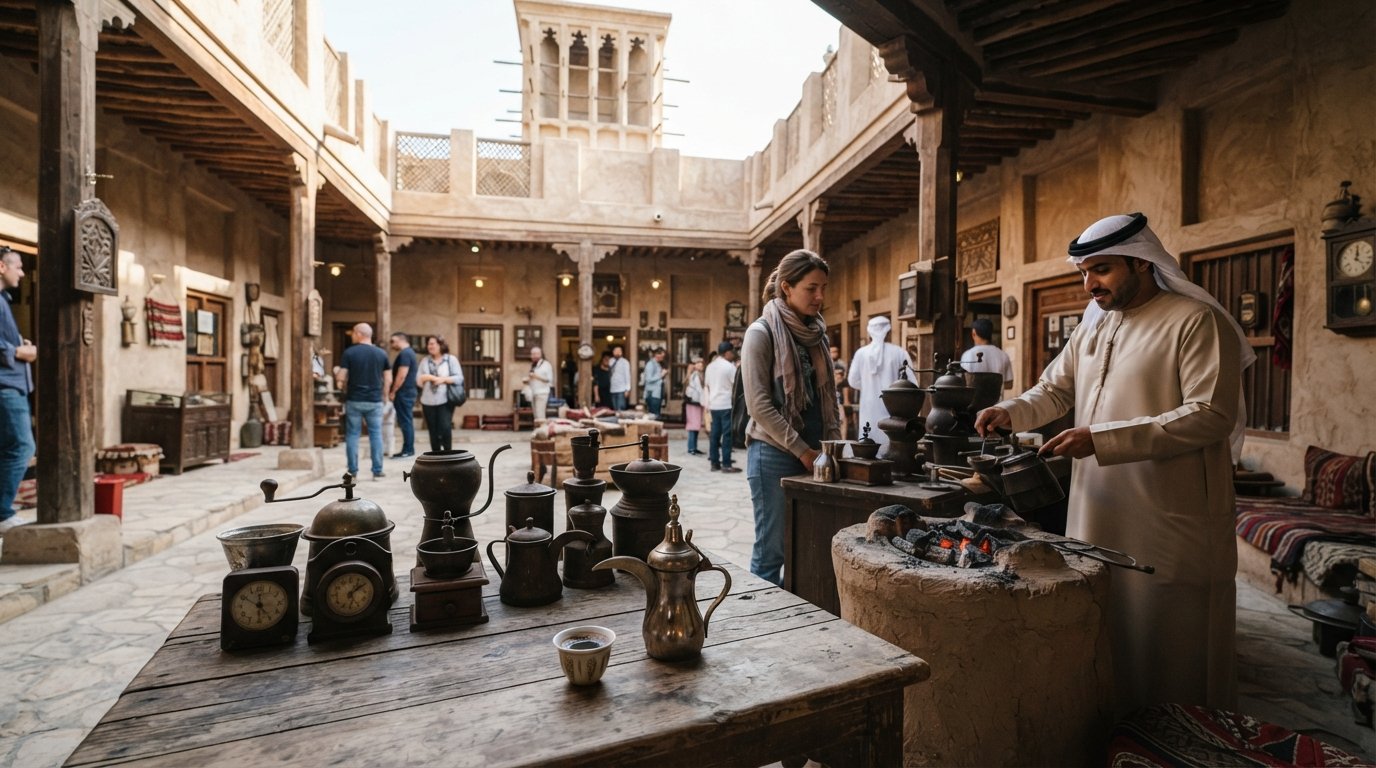
For something more interpretive, the Sheikh Mohammed Centre for Cultural Understanding is one of the most useful addresses in the district. Housed in a restored Al Fahidi wind-tower house, it offers Emirati cultural meals and heritage tours, and the tone is exactly as open as its motto promises: “open doors, open minds.” This is where you ask the questions people are often too shy to ask elsewhere — about customs, faith, daily life, food, family, dress — and get answers at a communal table rather than a lecture podium.
When you want a wider walk, continue east along the Creek to Al Seef. Built in 2017, its 1.8km promenade is heritage-styled rather than genuinely old, but it makes a pleasant evening stretch with shops, cafes and abra docks, especially after sundown when the heat loosens its grip and the water starts reflecting the lights.
Al Fahidi Historical Neighbourhood wind-tower architecture
Gold and Spice Souks
Traditional Abra boat crossing
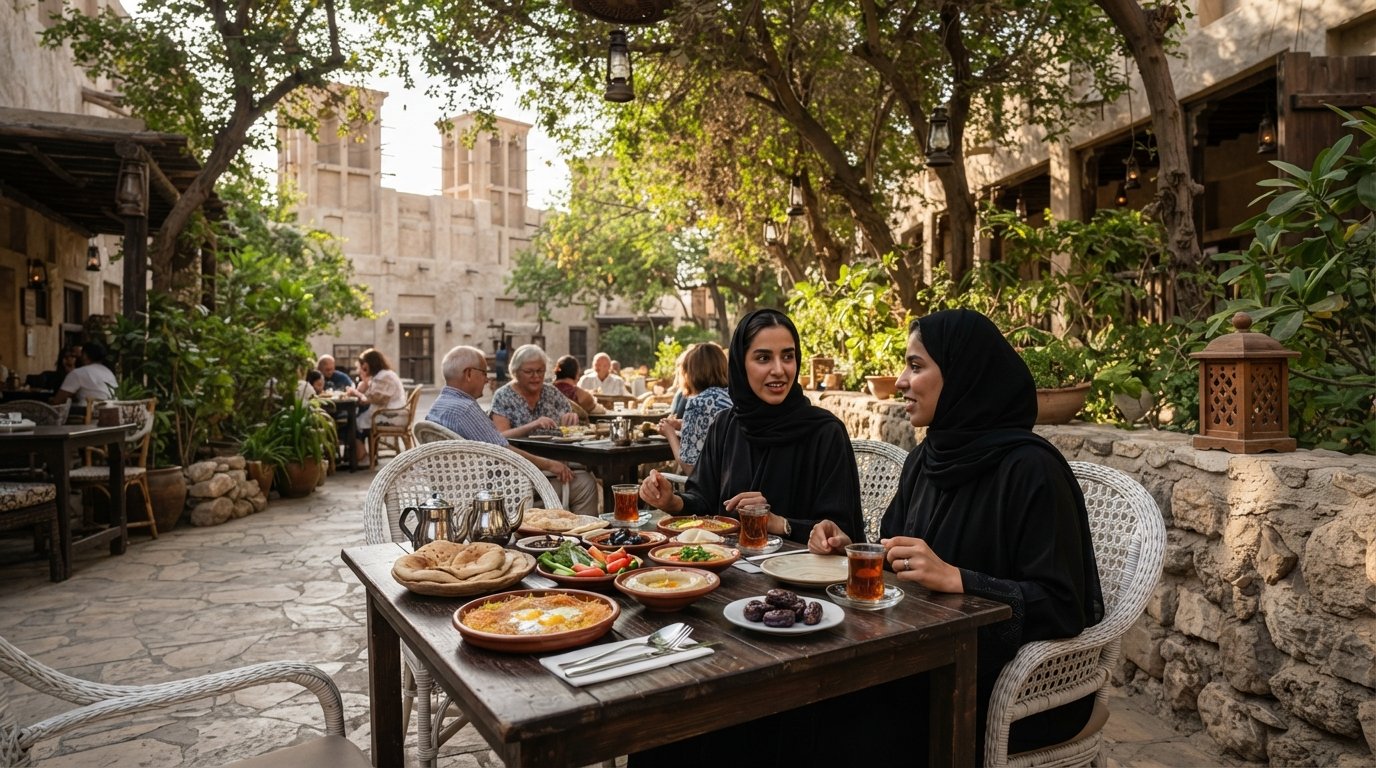
Old Dubai is where you remember that a good breakfast does not need a reservation, a linen napkin or a stage set. It needs tea, bread, eggs, a courtyard and a little shade. The Arabian Tea House on Al Fahidi Street has been doing this since 1997, and it knows exactly what it is: a courtyard institution under an old tree, with white rattan chairs and billowing drapes that soften the midday glare. Order the Special Emirati Breakfast Tray, around AED 87, and you get a spread that feels both generous and carefully assembled: balaleet, cheeses, beans, dango, warm chebab and khameer breads. The spiced karak tea is the thing to order, full stop.
A short walk away, Al Khayma Heritage Restaurant gives that same old-Dubai warmth a more formal frame. It earned a 2025 Michelin Bib Gourmand for rustic Emirati cooking served in a covered heritage courtyard, and the menu leans into dishes meant for sharing: lamb machboos, luqaimat for dessert, and a full meal for two that can land near AED 150. It is the sort of place where the room itself feels like part of the cooking, with the courtyard shade doing as much as the kitchen.
XVA Café is the quieter, more vegetarian answer, hidden in the courtyard of XVA Art Hotel and descended from the 1997 Basta Arts Café. The plates are Middle Eastern and meat-free, and the setting matters: tucked away, shaded, slightly removed from the busy street rhythm outside. In a district full of motion, it offers a pause.
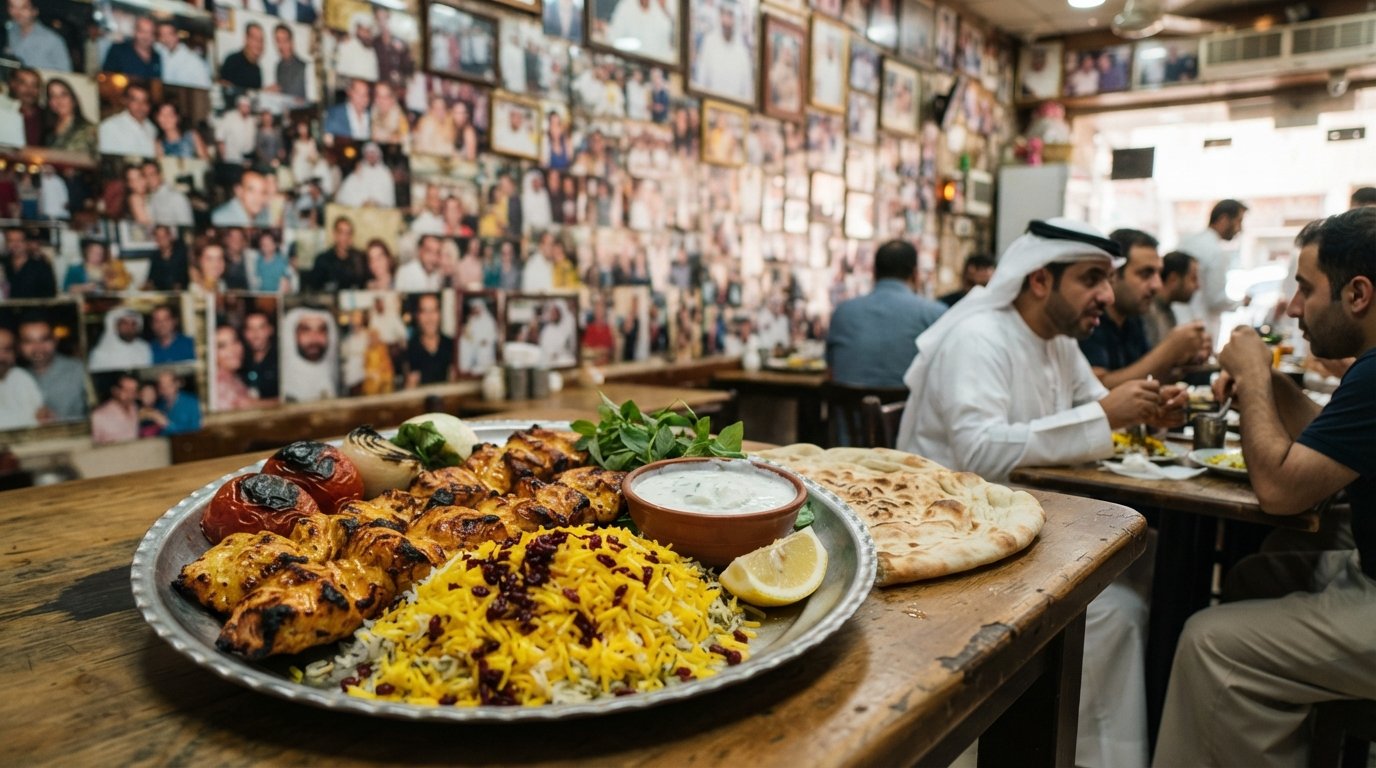
For the single best-value meal in the wider area, it is worth crossing beyond the immediate quarter to Bur Dubai’s Mankhool and Al Ustad Special Kabab, Dubai’s oldest Iranian eatery, open since 1978. The room is papered with thousands of photos, the kebabs are yoghurt-marinated chicken and mutton over saffron rice, and the signature plate is still under AED 40. That number matters here. It tells you what kind of city this still is, if you know where to eat.
Old Dubai is overwhelmingly dry, so this is a place for food, tea and conversation rather than cocktails. That restraint is part of the character. You come here to taste the city’s older habits, not its imported nightlife.
Deira remains the reason people still call this the trading heart of Dubai. The Gold Souk, off Sikkat Al Khail Street, is a covered maze of jewellers where the prices track the live gold rate and the making charge is where the negotiation happens. Bargaining is expected. So haggle hard, and never take the first number. The effect is not just commercial; it is theatrical, with glass cases catching the light and the metal itself making the whole lane glow.
A couple of minutes on, the Spice Souk narrows into stacked lanes of saffron, dried limes, frankincense, teas and rose petals. It is cheaper and less pushy than the gold lanes, though the same rule applies: compare, ask, bargain, and do not be rushed. Nearby, the Perfume Souk on Sikkat Al Khail is a wall of oud, attar oils and bakhoor, and the vendors will happily mix a custom scent. Alcohol-free attars run roughly AED 50–200, which makes it one of the more approachable luxuries in the district.
For food theatre, the Deira Waterfront Market on the Corniche is Dubai’s biggest fresh market, with hundreds of stalls of fish, meat and produce, and the option to buy your catch and have it cooked. It is a market in the old sense: practical, busy, noisy and rooted in the city’s appetite rather than its image.
Back across the Creek, the Textile Souk — the Old Souk in Bur Dubai beside Al Fahidi — is the place for pashminas, fabrics and souvenirs under a restored wooden arcade. It is the sort of market where the merchandise matters less than the atmosphere of looking, touching, asking and bargaining under timber beams that have seen many versions of Dubai pass beneath them.
Most souks run roughly 10am–10pm, with a Friday-prayer lull. That timing is useful, but the real advice is simpler: come early or late, and let the crowds be part of the story rather than an obstacle to it.
Staying in old Dubai means accepting less gloss and more character, which is usually the better bargain. In Al Fahidi itself, the XVA Art Hotel is the most atmospheric base: a restored wind-tower house with just 15 individually designed rooms, three courtyards and an on-site gallery. It is quiet, arty and steps from the sikkas, which is exactly the point.
On the Creek at the neighbouring heritage district, the Al Seef Heritage Hotel Dubai, Curio Collection by Hilton spreads across restored-style bayt townhouses with creek-facing rooms and easy abra access to the souks. It gives you the old-town feeling with a little more hotel structure, and the location makes moving between banks simple.
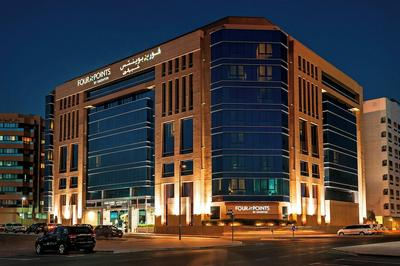
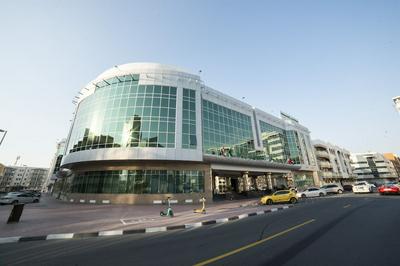
Deira proper leans more practical, with well-priced mid-range and business hotels handy for the Gold Souk and the metro rather than boutique charm. That is not a flaw so much as a category. If your plan is to spend your days in the souks, on the abra and in the old lanes, a polished resort pool would mostly be a distraction anyway.
Wherever you land, you are likely to be near the abra and the Green Line, which means the whole old town — and a quick run to Downtown — stays within easy reach.
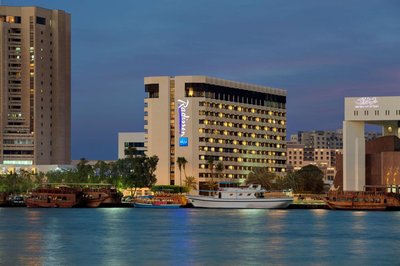
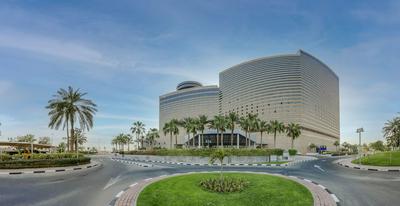
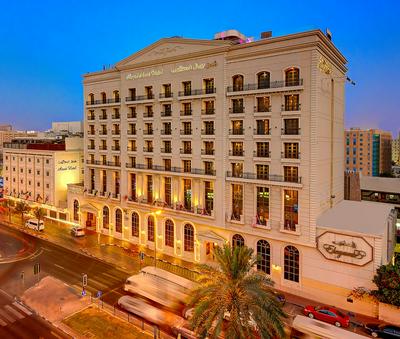
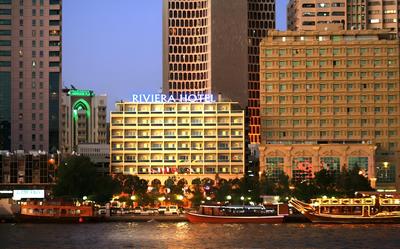
Our best-rated stays in this neighbourhood. Prices are approximate “from” rates — confirmed at the provider when you continue. We may earn a commission if you book through our partners — at no extra cost to you.
The Green Line is your best friend here. Use Al Fahidi and Al Ghubaiba stations for the Bur Dubai heritage quarter, and Al Ras or Baniyas Square for the Deira souks. Al Ras is a short walk from the Gold and Spice souks, which means you can arrive by Metro and still feel as though you have stepped into the old trading city rather than a transport node.
The signature link between the two districts is the abra across the Creek. It costs AED 1, takes roughly five minutes, runs from early morning to around midnight and works as close to door-to-door transport as this city gets between Al Fahidi and the Deira souk lanes. It is cheap enough to repeat, which is useful because the crossing changes character with the light: brisk and practical by day, almost cinematic at dusk.
The old town is genuinely walkable once you are in it, though the souk streets are narrow and cars crawl, so taxis and the abra are usually better than driving. Downtown Dubai and the Burj Khalifa are about 10–15 minutes by taxi or a short Metro hop, and Dubai International Airport is only about 15–20 minutes away, one of the shortest airport runs in the city.
That ease is part of the area’s appeal. Al Fahidi and Deira are not remote heritage enclaves. They are old Dubai still plugged into the present, still connected, still working, still cheap enough in moments to surprise you. And if you time it right — early morning, late afternoon, after dark — they reward you with something increasingly rare in this city: a neighbourhood that feels like a neighbourhood, not a performance.
Gallery
Yes — if you want old, characterful Dubai rather than beach resorts and glass towers. You’ll have heritage stays like XVA Art Hotel or the Al Seef Heritage Hotel, souks and cheap authentic food close by, plus one of the shortest airport transfers in the city. It’s less suitable if you want nightlife, resort pools or the beach on the doorstep.
The traditional wooden abra between Bur Dubai and Deira Old Souk stations costs AED 1 per person each way, paid to the driver as you board. Air-conditioned and petrol abras cost AED 2, and a private one-hour charter is around AED 120. It’s widely considered one of the best-value experiences in Dubai.
As of early 2026, the Dubai Museum inside Al Fahidi Fort is closed for a major multi-year restoration and is expected to reopen in the first half of 2026 with new galleries. Check the latest before you go; meanwhile the Coffee Museum, the SMCCU and the heritage lanes are open.
Gold, spices, perfumes and textiles are the classics. The Gold Souk is where you bargain on the making charge, the Spice Souk is good for saffron, loomi and frankincense, the Perfume Souk sells oud and attars, and the Textile Souk is the place for fabrics and pashminas.