
By nine in the evening, when the heat finally loosens its grip, Dubai's desert stops posing for the daytime crowd and gets on with what it has done for centuries after sunset: cool fast, go dark, and reward whoever bothered to still be out there. Most day-trippers miss this shift entirely, bused back to the Marina before the first star shows. The dune-running season (loosely October through April, when night temperatures drop enough that both drivers and camels stop suffering for it) is when the edge of the Empty Quarter actually earns its reputation, and when the desert's oldest inhabitants, the Bedouin who worked this land long before any of it had a road, would have recognised the cool hours as the only sane time to move through it.
Where the dune-bashing is the point
For readers who came for the g-forces rather than the ambience, three operators do the actual driving-over-sand part properly, and they are not interchangeable.
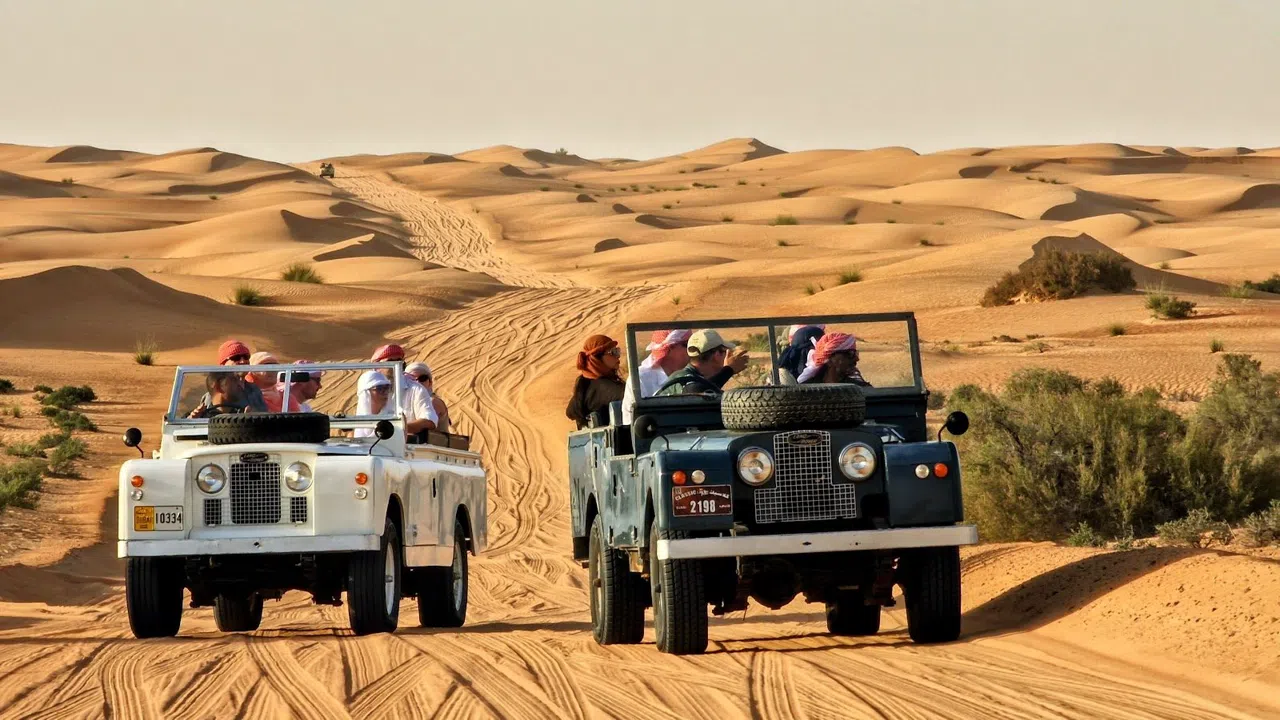
Platinum Heritage [Dubai Desert Conservation Reserve] is the one to book if the desert itself matters as much as the thrill of crossing it. It's among the small handful of operators licensed to drive inside the protected DDCR after dark, and it does so in vintage Land Rovers rather than the rental-fleet Land Cruisers everyone else uses, a detail that changes the whole feel of a night drive, engine note included. The vehicles seat three or four, so anything larger than a couple or a small family runs as a fleet convoy rather than a single bus, and private bookings and small groups are the sweet spot; event-season dates fill early, so book ahead rather than on arrival. Heritage Collection trips run from roughly AED 500-600 per person, the fuller Platinum Collection from AED 1,000-plus. Guides fold the DDCR's own history into the drive: it was established in 2003 as the country's first protected desert area, precisely because unregulated dune-bashing was tearing up the fragile grasses that hold the sand together.
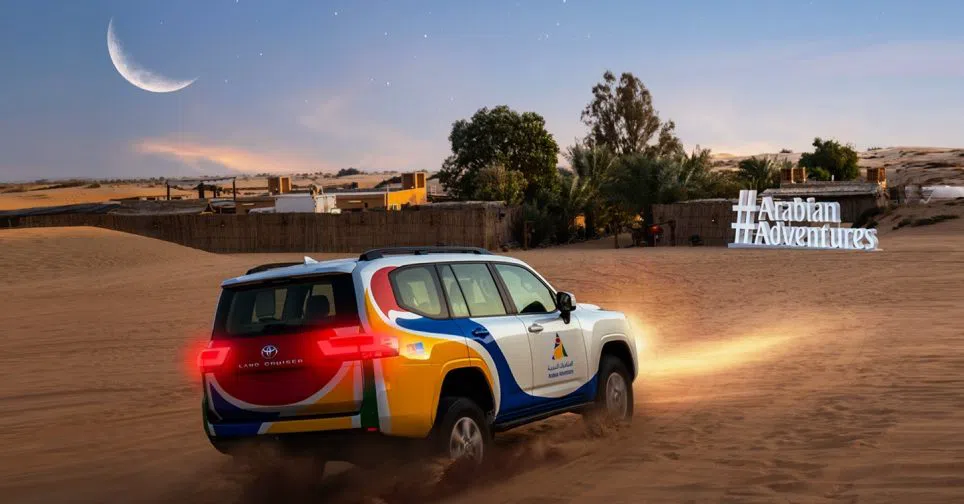
Arabian Adventures [desert camps around Al Lahbab, roughly 45 minutes from Downtown] sits at the opposite end of the same activity, built for volume rather than intimacy. It's the Emirates-Group-backed operator that shows up as a one-click add-on when booking flights, and it exists to guarantee capacity (coach-sized groups, corporate buyouts, and a bigger production once you're at camp) from around AED 649 per person. It's the sensible pick for a work trip's group dinner or a family that wants everything handled in one booking, and a poor one for anyone hoping the desert will feel empty around them.
Expert Rangers sits between those two as the mid-market answer, a standard shared-coach evening safari, long-running and reliably priced, without quite matching Platinum Heritage's polish or Arabian Adventures' scale. Rates aren't published outright; it's a contact-for-a-quote operation, though private and group buyouts are available on request. For a reader whose budget is the deciding factor, and who just wants a competent bash, a barbecue, and a camel photo without paying luxury rates, this is the name to have on the shortlist.
Driving it yourself
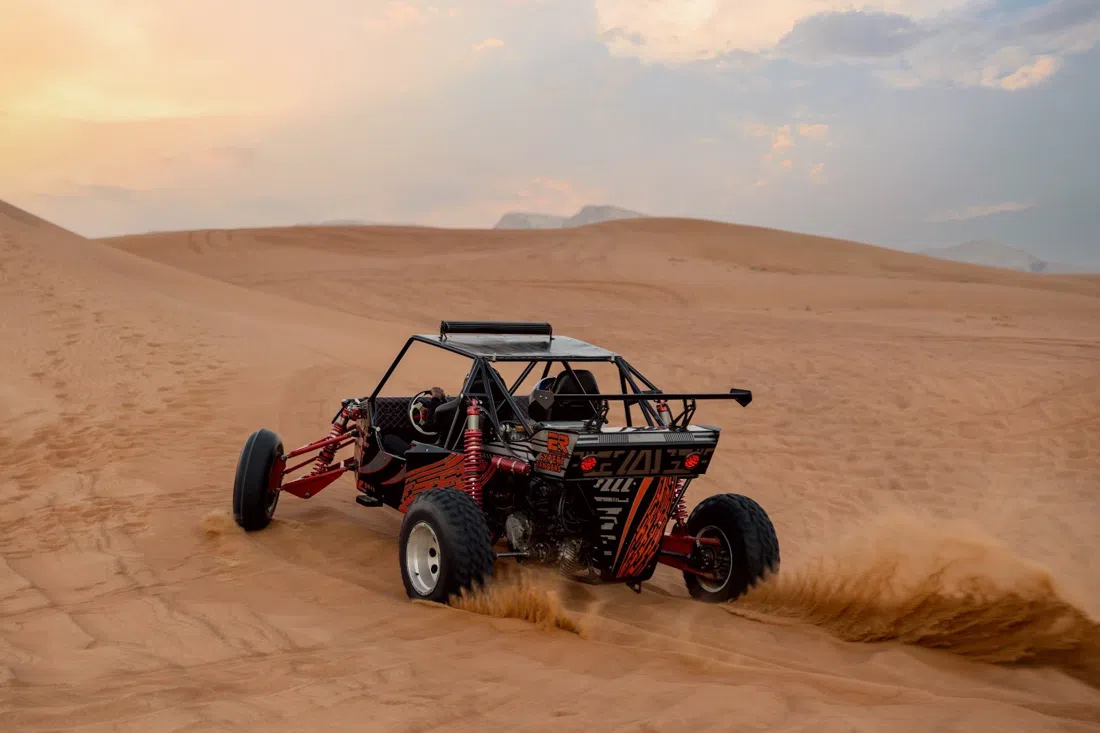
Every operator above puts a driver behind the wheel. Desert Buggy Rental [desert tracks around Al Lahbab] hands the wheel to the guest instead. DTCM-licensed since 2020, it runs shared waves of up to eight guests as well as private and multi-vehicle group or corporate bookings, with rates from AED 600 for a 30-minute shared session up to AED 5,200 for a two-hour premium four-seater. This is the choice for readers who'd rather do the driving than be driven (no chauffeur required, though a valid licence and a signed waiver are), and it suits confident, capable adults far better than families with small children. It's worth booking a late-afternoon slot that runs into dusk rather than a midday one, if the point is to be out there as the light and the temperature both change.

Dinner in the dunes
Two venues treat the evening as a full production rather than a means to a dune-bash, and they sit at different registers of the same idea.
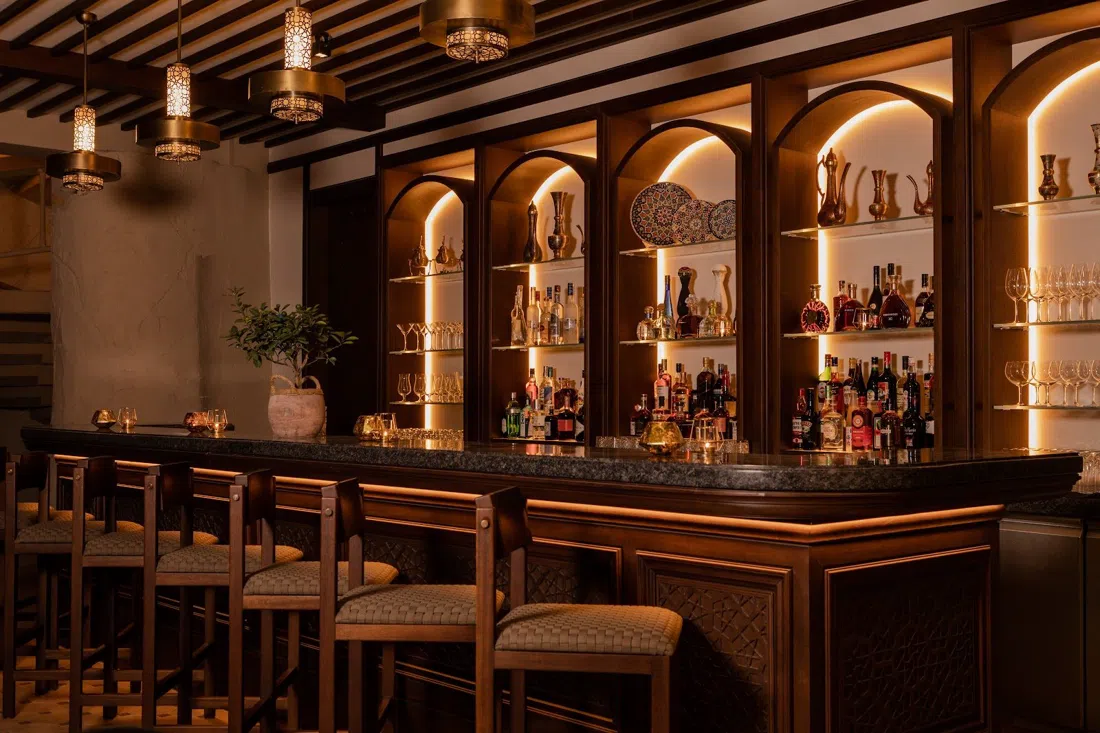
Al Hadheerah at Bab Al Shams [Bab Al Shams, past Al Qudra on the desert's edge] is Dubai's closest approach to desert dinner theatre done at a genuinely high standard, part of the reopened Bab Al Shams resort under Rare Finds by Kerzner. It's built to host large groups and events, with a set menu running roughly AED 450-550 per person, and a reservation is strongly recommended rather than optional; Thursday or Friday nights close with a fireworks finale worth timing a visit around. What it isn't is intimate: this is a stage set, falconry demonstrations and live music included, and it should be booked as one rather than mistaken for a quiet dinner for two. Bab Al Shams, its name meaning gate of the sun, was one of the first resorts to stake a claim this deep into the desert outside the city, back when the road out here was still mostly sand underfoot.
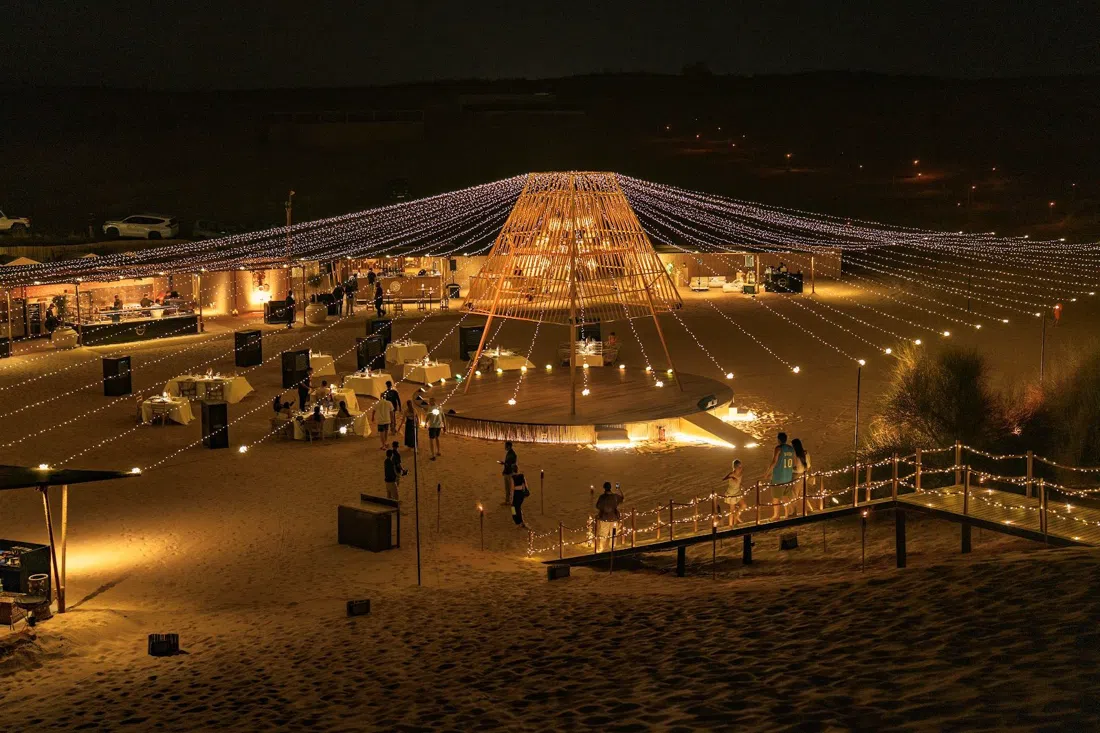
Sonara Camp [Al Marmoom Desert Conservation Reserve] plays a gentler version of the same evening, and does it well specifically for families: family-style dining, a proper kids' menu, sunset-to-dinner packages from AED 390-890 per person, with an overnight 'Nest' option from AED 2,070-plus for those who'd rather stay past the last coach out. Its dune-bashing is available only as a premium chauffeured add-on rather than the main event, which is the honest way to read Sonara: it's stronger on atmosphere and food than on adrenaline, and pairs well with booking a dedicated dune-bashing operator earlier the same evening rather than expecting the thrill to happen here.
Sleeping out past the last convoy
Most desert evenings in Dubai end the same way: everyone gets bused back to a hotel bed by ten. Two venues are built for the reader who'd rather not do that.
Al Khayma Camp [Al Marmoom desert] is the pick for anyone who actually wants to sleep under the dunes rather than treat the desert as a two-hour excursion. It takes groups and couples equally well; day safaris start from around AED 300 per person, and overnight packages run from roughly AED 716 per person. But tents are limited, and peak season, broadly the cooler months this piece is written for, books out ahead, so this isn't a same-week decision.
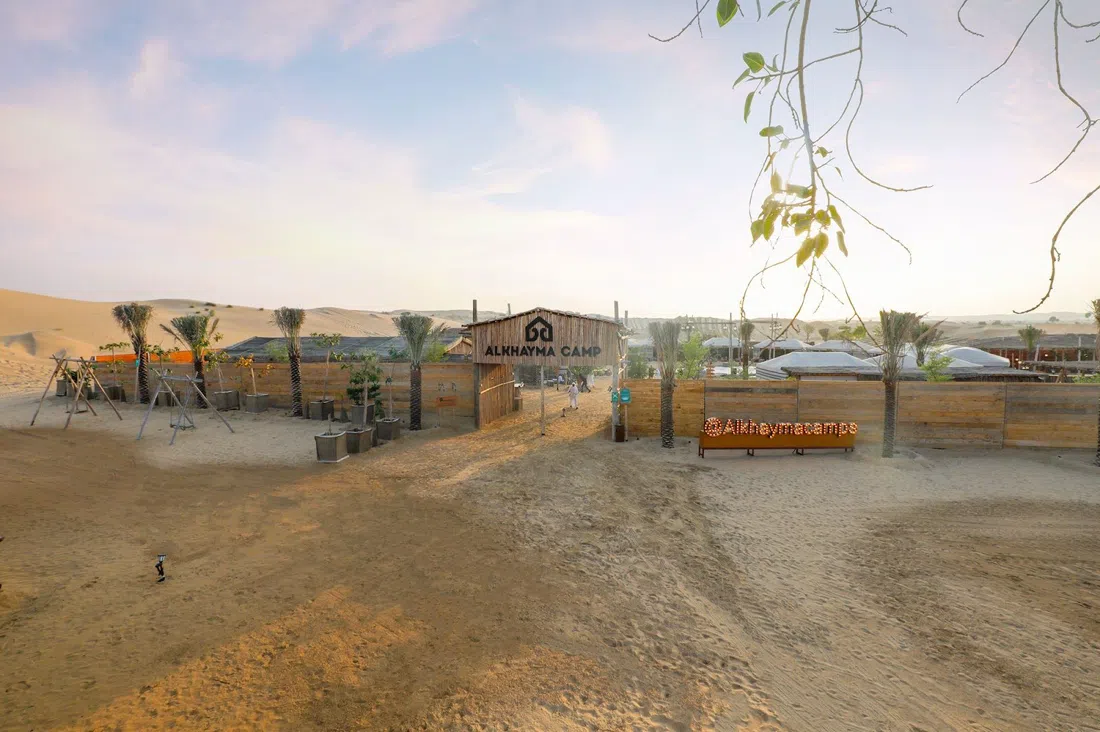
Al Marmoom Oasis [inside Al Marmoom Desert Conservation Reserve] takes the overnight idea further upmarket, with domes and tents bookable individually or as a group block, day experiences from AED 175-700 per person, and overnight dome stays from roughly AED 4,300-plus per group. It's family-friendly and genuinely inside the conservation reserve rather than merely near it, which matters here, because it means the dark-sky claim below is real rather than marketing copy. Despite sharing a booking channel with Al Khayma Camp, it's a distinct property with a distinct register: quieter, glossier, and priced accordingly.
The sky itself
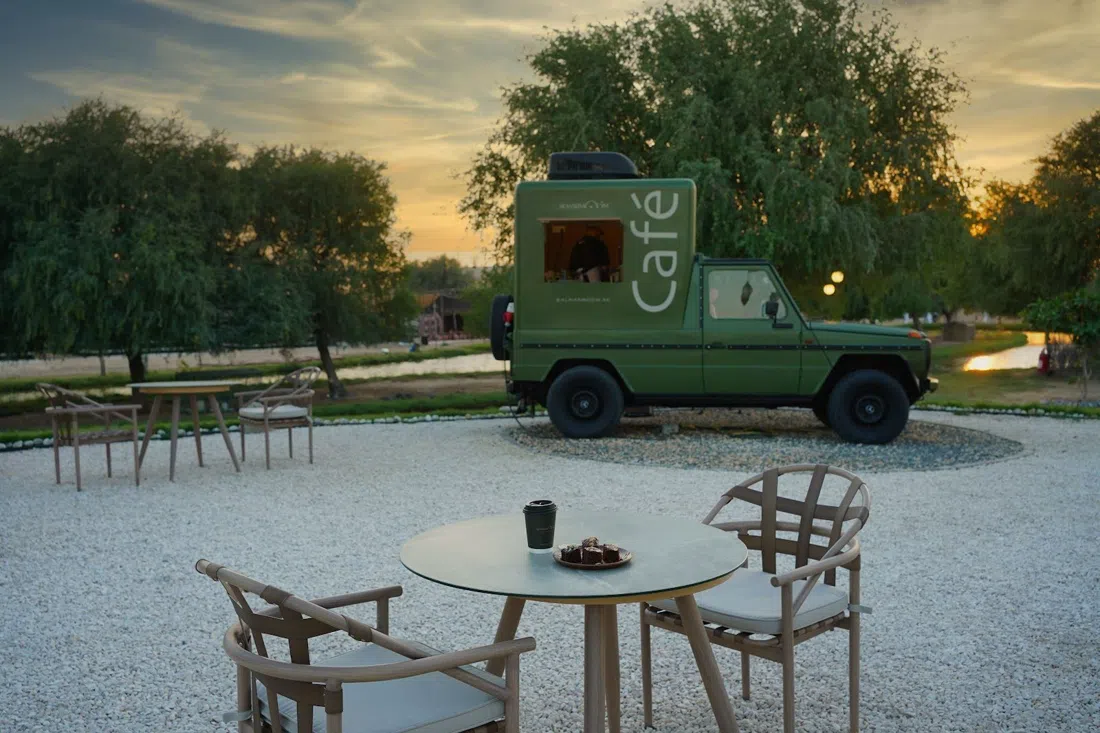
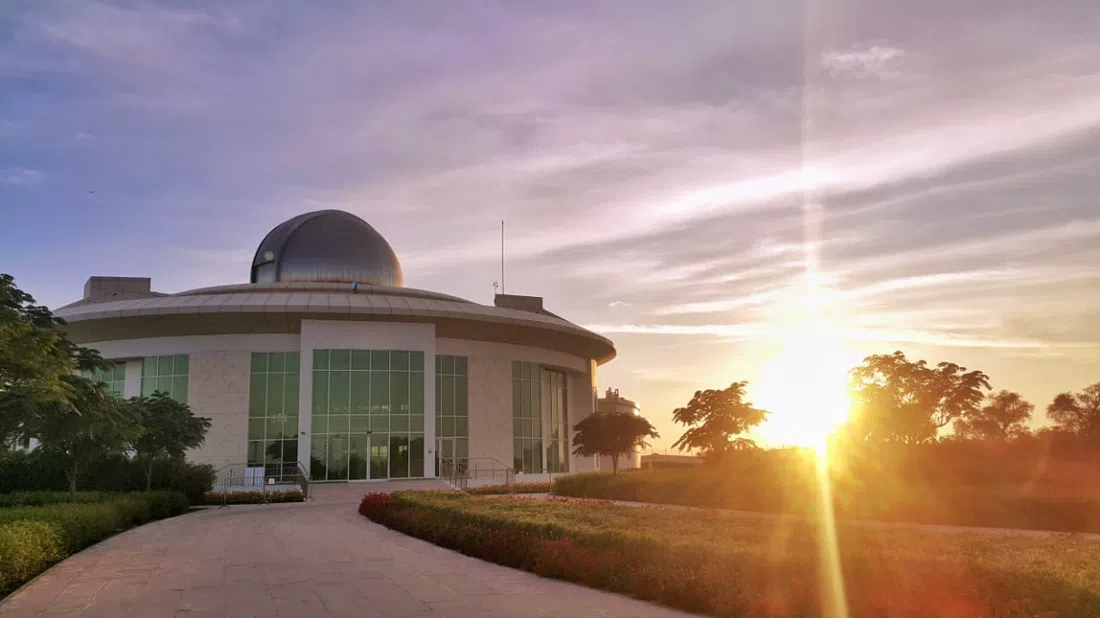
Every venue above sells the desert as a backdrop to something else: dinner, a drive, a night in a tent. Dubai Astronomy Group's Al Qudra stargazing nights [Al Qudra, within Al Marmoom] are the one entry on this list about the sky on its own terms, run by a volunteer astronomy club rather than a hospitality operator, and open to the public as well as to groups. Casual sessions are informal and often free; headline nights (meteor showers, planetary alignments, the occasional eclipse) are ticketed, up to around AED 200 per person. Al Qudra's appeal is specific: it sits far enough from the city's glow that a decent amateur telescope actually shows something worth queuing for. For a reader building an evening around this piece's whole premise, it's worth checking the group's published calendar first and building the rest of the night (dinner, a drive, a tent) around whichever date has a session running, rather than the other way round.
Getting there, what to bring, what it costs
Transport. Almost every operator above includes hotel pickup and drop-off in the price, which is the sensible default. Self-driving into unmarked desert tracks at night, particularly off-road toward the DDCR or Al Marmoom, isn't something to attempt without local knowledge. Desert Buggy Rental is the exception by design, since driving is the entire point, but even there, get to the site itself by taxi or transfer rather than trying to navigate the last stretch of open desert alone. A regular car works fine for reaching camp entrances close to a paved road, like Bab Al Shams; anything further into the reserve, take the operator's transfer.
Cash. Most bookings are prepaid online, but small camps and add-ons (extra photography, private telescope time, tips for camel handlers and drivers) run on cash, so keep small AED notes on hand, since card readers are unreliable once you're off the tarmac.
Timing. The season this piece is named for runs roughly October through April, when night temperatures fall enough to make both the driving and the sitting-outside-for-dinner parts genuinely pleasant rather than merely tolerable. Within that window, book at least a few days ahead for anything mid-week, and well ahead (a week or more) for Thursday and Friday nights, weekends, and any date near a public holiday, when Al Hadheerah's fireworks and the luxury camps' overnight tents sell out fastest.
Budget. As a rough range across everything above: a competent shared evening safari with Expert Rangers or Arabian Adventures starts under AED 700 per person; a private, better-vehicle experience with Platinum Heritage moves into four figures; dinner-camp evenings at Sonara Camp or Al Hadheerah sit in the AED 400-900 band; and an overnight stay, whether at Al Khayma Camp's simpler tents or Al Marmoom Oasis's domes, is where the real spend happens, from a few hundred dirhams per person up to several thousand per group. None of it requires a hotel out in the desert itself. Most visitors base themselves in the city and treat the desert as a night trip out and back, which is where a well-located Dubai hotel search earns its keep, keeping the return transfer short after a late finish. For everything else the city offers beyond these dune-lit evenings, the full Dubai guide covers it.