The Dubai issue
One Dirham Across the Water: The Dubai Creek the Skyscrapers Never Reached
Skip the towers for an afternoon and cross the Dubai Creek by wooden abra — a one-dirham fare into the souks, spice lanes and courtyard cafés where the city actually began.
By Saskia van DijkDubai's neighbourhoods, sights and slow mornings

There is a version of Dubai that costs one dirham. It is not on any billboard, and you will not find it in the sky. It is a wooden boat with a diesel engine and a bench worn smooth by a century of hands, chugging across a saltwater inlet while the call to prayer drifts over from Deira and a man in a loading crew shouts something to a dhow captain who has heard it all before. This is the Creek — the reason the city exists at all — and it remains, quietly, the best afternoon in Dubai.
Before the oil, before the artificial islands, there was this channel of water and the pearl divers and traders who worked it. The Creek is where Dubai was a fishing settlement, then a customs-free port that pulled in merchants from across the Gulf and the subcontinent. The towers came later and went elsewhere. Down here, the old rhythm holds. What follows is a way to walk it — souk to souk, bank to bank — built entirely around places that are still open, still working, and still worth your time. For where to base yourself, the Dubai hotel search covers everything from Al Fahidi guesthouses to Deira business hotels; for the wider city, the Dubai guide sets the scene.
The Crossing: One Dirham, No Booking

Start with the boat, because everything else radiates from it. The Bur Dubai–Deira Abra Crossing (the traditional RTA abra stations sit on both banks) is the single cheapest, most honest ride in the city: one AED, paid in coin to the boatman as he pushes off, no ticket, no queue, no app. The abras run almost round the clock and leave when full — usually a two-minute wait — so there is nothing to plan and nothing to miss.
Sit at the side rather than the middle; you want the water at your elbow and the working port in your eyeline. A group can simply fill a bench, and if you are a larger party you can charter a whole boat, or take one of the bigger heritage or electric abras that seat more — those run roughly 25 to 65 AED depending on the boat and the route. But the classic petrol abra at one dirham is the point. It is the rare Dubai experience that has not been upgraded, priced up, or roped off. Cross once each way at least; the light on the water is different in each direction, and the second crossing, at dusk, is the one you will remember.
A small note of respect: these boats are transport for the people who live and trade here, not a ride laid on for visitors. Keep your bag on your lap, let others board first, and you will find the boatmen unfailingly easy.
Plan your Dubai trip
Live prices from our booking partners.
Free cancellation on many rooms. We may earn a commission when you book.
Deira: Gold, Spice, and the Smell of Oud
Land on the Deira side and you are in the older commercial heart. Walk up from the water and the lanes tighten around you.
The Dubai Gold Souk (Deira) is the headline, and for once the billing is deserved. These are open public lanes lined with windows stacked in yellow — necklaces the length of your forearm, bangles by the tray. Browsing is free; gold is sold at the day's spot rate plus a modest making charge, so the metal itself is not marked up the way you might fear. Go at dusk, when the windows blaze under the arcade lights and the whole street takes on a furnace glow. It is genuinely photogenic, but I would send you here even if you never lifted a camera — for the sheer theatre of commerce, and for the small history that the souk's density is a direct inheritance of Dubai's tax-free trading past, which is why so much gold gathered in one place to begin with. Expect friendly hustle and the odd 'copy watch' tout; a firm, good-humoured no is all you need.

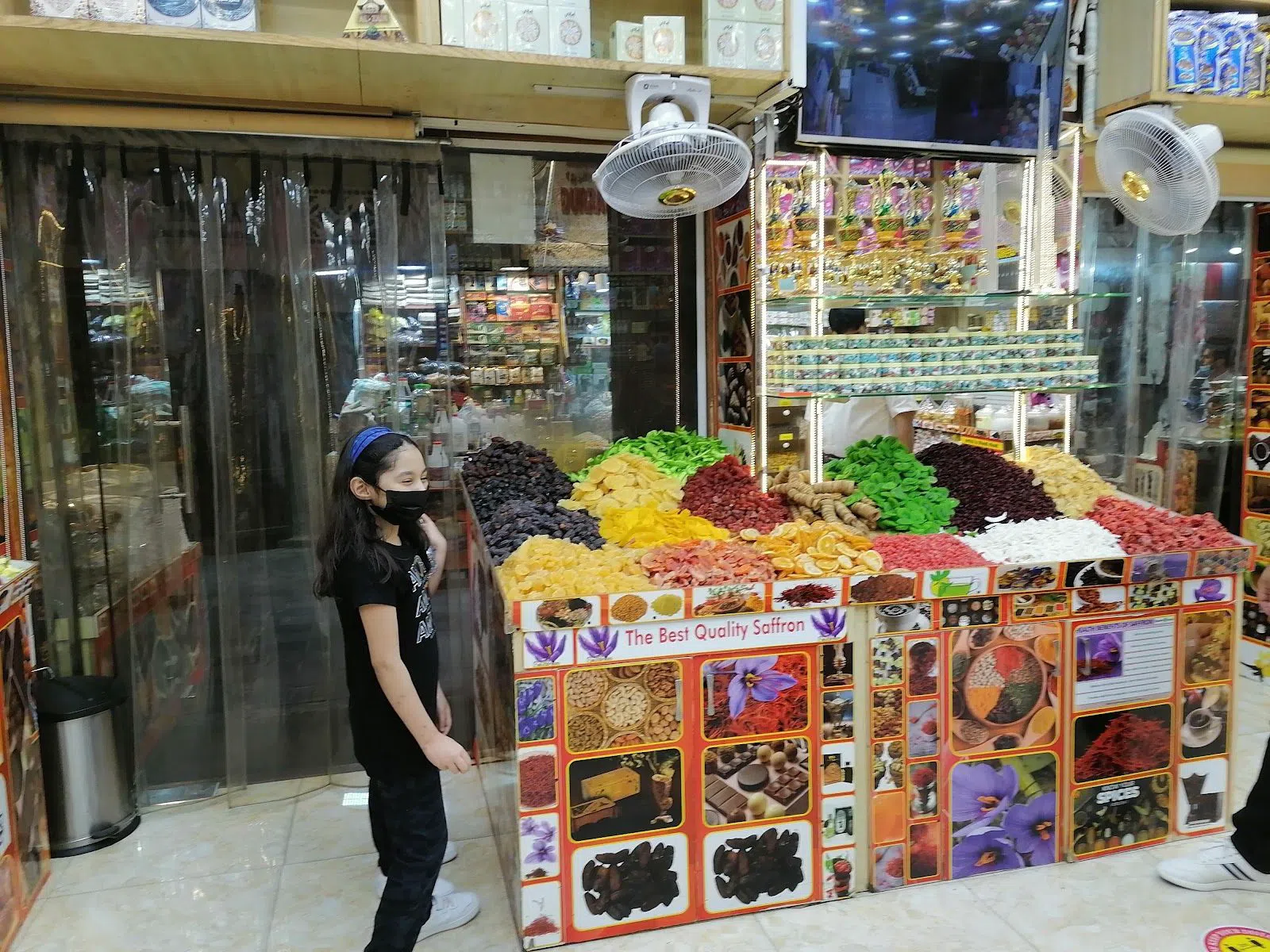
A few minutes' walk on, the Dubai Spice Souk (Deira) is smaller, narrower, and to my mind the more sensory of the two. The lanes run single-file in places, so it is fine for a group but you will string out into a line. Vendors wave open sacks of saffron threads, dried lemons, and frankincense — the resin that was traded along these coasts long before the Creek had a name, burned in homes across the Gulf then as now. Everything is cheap and haggled by weight. Buy a little frankincense even if you have nowhere to burn it; the smell will find its way home in your bag.
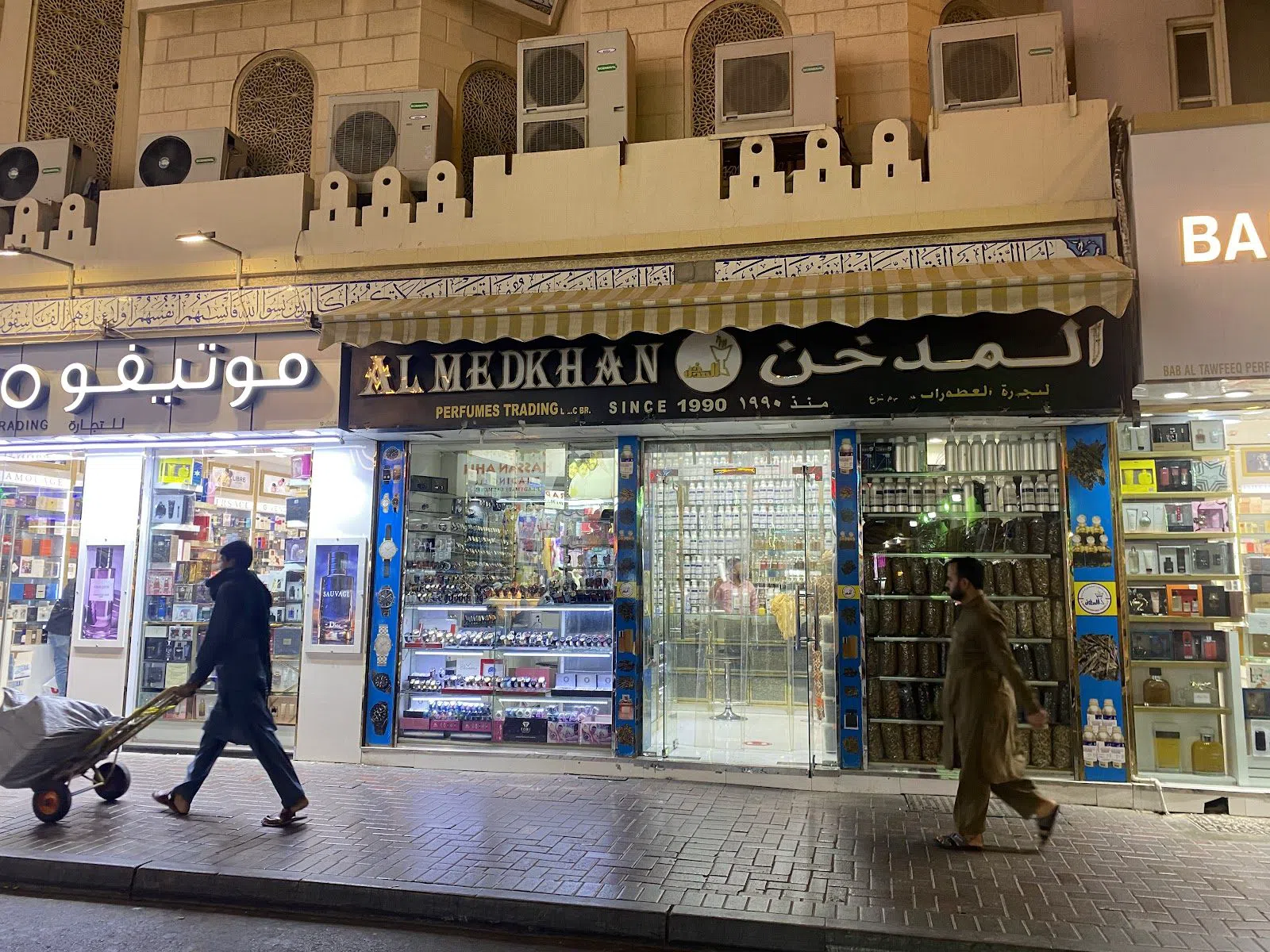
Beside the Gold Souk, around Sikkat Al Khail Road, the Deira Perfume Souk is the one to slow down for. These are open-street shops where the shopkeepers blend custom scents on the spot — real oud, attar, the heavy resinous perfumes of the region — from a few AED for a small vial to several hundred for the serious oils. Ask to smell the oud itself before anything is blended; it is a scent most visitors have never actually met, and it explains a great deal about the Gulf once you have.

Walk back down to the water on the Deira bank and you reach the Dhow Wharfage (Baniyas Road), and this is where the whole trip earns its keep. It is a free, open waterfront walk along a live working port — wooden dhows moored three deep, their decks piled with tyres, air-conditioning units, sacks of who-knows-what, bound for Iran and ports beyond exactly as they have been for centuries. Nobody has curated this for you. Keep well clear of the loading crews, walk slowly, and understand that you are looking at one of the last functioning pieces of the old Gulf trade, running on the same principles that built the city across the water. Pair it with the abra ride and you have the honest version of maritime Dubai in a single hour.
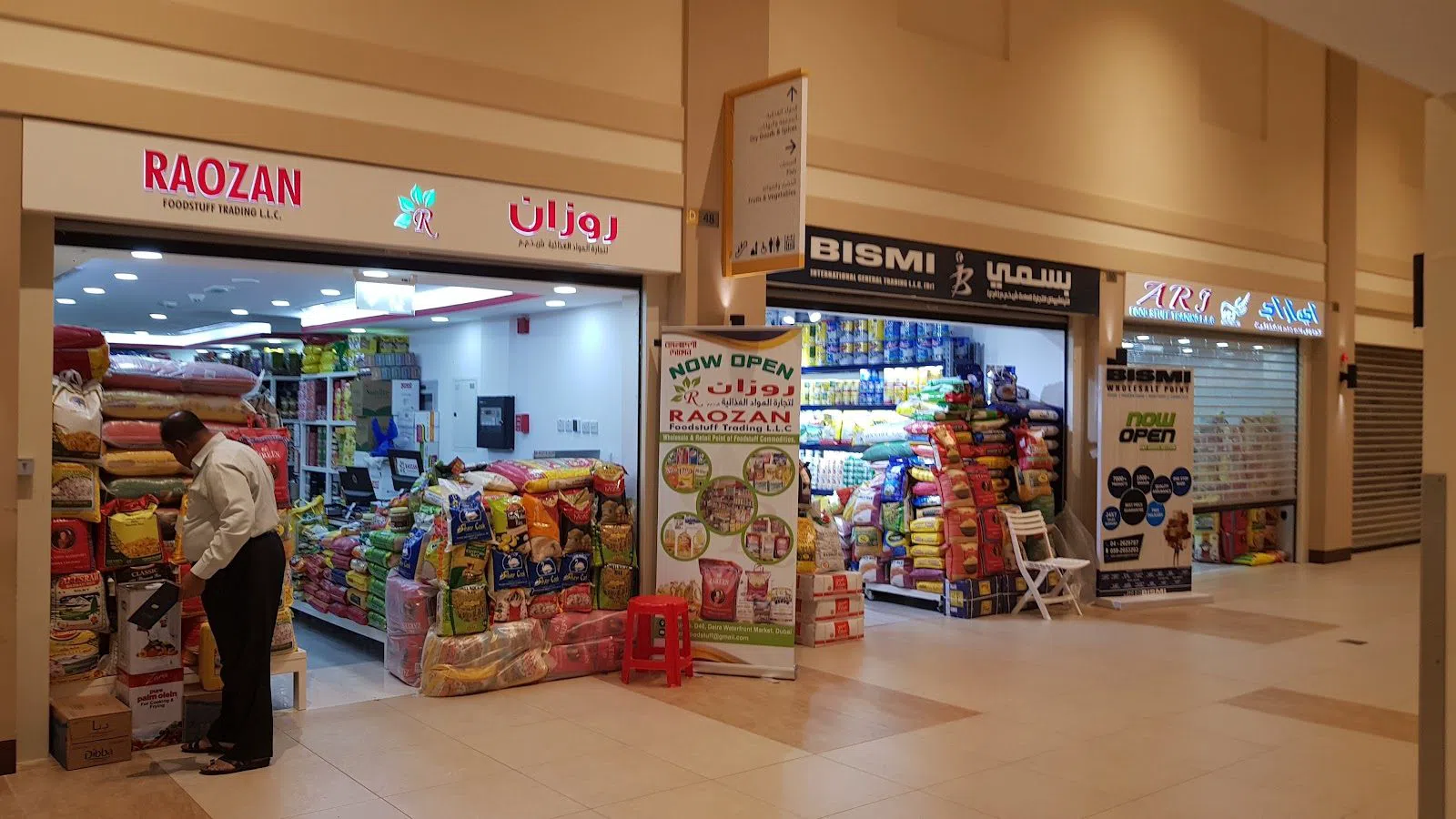
If you have time and an appetite, the Deira Waterfront Market is a short way along — a huge indoor market built for crowds, the 2017 successor to the historic 1958 Deira Fish Market. It is free to enter, seafood is sold cheap by weight, and several stalls will cook what you buy. It is less touristed than the souks and all the better for it; this is where the city shops, not where it poses.
Back Across: The Bur Dubai Landing

Cross again — another dirham — and step off almost directly into the Old Textile Souk (Bur Dubai), a covered pedestrian arcade right at the abra station. This is Deira's quieter counterpart: bolts of fabric, pashminas, tailors calling from doorways, prices heavily negotiable. It is group-friendly and shaded, a good place to regroup out of the sun. The arcade's wind-tower-styled roof is a nod to how these lanes were cooled before electricity — worth a glance up.
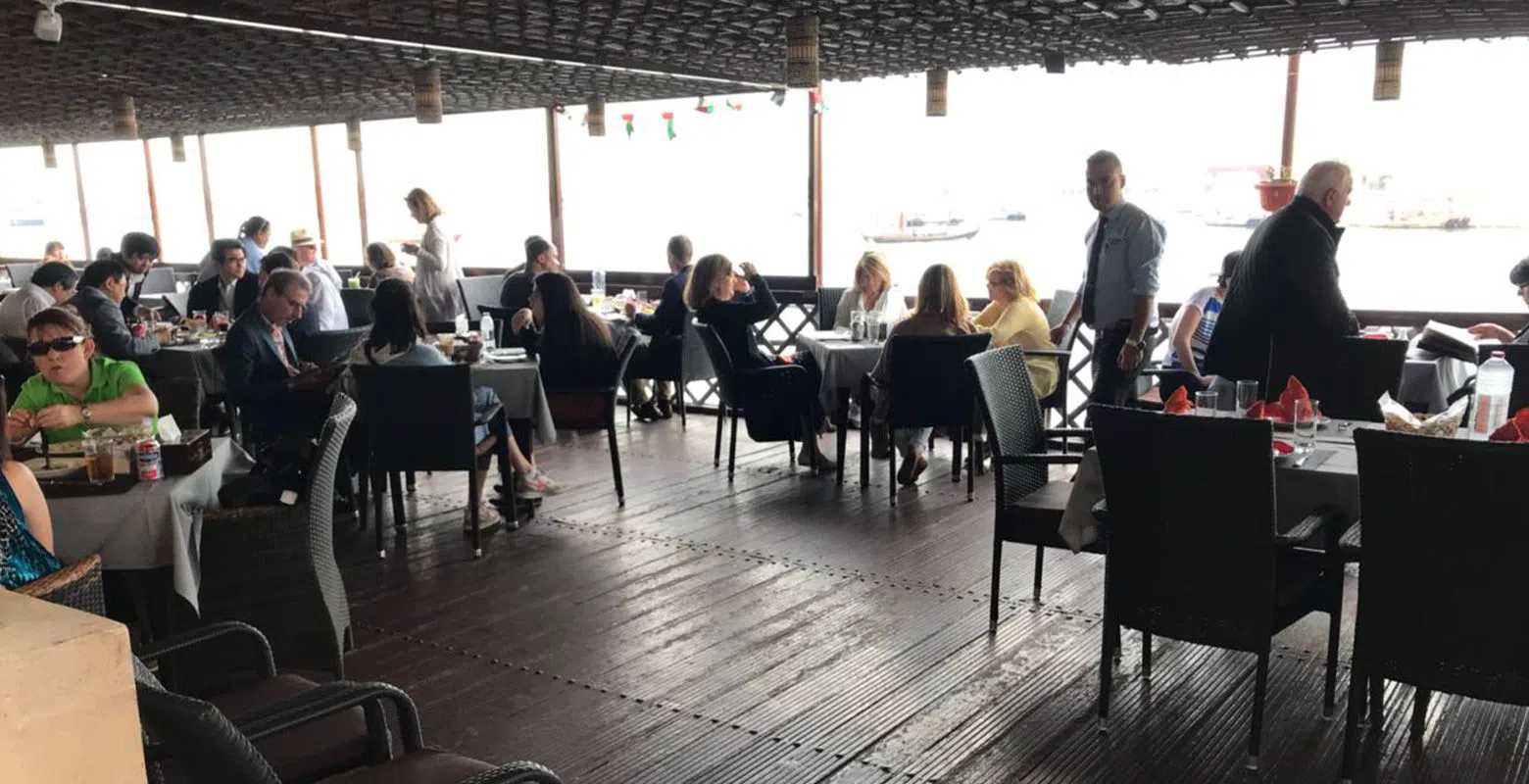
Right at the landing, with a deck built out over the water, sits Bayt Al Wakeel (Bur Dubai, at the Textile Souk). It occupies what is often called Dubai's oldest office building, from the 1930s, now a creekside restaurant serving Arabic dishes and seafood at roughly 100 to 180 AED a head. I will be straight with you: the food is fine rather than remarkable. What you are paying for, and what is genuinely worth it, is the table — book the waterfront deck and you get an unbeatable seat for watching the abras crisscross the Creek at golden hour. Come for a mid-afternoon coffee or an early dinner and treat the view as the main course. Groups fit on the deck; a couple will find it romantic enough at dusk.
Al Fahidi: The City Before Oil
A few minutes' walk from the Textile Souk brings you to the Al Fahidi Historical Neighbourhood — Al Bastakiya — and the pace changes entirely. This is Dubai's best-preserved pre-oil quarter: a free, open-air maze of coral-and-gypsum houses, wind towers, and shaded courtyards, laid out by merchant families who settled here more than a century ago. It is perfect for a group walking at its own speed, with galleries, museums, and cafés tucked behind almost every door. One honest heads-up for 2026: the Al Fahidi Fort and Dubai Museum inside the district are closed for restoration this year — but the neighbourhood itself is fully open, and it is the streets, not a single museum, that make it.

For a proper sit-down, the Arabian Tea House (Al Fahidi) is the signature spot — a large shaded courtyard of white chairs and climbing vines, serving Emirati breakfasts and teas at roughly 80 to 150 AED a head, open 7am to 11pm. It is popular with tour parties, so book ahead if you are more than a couple. Yes, it photographs beautifully; I am recommending it anyway because the food is real and the shade is a genuine mercy in the middle of a walking day.


To actually understand what you are walking through, give an afternoon to the Sheikh Mohammed Centre for Cultural Understanding (SMCCU, Al Fahidi). Its 'Open Doors, Open Minds' sessions are guided Emirati meals with an open, no-question-off-limits format, built specifically for mixed international groups; expect around 150 to 225 AED for a cultural meal, and book in advance. Of everything on this route, it is the one experience that turns a pleasant wander into something you understand — the context behind the food, the dress, the faith, and the district itself.

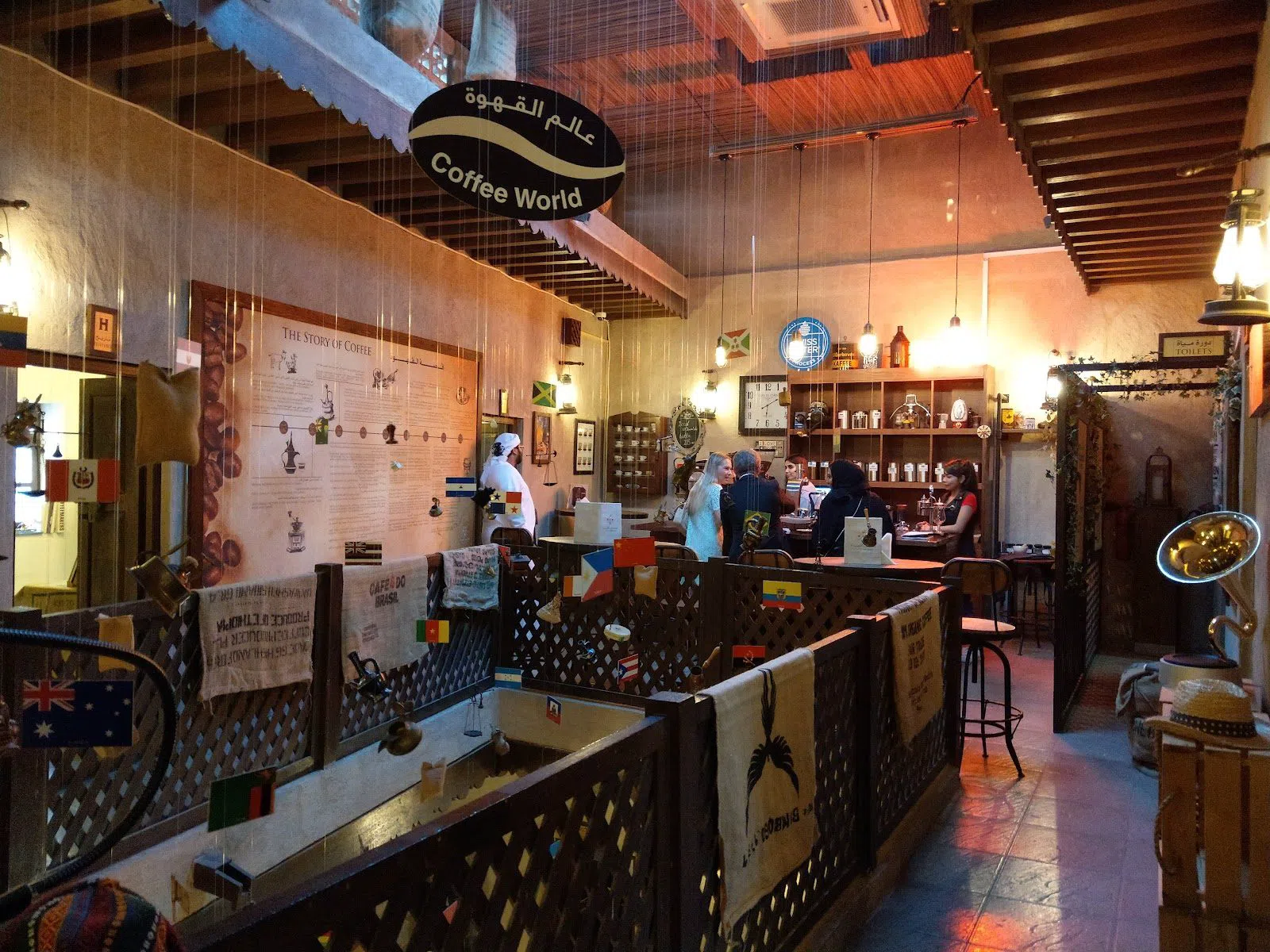
Two quieter stops reward small groups. The Dubai Coffee Museum (Al Fahidi) is a restored heritage house given over to the region's coffee ritual, with tastings and demonstrations on request and a low entry fee; it is a good change of pace between souk crawls, and the Gulf's coffee tradition is older and more ceremonial than the espresso reflex most of us arrive with. And XVA Gallery, Café & Art Hotel (Al Fahidi) is the district's contemporary-art anchor — an intimate courtyard with a rotating gallery (free), a vegetarian café at mid-range prices, and a handful of boutique rooms, open from 7am. It suits small groups and couples far better than large parties; the whole appeal is its calm.
Al Seef: The Creek, Made Comfortable
If the working port and the tight souk lanes are the raw version of the Creek, Al Seef is the smoothed one — a long waterfront promenade of heritage-styled buildings, cafés, a souk, and a floating market, linking Al Fahidi back down to the abra stations. It is free to stroll, the shops and cafés run mid-range, and there is space to spread out, which makes it the easy choice for a relaxed group evening or a slow walk after dinner. It is newer than it looks and does not pretend otherwise; take it for what it is — a comfortable, well-lit stretch to end the day by the same water where it started.

Practical Notes
Transport. The whole route is walkable once you are on either bank, and the abra stitches the two sides together for one AED a crossing. The Dubai Metro Green Line serves both Al Fahidi/Al Ghubaiba (Bur Dubai) and the Deira souks, so you can arrive by rail and leave the car behind entirely. Taxis are plentiful on both banks if you tire.
Cash. Bring coins and small notes. The classic abra wants exact-ish cash, souk haggling goes better with notes in hand than a card, and the Spice and Perfume souks in particular run on cash. Budget maybe 50 AED in small change per person for boats and incidentals.
Timing. Come in the late afternoon. The souks light up at dusk, the Gold Souk is at its best after dark, and the temperature is survivable — midday between roughly May and September is genuinely punishing, so save this walk for the cooler hours or the cooler months. Allow a full half-day; a rushed hour does it no justice.
Budget. This is the rare corner of Dubai you can do almost for free. Two abra crossings and a wander through every souk costs pocket change; the only real spending is a meal — 80 to 180 AED a head at the Arabian Tea House or Bayt Al Wakeel — or the SMCCU cultural lunch at 150 to 225 AED if you want the depth. A couple can do the whole afternoon, food included, for a fraction of one dinner up in the towers.
Etiquette. Dress modestly for the souks and the mosque-adjacent lanes — shoulders and knees covered serves everyone well. Haggle warmly, not aggressively; the vendors here do this all day and respond to good humour. And on the Dhow Wharfage, remember you are a guest at someone's workplace. Cross once for the dirham, and once more for the view.
Before you go
How much does the abra across Dubai Creek cost, and do I need to book?
The classic wooden abra costs just 1 AED per crossing, paid in cash to the boatman — no booking, no ticket. Boats leave when full, usually within a couple of minutes, and run almost round the clock. Larger heritage or electric abras and private charters cost roughly 25–65 AED.
What's the best time of day to walk the Creek and souks?
Late afternoon into the evening. The Gold Souk is at its best after dark when the windows blaze under the arcade lights, dusk is when the whole area comes alive, and the temperature is bearable. Avoid midday from roughly May to September, when the heat is punishing.
Is the Dubai Museum in Al Fahidi open in 2026?
No — the Al Fahidi Fort and Dubai Museum inside the neighbourhood are closed for restoration in 2026. However, the Al Fahidi Historical Neighbourhood (Al Bastakiya) itself is fully open, and its streets, courtyards, galleries and cafés are the real draw.
Do I need cash, and how much should I budget?
Yes, bring coins and small notes. The abra, the Spice and Perfume souks, and most haggling run on cash. Around 50 AED in small change per person covers boats and incidentals; the only real cost is a meal, roughly 80–225 AED per head depending on where you eat.
Which spots suit groups versus couples?
The souks, the Dhow Wharfage, Al Seef and the SMCCU cultural meals are all built for groups. The Arabian Tea House and Bayt Al Wakeel's waterfront deck take groups if you book ahead. The Dubai Coffee Museum and XVA Gallery's café are more intimate and better suited to small groups or couples.