
September in Dubai is the month the Gulf stops cooling anything down. The sea holds its summer temperature, the air stops moving, and by mid-afternoon a reading of 42°C on the dashboard is unremarkable rather than newsworthy. Plan the days backwards, indoors first and outdoors last, and the month turns generous: quieter galleries, shorter queues, softer room rates, and a city that spent forty years building interiors for exactly this weather.
Plan the day backwards
The common mistake is to treat September like an ordinary holiday and assume the mornings will carry you. They will not. Count on two usable outdoor windows a day and fill everything between them with places that are cold by design.
From about 09:00 to 11:00 the creek and the courtyards still work, especially where there is shade and moving water. From 11:30 until sunset you belong indoors. After the sun drops, around 18:45 in mid-September, the city becomes usable again, though usable still means 34°C and heavy air, so evening plans should involve sitting rather than walking. Water is the exception to all of it: a pool or a slide is comfortable at any hour, which is why so much of a September itinerary ends up wet.
Almost everything worth doing is timed-entry and bookable online, and in September that matters less for capacity than for the fifteen minutes you would otherwise spend standing outside a ticket window. Book the whole party on one slot, screenshot the QR codes, and read the rest of the city in the Dubai guide before you go.
Book the cold rooms first
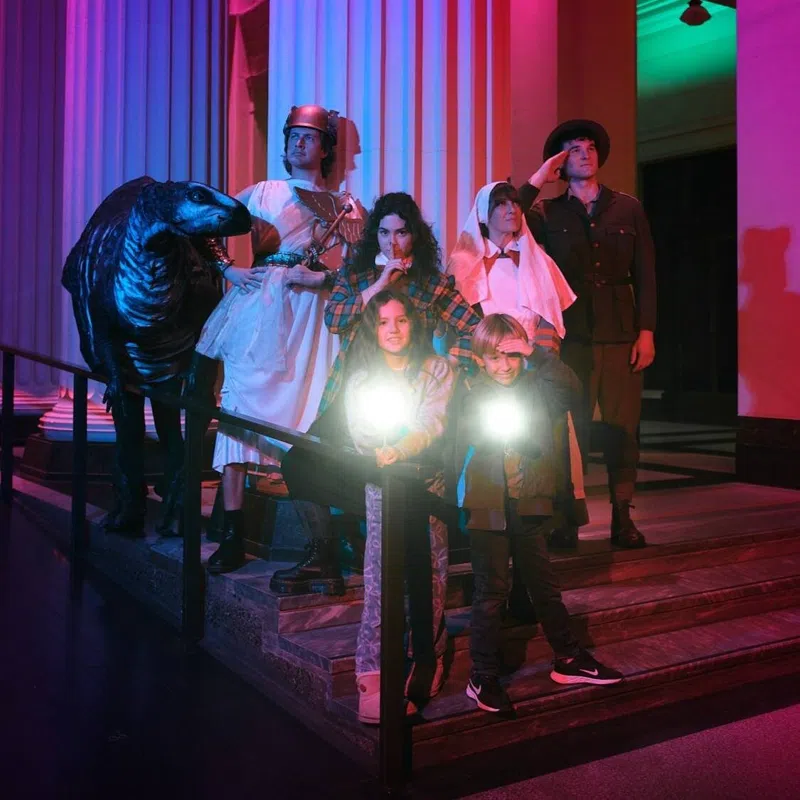
Museum of the Future (Sheikh Zayed Road, beside Emirates Towers metro) is the single best heat-proof half-day in the city: seven fully conditioned floors, open 09:30 to 21:00 daily, and a timed ticket that means you never queue in the sun. The Arabic calligraphy wrapping the steel shell is real text rather than pattern, which tells you most of what you need to know about how seriously the building takes itself. Tickets are AED 149 for adults, under-3s free, and during Year of the Family, until 15 September 2026, one child under 12 goes free with each paying adult. There are no walk-ups. Groups must book the same slot in advance, and at busy times large parties are split across slots anyway, so book early and travel together.
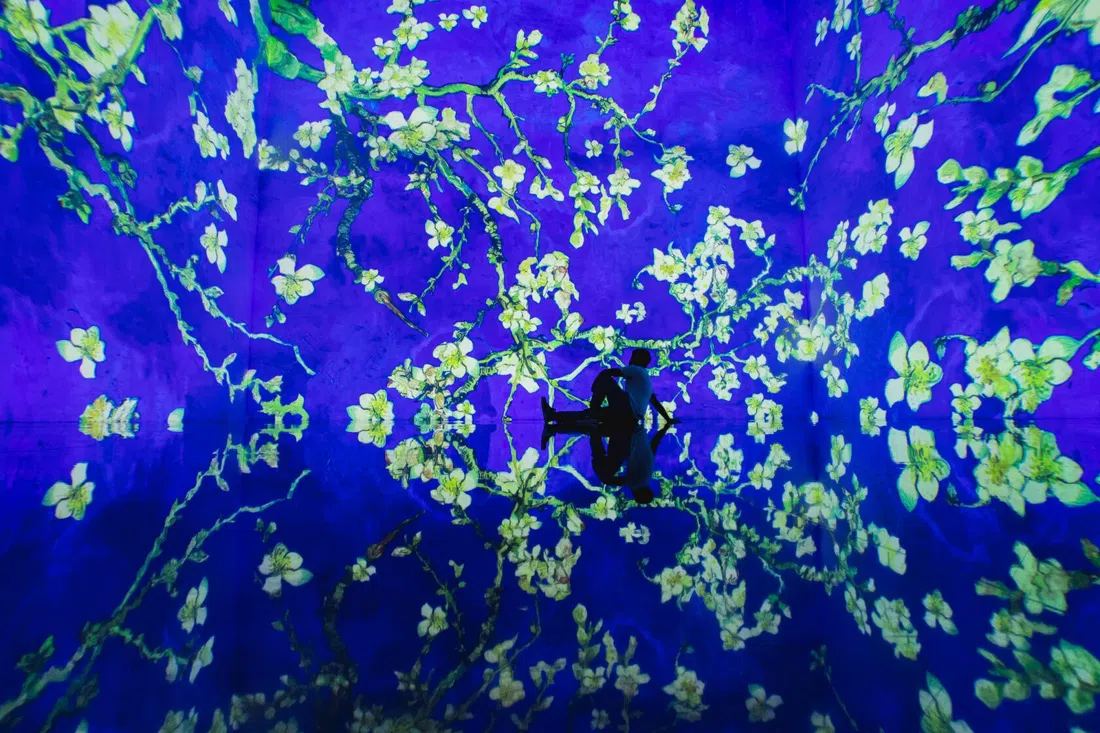
AYA Universe (WAFI, Umm Hurair) is twelve dark, cold, projection-mapped rooms, open 10:00 to 22:00, around AED 130 to 150. Ticketing is open-flow with no minimum and the zones swallow large parties without a bottleneck, which makes it the most reliable filler when an afternoon plan collapses in the humidity. I would send you for the ninety minutes of genuine relief and the strangeness of the rooms, not for the photograph. The pictures all look the same and none of them explains why you enjoyed it.
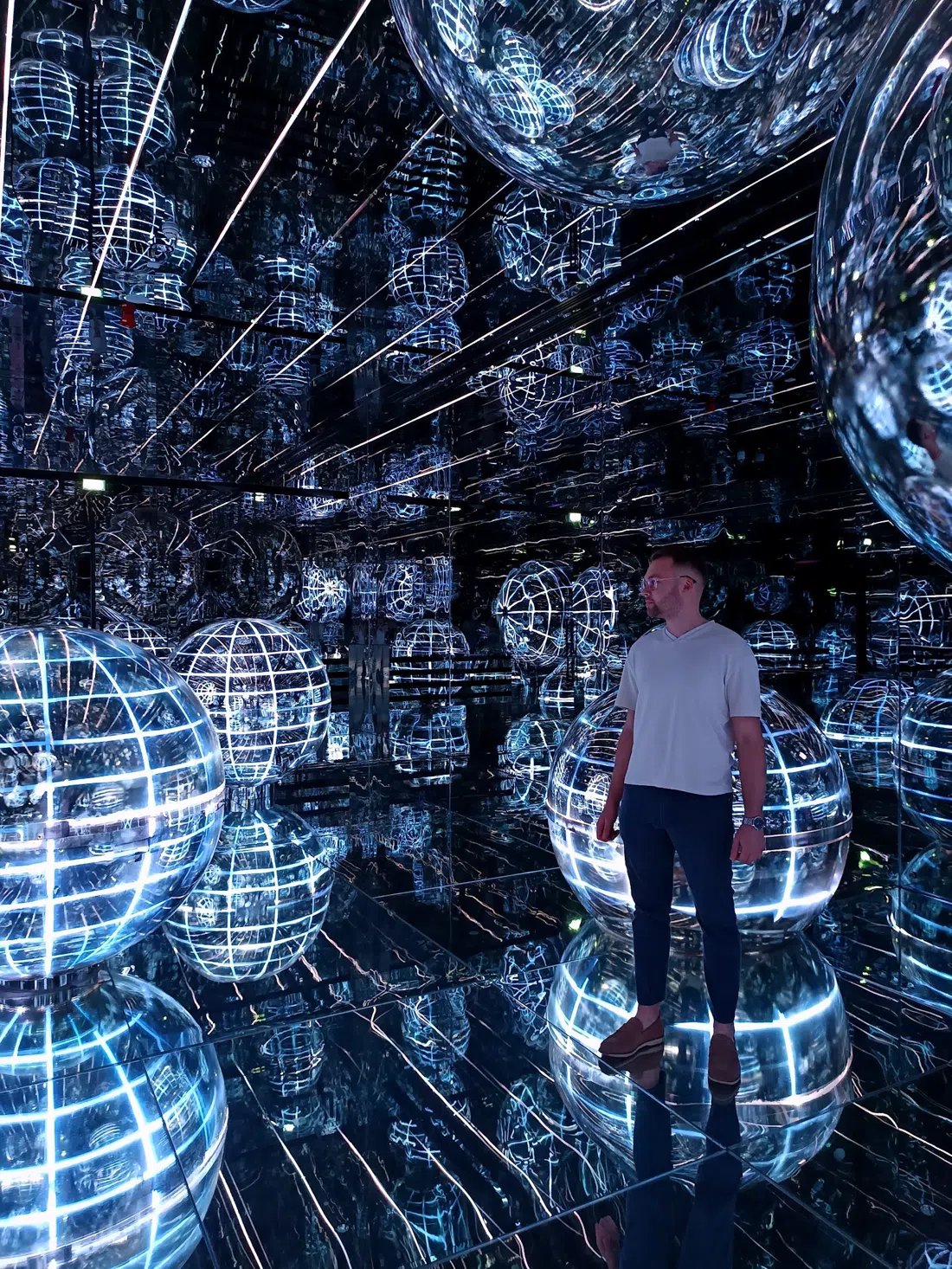
Theatre of Digital Art (Souk Madinat Jumeirah, Umm Suqeim) runs 11:00 to 23:00, roughly AED 90 to 130 depending on the programme, which makes it the rare cultural stop you can start at 21:00. Five separate halls make it easy to place a large group, and the venue explicitly takes private and group bookings with catering and technical support. Pair it with the abra canals outside once the sun is down; the boats are the pleasant, pointless half-hour that the afternoon owes you.
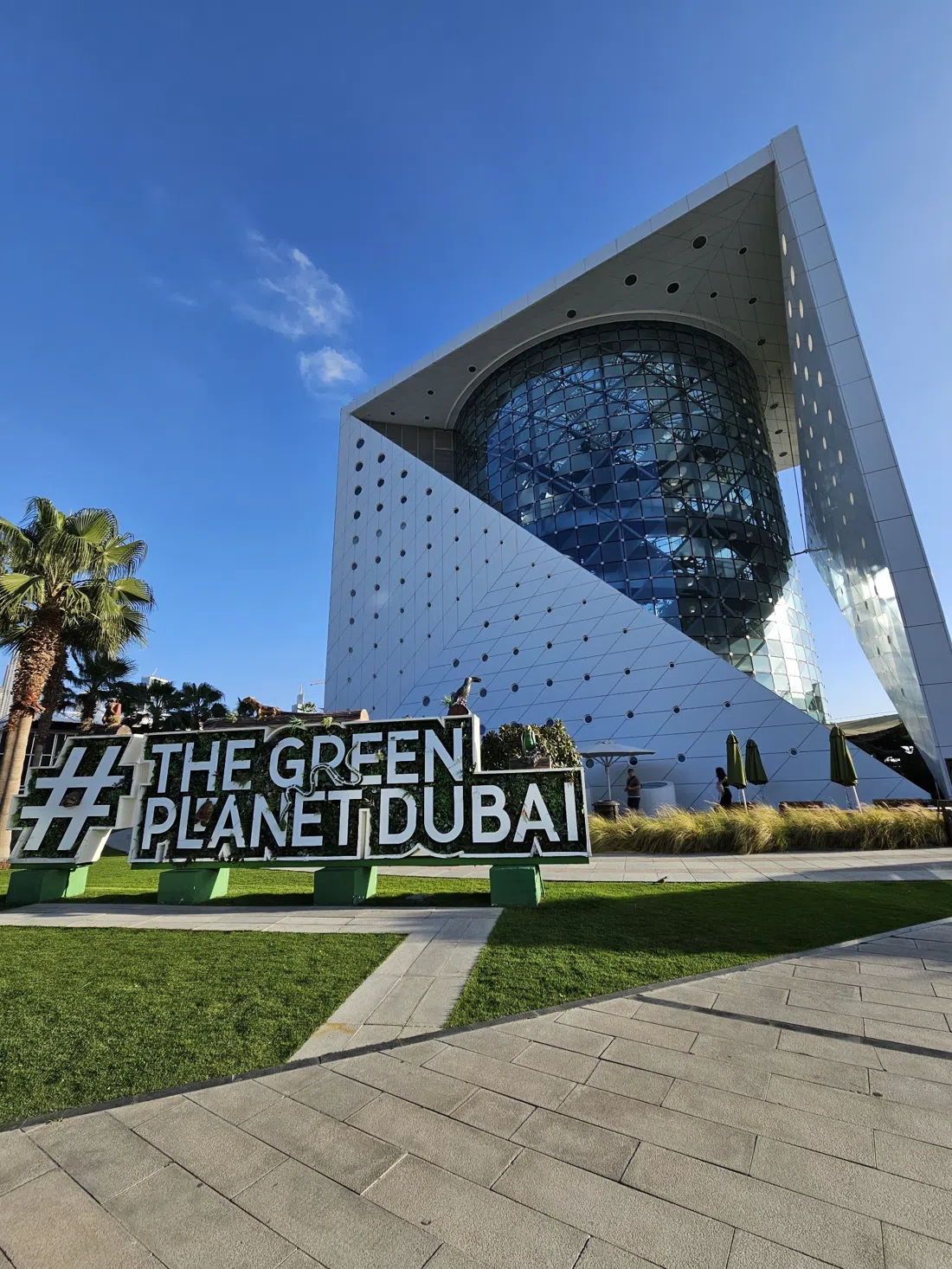
The Green Planet Dubai (City Walk, Al Wasl) is a bio-dome built around a single indoor tree, and it is humid on purpose rather than by accident, which makes it worth experiencing deliberately instead of resenting. It is small enough to finish in ninety minutes, AED 155 adult and AED 130 child with infants free, and the guided tour is included in the day pass. It closes at 18:00 most days, so treat it as a morning slot, never an evening one. Groups fit, but book ahead: the space is compact and fills quickly.
Mornings belong to the old city
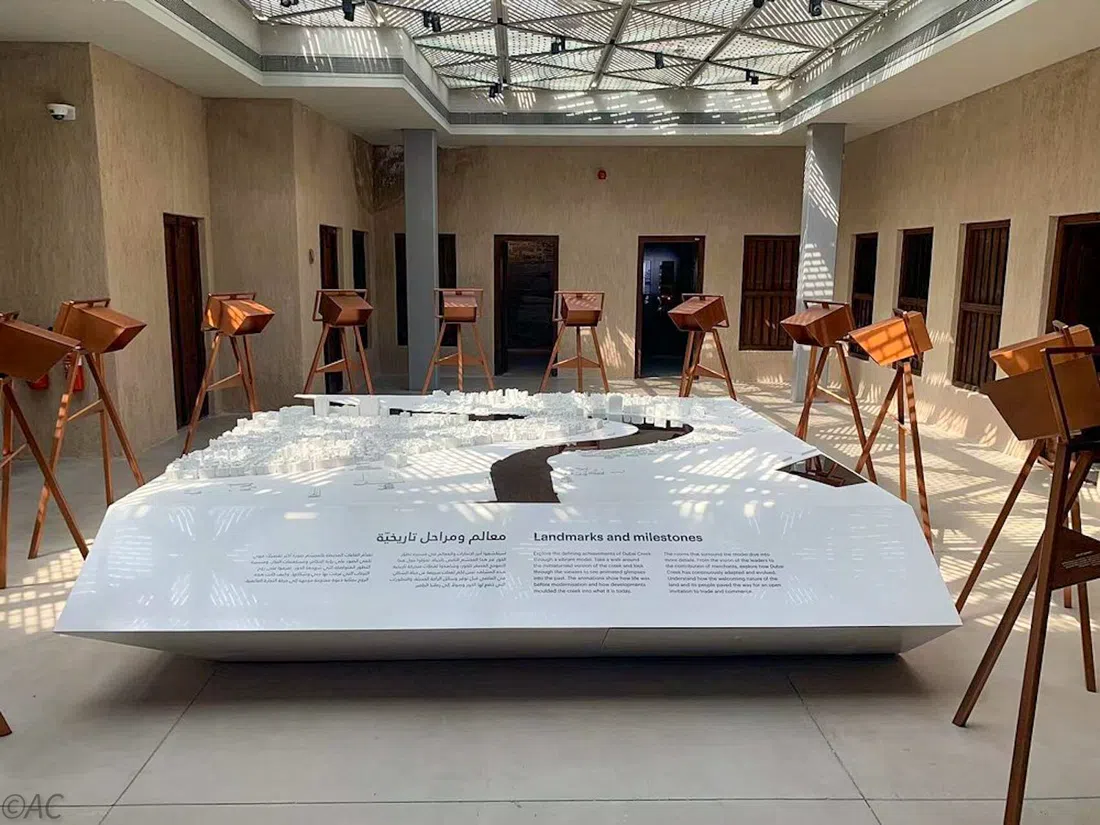
Al Shindagha Museum (Al Shindagha, on the Bur Dubai bank of the creek) is where the ruling family lived before the creek was dredged in the 1960s and the town's centre of gravity moved inland. It is 21 separate restored houses rather than one building, from about AED 20, open daily 10:00 to 20:00 with last entry an hour before close. Do it at opening, while the water still pushes a breeze up the lane. Because each house is individually air-conditioned, you dip in and out of the heat in short bursts instead of walking through it, which is what keeps the morning going rather than ending it early. Under-12s must be with an adult over 16.
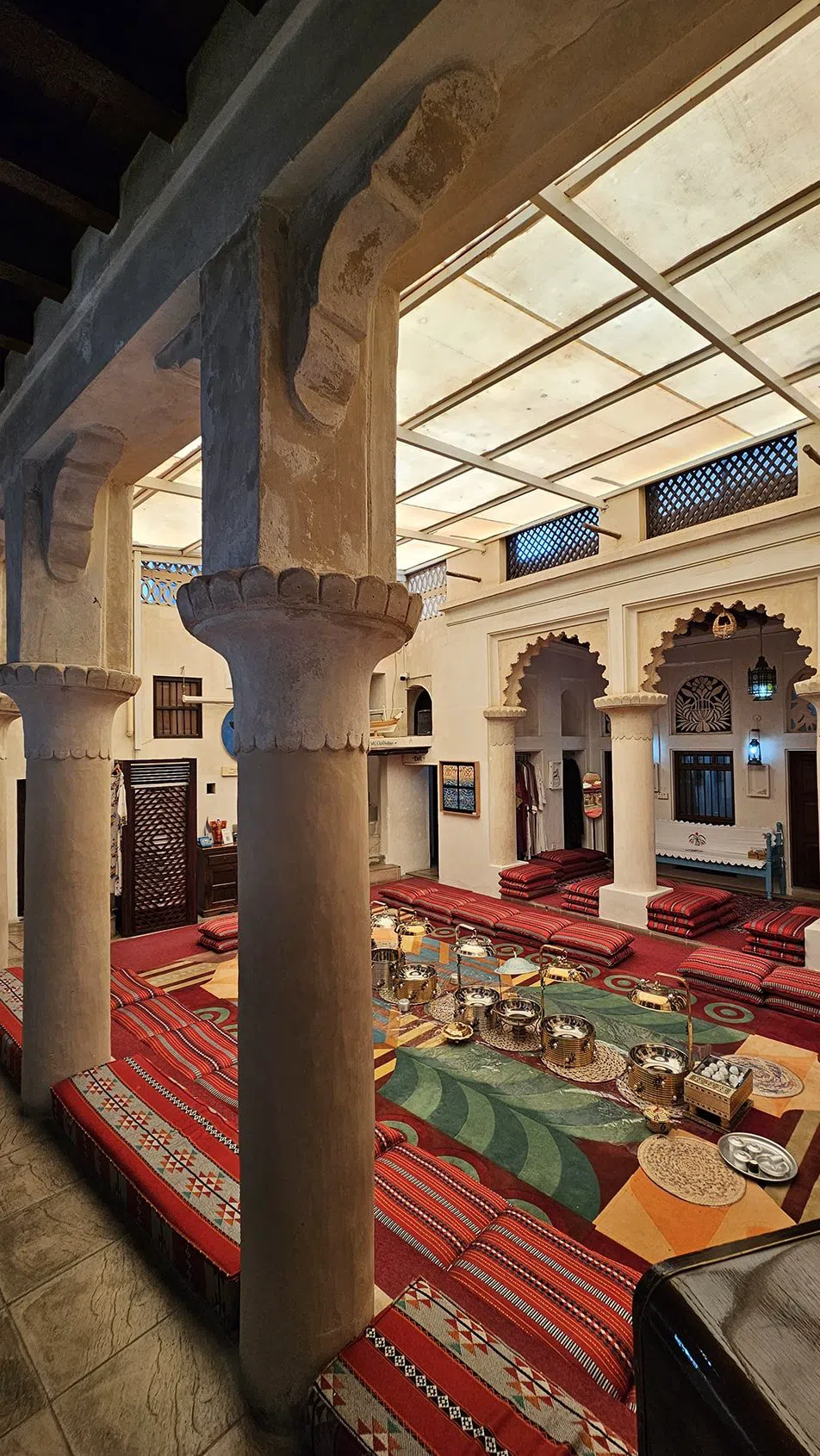
The Sheikh Mohammed Centre for Cultural Understanding (Al Fahidi) sits among wind towers built by pearl-trade merchants around the turn of the twentieth century, the city's original air conditioning and still legible on the skyline of that quarter. Its Cultural Breakfast runs Mondays and Wednesdays at 09:00 for 90 minutes, AED 130 per person, under-12s free with a paying adult. The early start is deliberate: you eat indoors, ask anything you like without the usual politeness tax, and are back out of the courtyards before they turn into an oven. The centre is purpose-built for groups, including schools, companies and corporate parties, and it also runs the Jumeirah Mosque visits for non-Muslims.
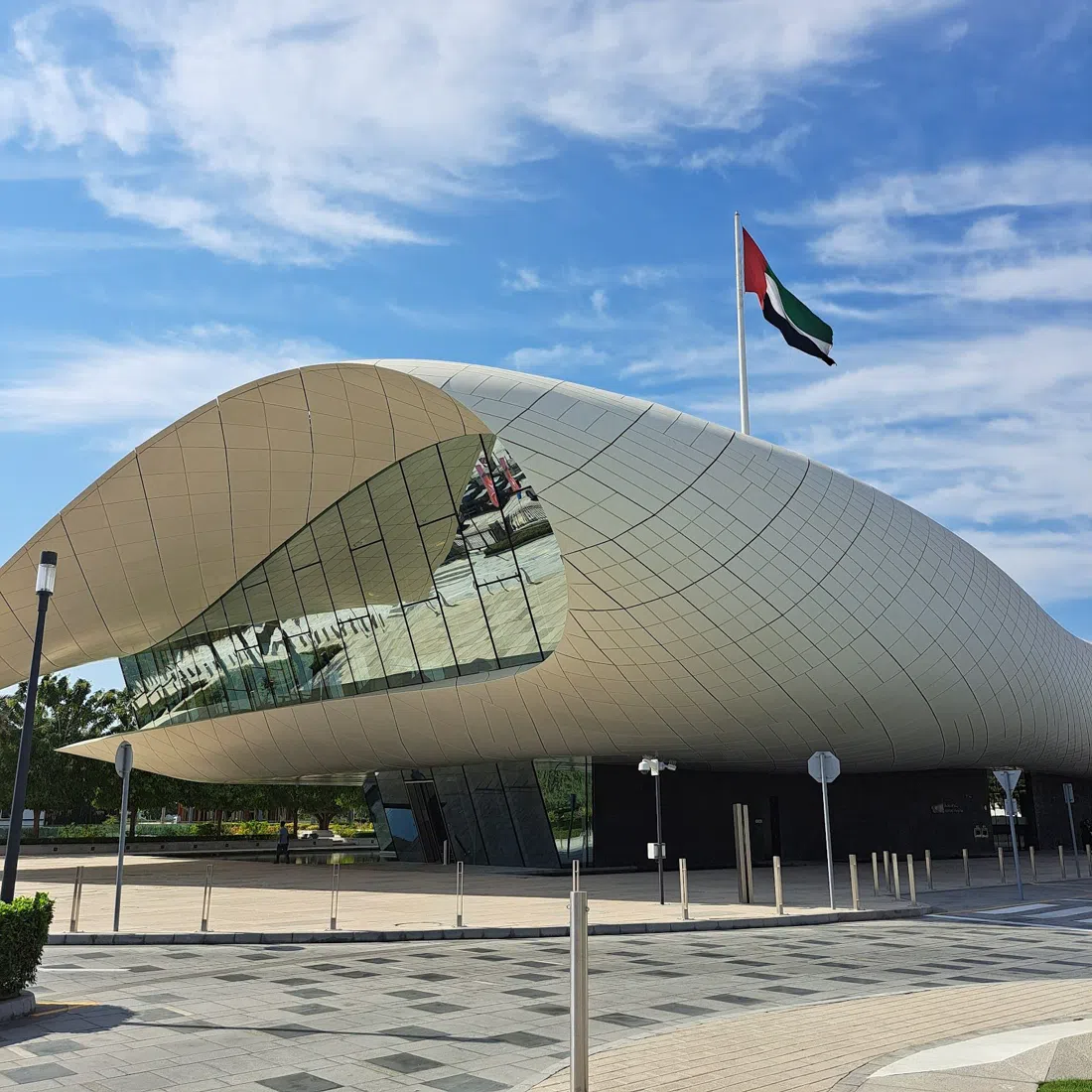
Etihad Museum (Jumeirah 1) stands where the union agreement was signed in December 1971, with seven columns for the seven emirates and almost the entire museum below ground and cold. It costs AED 25, under-5s free, open daily 10:00 to 20:00. The underground galleries handle volume well and there is no door policy. It is the one place that explains why the rest of the city looks the way it does, and at the price of a flat white it is the easiest recommendation in this piece.
Two views and the right hour for each
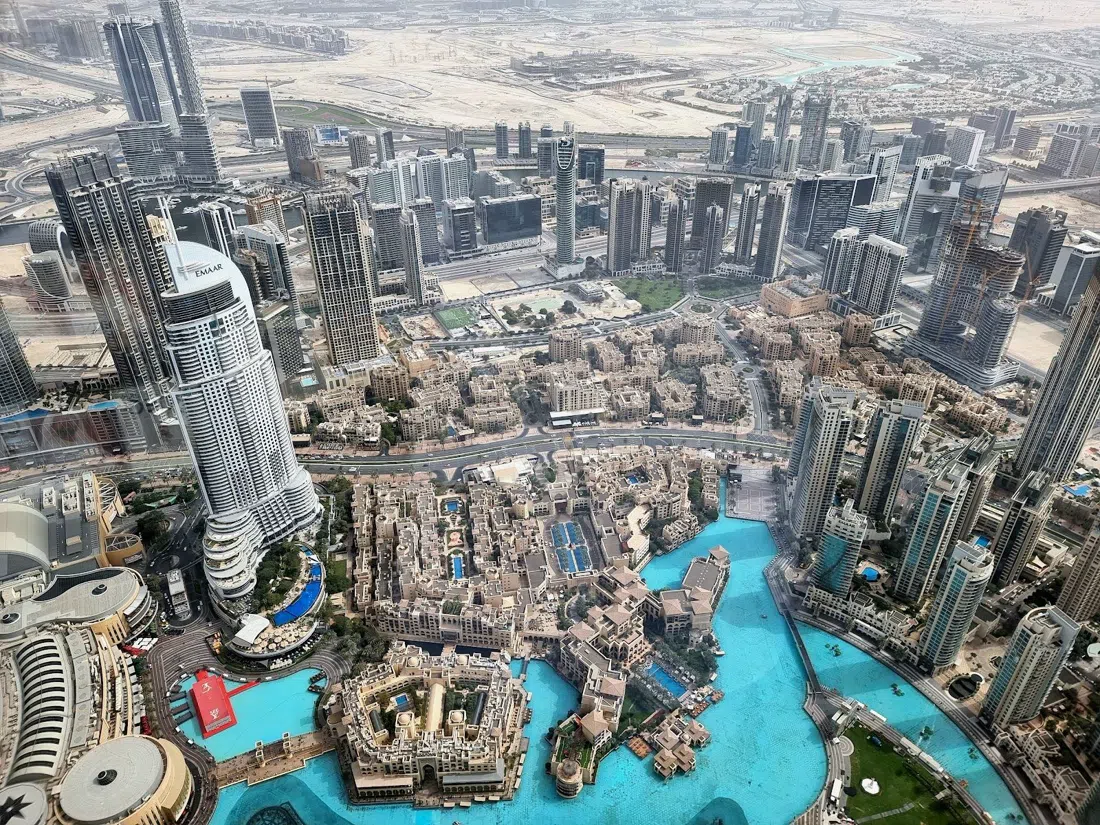
At the Top, Burj Khalifa (Downtown Dubai) sells prime slots between 16:00 and 19:00 that go days ahead in September and cost AED 250 against AED 173 for non-prime; SKY on level 148 runs AED 400 to 554. Take a non-prime slot from 20:00. The interior is chilled, the outdoor terrace is bearable once the sun has been down a couple of hours, and you pay roughly a third less than the sunset crowd for a city that photographs better lit anyway. Groups book readily through the advance online slots, but book the whole party in one transaction or you will be split.
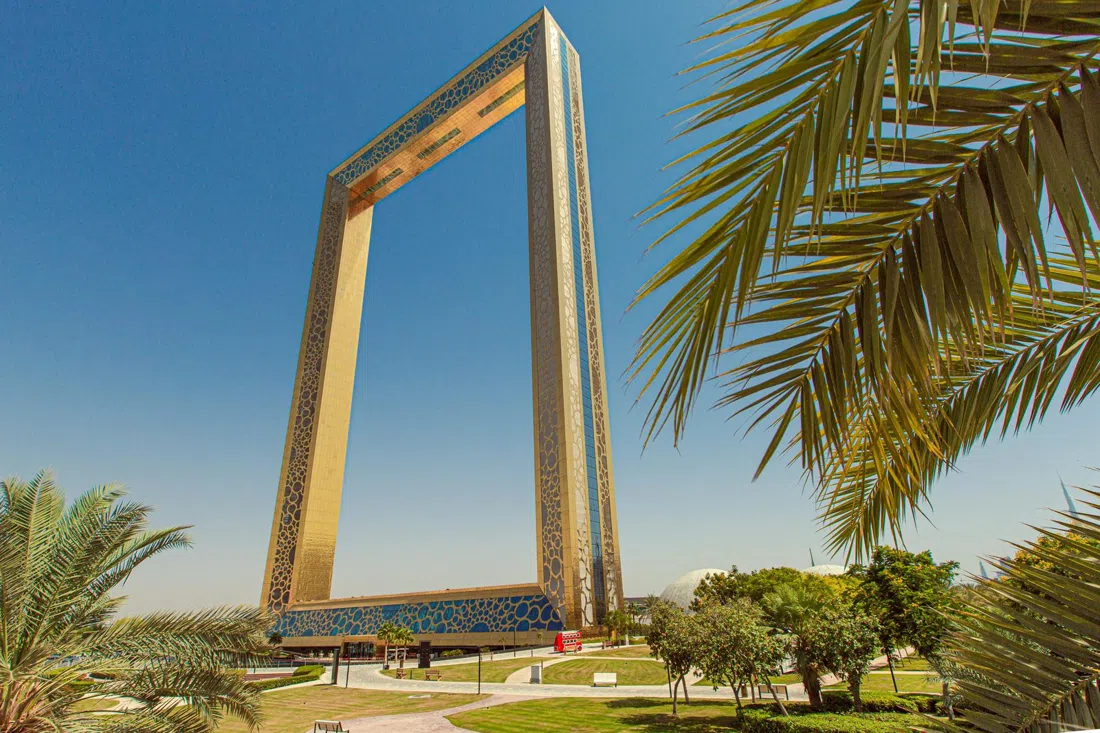
Dubai Frame (Zabeel Park) is cheap, fast and fully glazed: AED 50 adult, AED 20 for children aged 3 to 12, free for seniors and people of determination, open 09:00 to 21:00. An hour at 19:00 gives you both halves of the city lit, the old quarters on one side and the towers on the other. That contrast is the whole conceit of the building and the reason it works. Book online to skip the Gate 4 queue, the only part of the visit exposed to the heat.
Minus two degrees, and water held at thirty
Ski Dubai (Mall of the Emirates, Al Barsha) has been the literal answer to a 42°C afternoon since 2005: 22,500 square metres held at −2°C, with snowsuits, boots and jackets included in every pass, so you carry nothing warm to Dubai. Snow Park passes start around AED 230, Snow Classic around AED 275, ski slope passes from about AED 305. It takes groups without fuss; penguin encounters are sold as small fixed-size sessions, so book those separately and early.
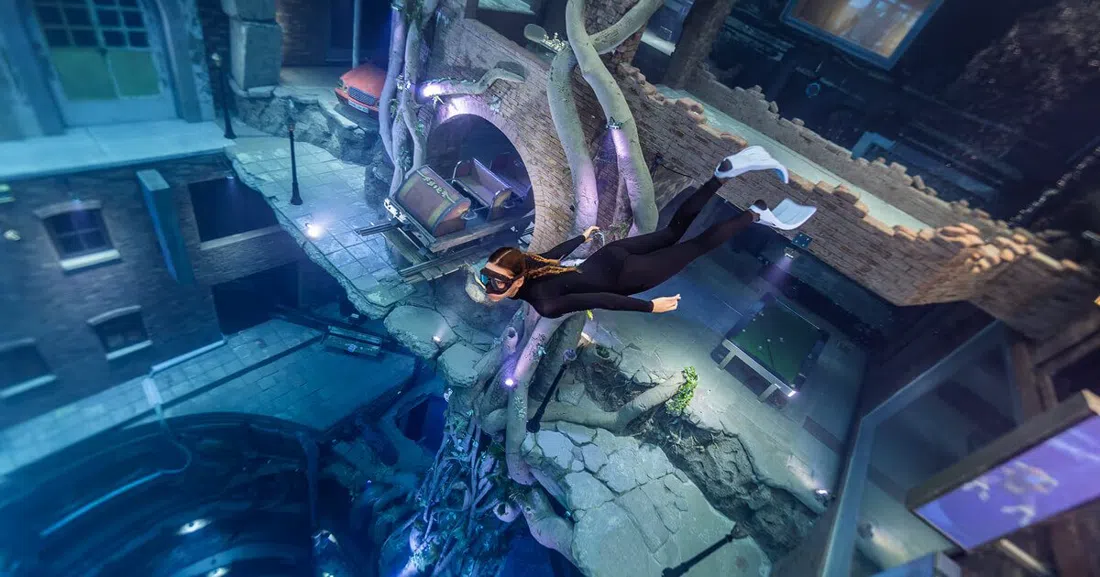
Deep Dive Dubai (Nad Al Sheba) keeps its water at a controlled 30°C indoors, and the range of options means non-divers are not abandoned in the café: snorkelling AED 400, the Sunken City Walk AED 600, freediving AED 900, scuba AED 1,200. It closes every Monday, the sort of detail that wrecks a four-day itinerary if you miss it, so plan around it. Groups are welcome and bespoke dives and events can be arranged.
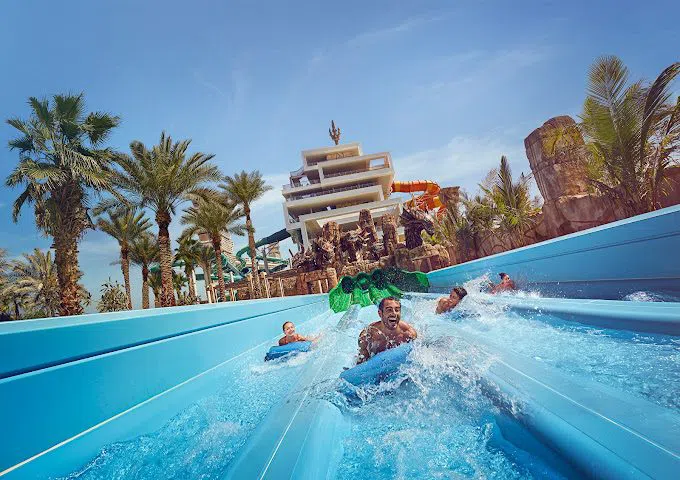
Atlantis Aquaventure (Palm Jumeirah) is the case where being wet is the point. It shuts at 18:30, so arrive at the 10:00 opening for the slides while the queues are short, then spend the worst of the afternoon in the shaded stretches of the lazy river rather than on the towers. Tickets are AED 350 for age 8 and up, AED 300 for ages 3 to 7, under-3s free. It is very group friendly, with AquaXpress fast passes and cabanas to make a large party manageable, but popular dates sell out online.
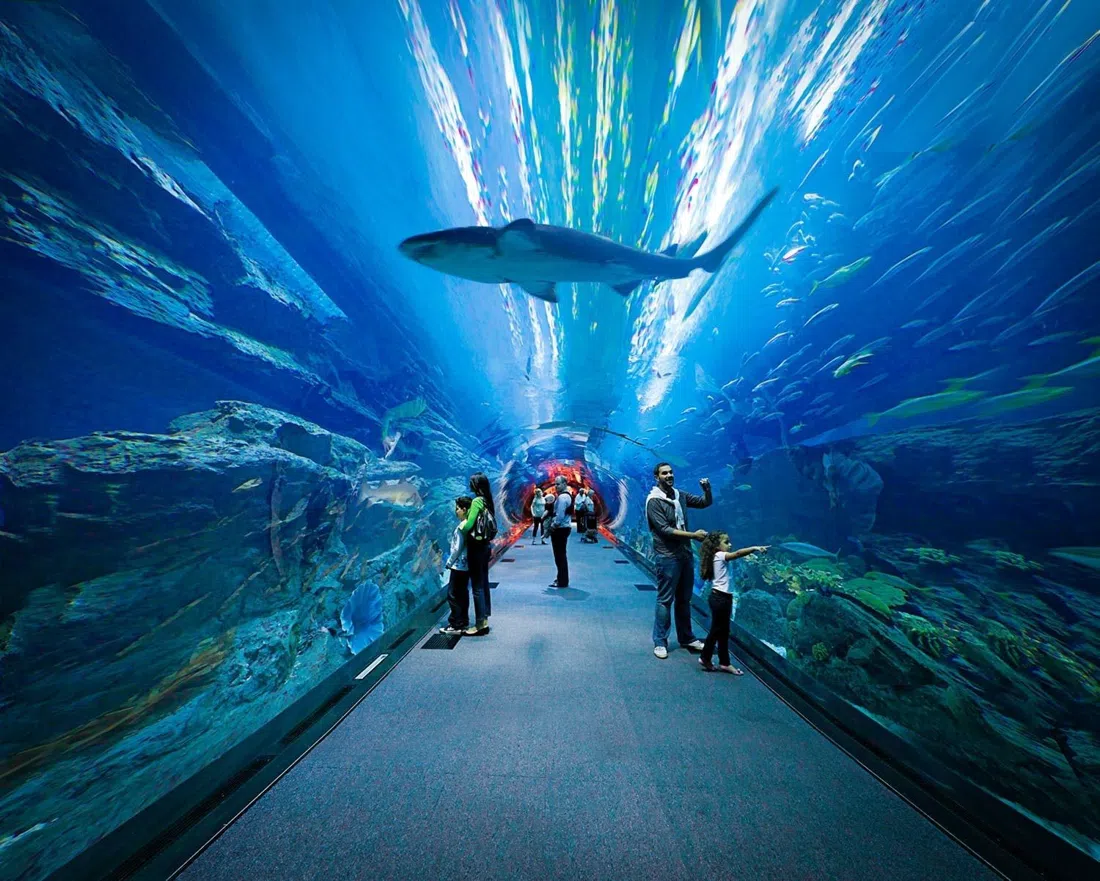
Dubai Aquarium & Underwater Zoo (The Dubai Mall, Downtown) stays open until midnight Thursday to Saturday, which is exactly the shape of a September evening when it is still 34°C outside. The day pass is AED 153; the AED 199 Explorer adds the glass-bottom boat, the simulator and a back-of-house tour, all run in small timed batches. It is walk-in and group friendly with no door policy. And if you only want the tank, the view from the mall concourse costs nothing and is honestly most of it.
Coasters without the heatstroke
IMG Worlds of Adventure (City of Arabia, Dubailand) is the largest indoor theme park in the world and the only sane way to ride rollercoasters here in September. Day tickets start around AED 265 (about USD 72), children under 1.05m go free, and there are no capacity problems midweek. Go Sunday to Wednesday, when it closes at 20:00 and the queues are short. It is built for groups; unlimited-ride tickets remove the arithmetic that usually slows a large party down.

The one night worth going outside for
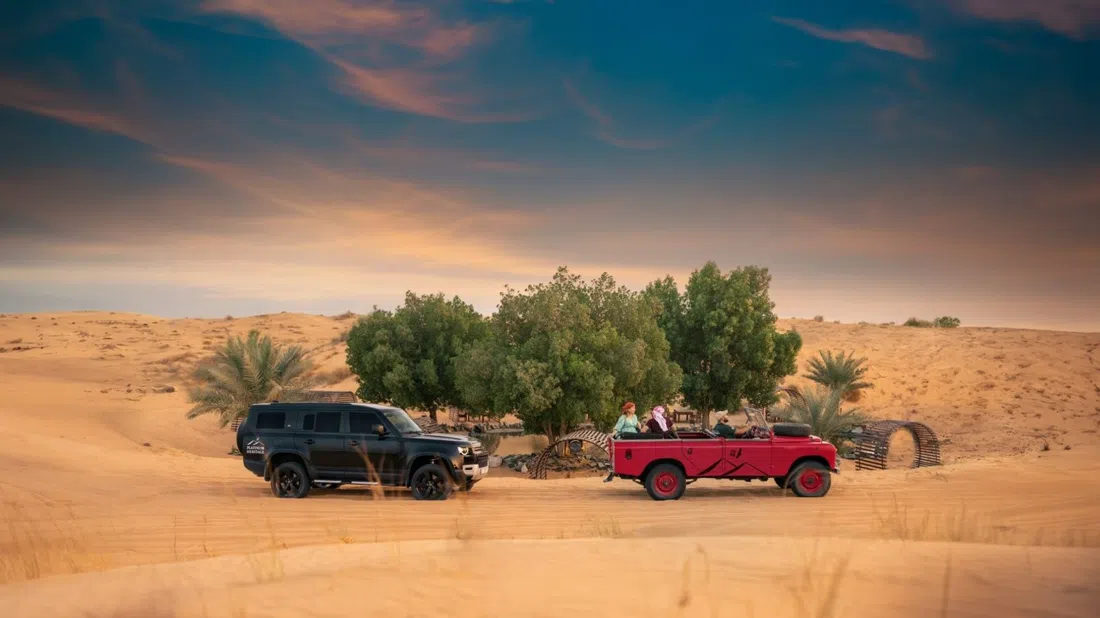
The only desert option worth booking in September is the evening one, and there is a reason Platinum Heritage (pickups across the city, out to the conservation reserve) runs no morning safaris in this month. Their route uses vintage Land Rovers on a conservation-reserve track that avoids the dune-bashing convoys, with a maximum of nine passengers per vehicle and a guide in each; larger groups are split across several cars, and private vehicles can be hired. Expect roughly AED 700 to 1,200 per person for the heritage evening safari with dinner. It is expensive and it is worth it, because the alternative is a bumpy queue of identical cars in the same patch of sand.
A pool day that does not punish you
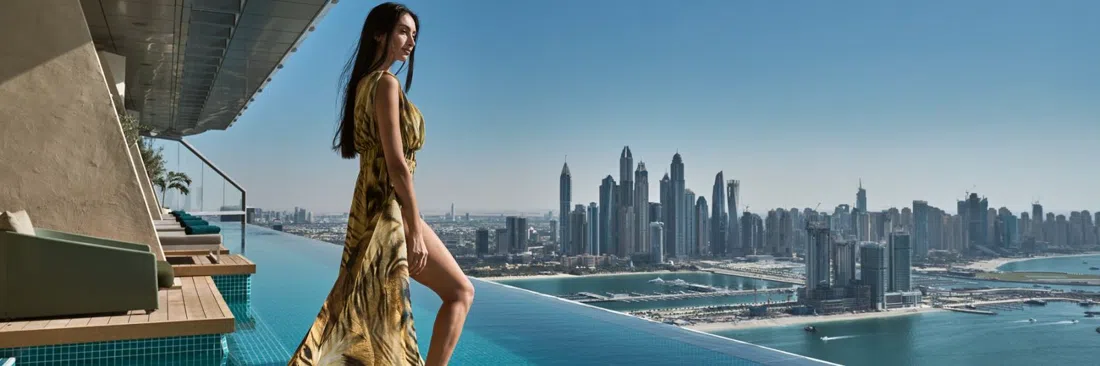
AURA Skypool (The Palm Tower, Palm Jumeirah) sells timed day passes, AED 295 weekday and AED 395 weekend, including a minimum food and drink spend, with allocated seating and slots for September bookable now. Book the last slot of the day. The pool is chilled, the sun is off the deck by then, and you get the sunset without standing in it. In this month that is the entire argument for the price.
Who each place actually suits
Couples do best with the small, dark, cold venues: Theatre of Digital Art at 21:00, the Etihad Museum's underground galleries, a late non-prime slot at the Burj Khalifa, an evening at the aquarium when the mall has thinned out. Large groups should aim at the places with open-flow ticketing and no bottleneck (AYA Universe, IMG Worlds, Ski Dubai, Aquaventure) and should treat the Museum of the Future and the Burj Khalifa as booking problems to solve a week ahead rather than decisions to make on the day. Families get the most from the Year of the Family child concession at the Museum of the Future, the free under-3s at Aquaventure and the aquarium's Explorer batches. Anyone travelling with a non-swimmer or a nervous diver should look hard at the Sunken City Walk before writing off Deep Dive Dubai entirely.
Practical notes for a September week
The metro is the only outdoor-adjacent transport that behaves in this heat: stations are chilled and connected to the malls by long air-conditioned walkways, so Downtown, Mall of the Emirates and Al Fahidi are all reachable without a real walk. Buy a Nol card at any station. For everything else, meaning Dubailand, Nad Al Sheba and the Palm, take a taxi or a ride-hail; fares are low by international standards and the ten minutes you save outside are worth more than the difference. Never plan a transfer that involves more than about five minutes on foot between 11:00 and 18:00.
Cards work everywhere, including taxis. Carry a small amount of cash in dirhams for the abra crossings on the creek, which cost a few dirhams a head and take coins happily. The dirham is pegged to the US dollar, so the arithmetic is stable whatever your home currency.
Dress for interiors, not exteriors: you will spend most of the day in aggressive air conditioning, so a light layer in the bag is more useful than another vest. In the heritage quarters and for the mosque visit, cover shoulders and knees; it is a small courtesy and the buildings are cooler for it anyway.
On budget, a reasonable non-extravagant day runs about AED 300 to 400 a head once you have one paid attraction, taxis and lunch. The museums pull that average down sharply, while the desert evening and Deep Dive Dubai pull it up. September is low season, which is the reason to come: hotel rates in the same buildings that cost double in January are the month's real discount, and it is worth comparing a few dates on Dubai hotel search before you fix the flights. Book the timed-entry venues first, the restaurants second, and leave one afternoon completely empty. You will want it for a cold, dark room you did not plan on.